Reading comprehension Normal Rhyming Worksheets for 5-Year-Olds
4 filtered results
-
From - To
Enhance your child's reading comprehension with our fun and engaging Normal Rhyming Worksheets, specially designed for 5-year-olds. These worksheets incorporate rhyming words to help young learners understand language patterns while fostering their love for reading. With colorful illustrations and age-appropriate activities, children will identify rhyming pairs, complete fun exercises, and develop essential language skills. Our resources promote critical thinking as kids make connections between sounds and meanings. Perfect for classroom settings or at-home learning, these worksheets are an excellent tool for early educators and parents alike. Watch your child's confidence soar as they improve their reading comprehension in a playful way!
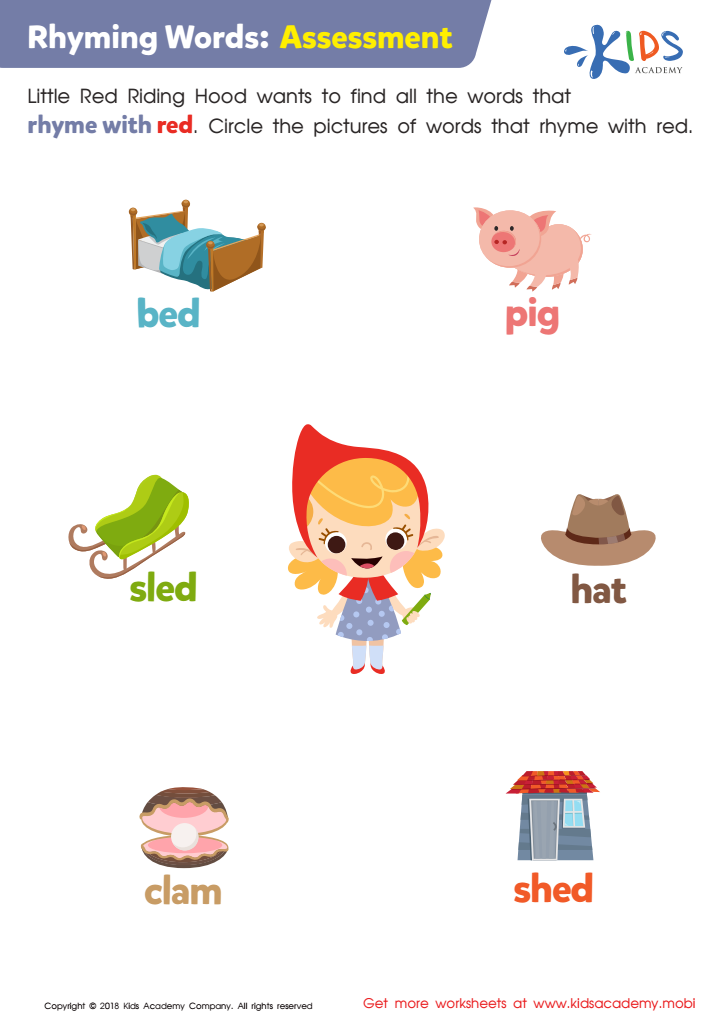
Rhyming Words: Assessment Worksheet
 Assign to My Students
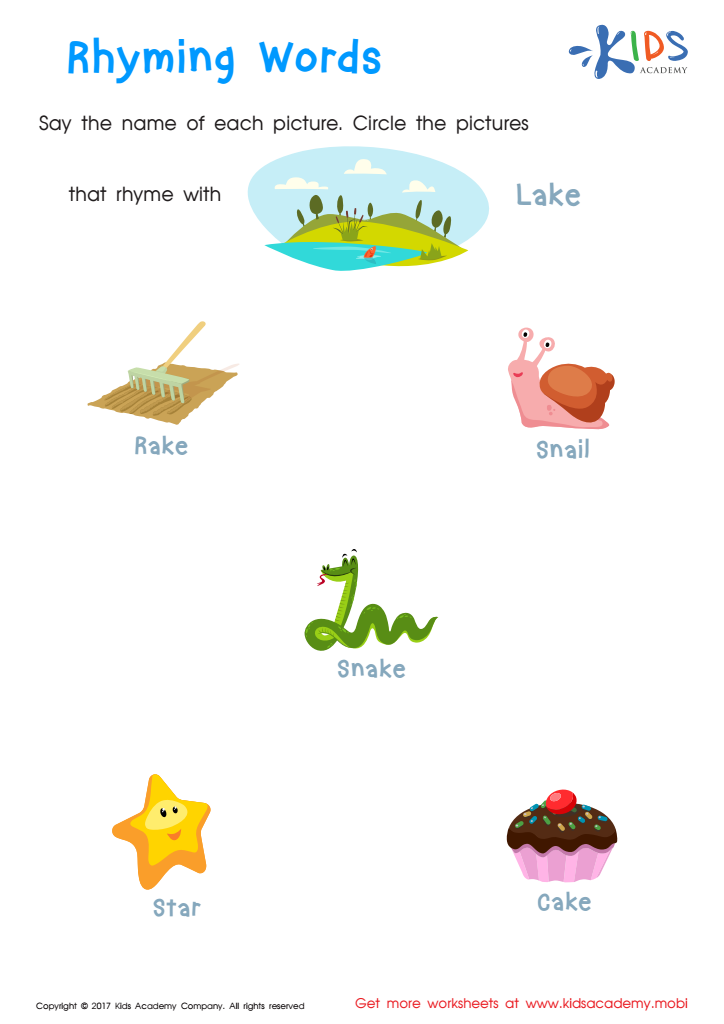
Rhyming Words Rhyming Worksheet
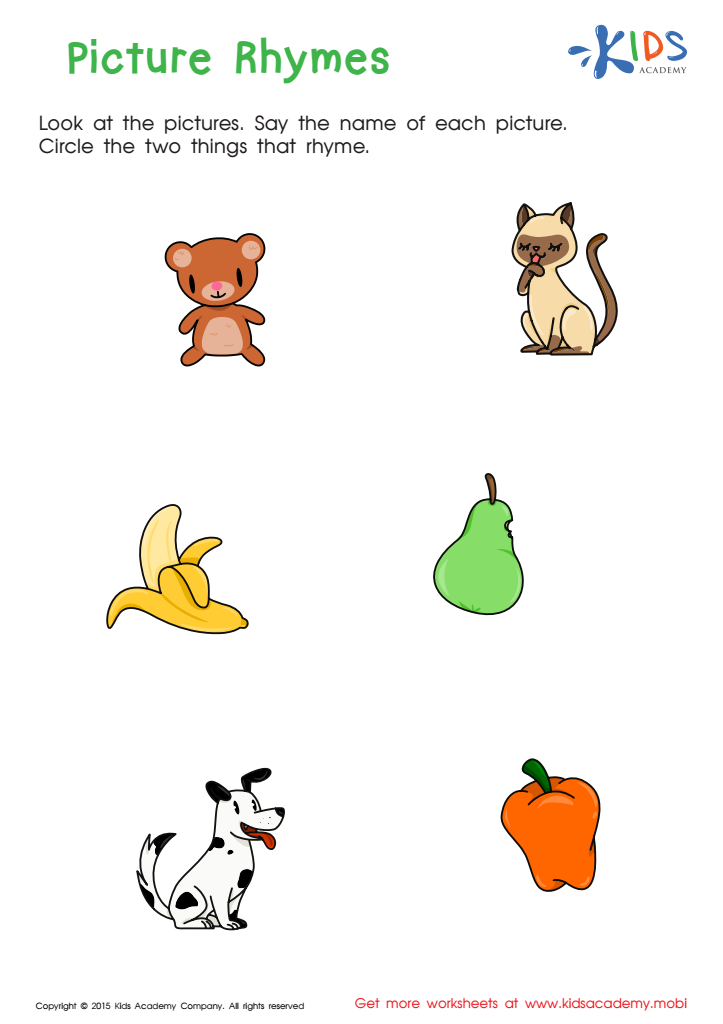
First Words: Picture Rhymes Worksheet
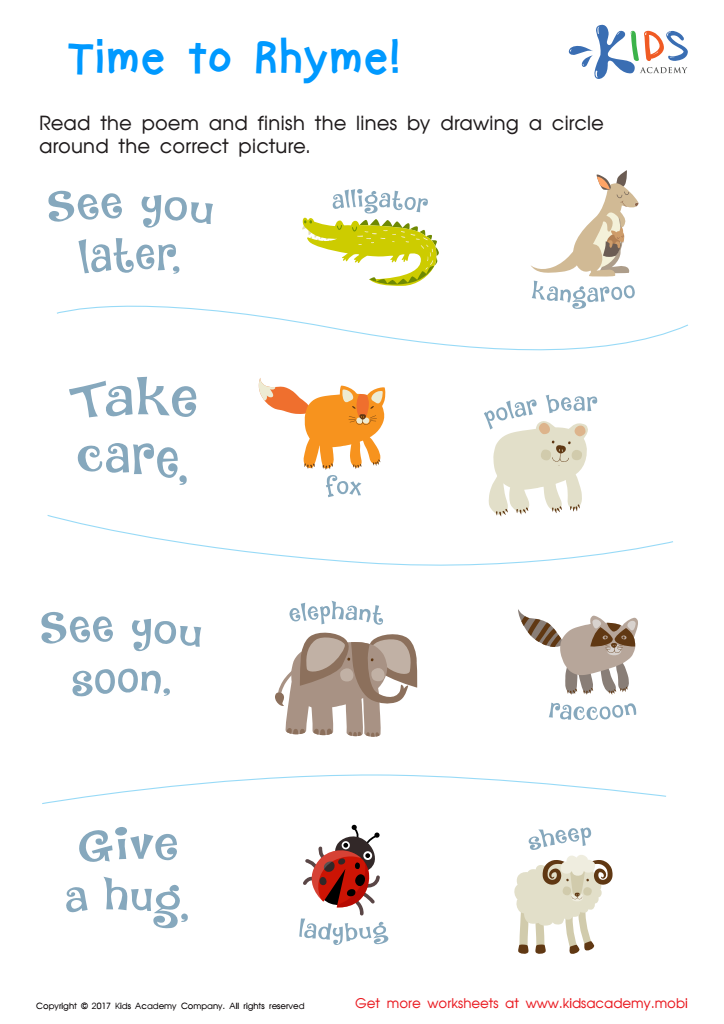
Time to Rhyme Rhyming Worksheet








Reading comprehension is crucial for the development of 5-year-olds, and incorporating normal rhyming in this process can enhance their understanding and appreciation of literature. At this age, children are naturally drawn to the rhythm and melody of rhymes, making learning engaging and fun. When children listen to or participate in rhyming activities, they build phonemic awareness, which is foundational for reading success.
Rhyming also helps develop vocabulary and language skills. As children hear and repeat rhymes, they are exposed to new words and phrases in a context that makes them easier to remember. This early exposure is essential for fostering a love for reading and learning.
Moreover, rhyming stories often have a narrative structure that helps children grasp the concept of story sequences—beginning, middle, and end—promoting comprehension skills. By encouraging parents and teachers to incorporate rhyming into their reading routines, we set the stage for better literacy outcomes.
Ultimately, the combination of rhythm, language play, and narrative understanding nurtures critical thinking and cognitive development. Fostering a positive association with reading through rhymes ensures that children develop the skills they need while enjoying the process, thereby laying the groundwork for future academic success.






