Fine motor skills development Normal Upper & Lowercase Letters Worksheets for 5-Year-Olds
3 filtered results
-
From - To
Enhance your child's fine motor skills with our engaging Fine Motor Skills Development Worksheets focused on normal uppercase and lowercase letters, designed specifically for 5-year-olds. These worksheets offer a fun and interactive way for young learners to practice letter formation and improve their hand-eye coordination. Each worksheet features tracing, coloring, and connecting activities that provide essential practice in writing letters correctly. By integrating fine motor exercises with alphabet recognition, these worksheets foster both academic skills and dexterity. Perfect for home or classroom use, our resources support early literacy and motor coordination, setting the foundation for future learning success. Start exploring today!
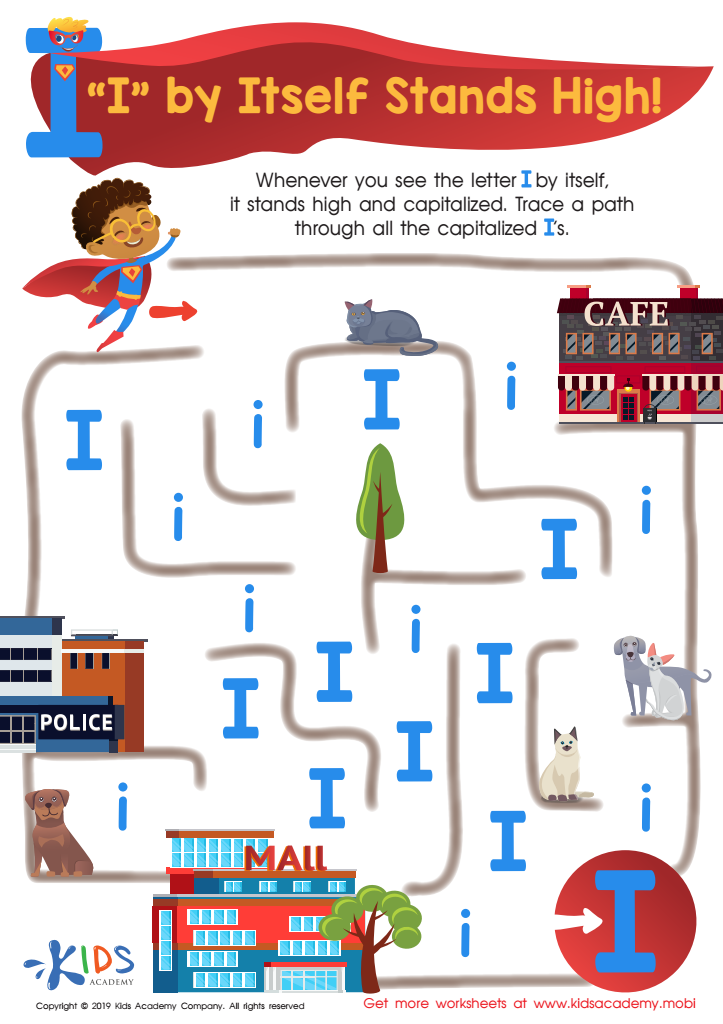
I Stands High Worksheet
 Assign to My Students








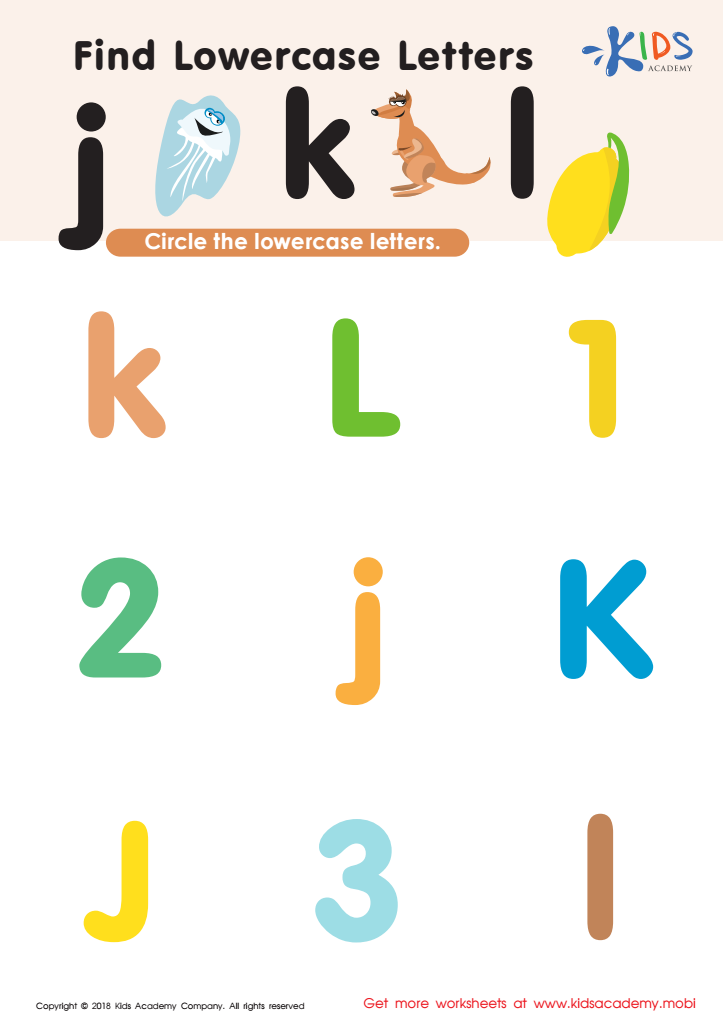
Find Lowercase Letters j k l Worksheet
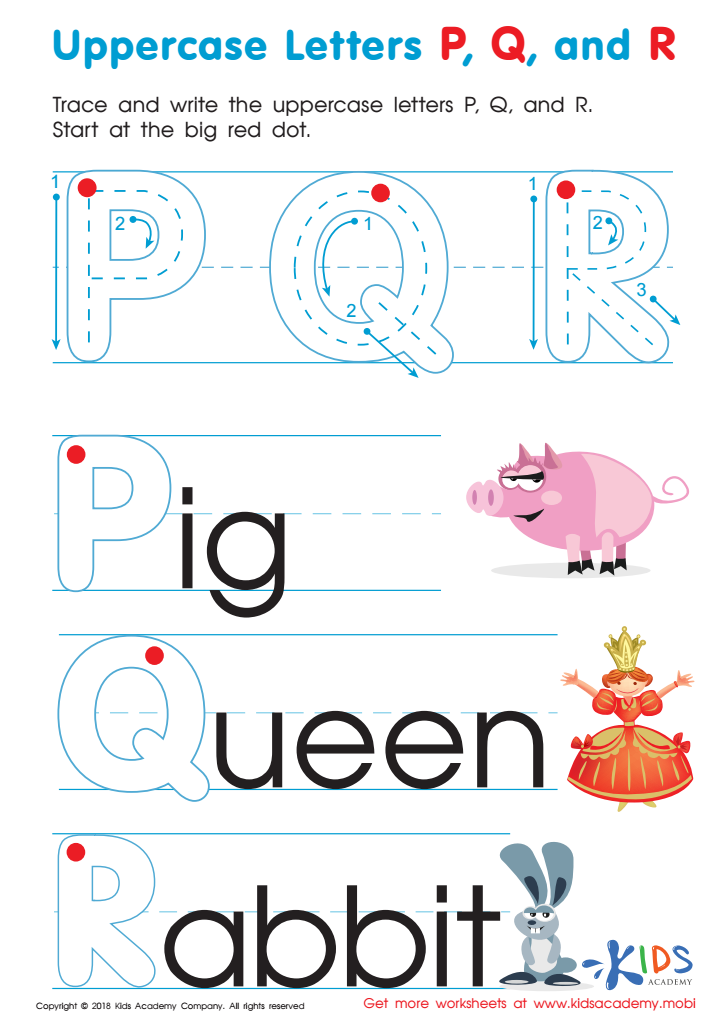
Uppercase Letters P, Q, and R Worksheet






Fine motor skills development is crucial for 5-year-olds, particularly concerning their ability to write normal uppercase and lowercase letters. At this age, children are becoming more independent and are often expected to start learning how to write their names and basic words. Mastering fine motor skills, such as gripping a pencil, controlling movements, and incorporating hand-eye coordination, is essential for developing adequate handwriting abilities.
Strong fine motor skills lay the foundation for overall academic success and should be of utmost importance to parents and teachers. When children struggle with writing due to poor fine motor skills, it can lead to frustration, decreased confidence, and a reluctance to participate in written tasks. The act of forming letters also engages cognitive processes, enhancing attention and memory.
Moreover, well-developed fine motor skills extend beyond handwriting; they are fundamental for everyday tasks, like buttoning clothes, using utensils, and eventually mastering more complex activities like typing. Supporting the development of fine motor skills in young children fosters creativity, problem-solving, and essential life skills that will benefit them long into their education and daily lives. Encouraging activities like drawing, lacing, and using small manipulatives can effectively promote these skills in engaging ways.







