Uppercase identification Normal Upper & Lowercase Letters Worksheets for 5-Year-Olds
5 filtered results
-
From - To
Discover our engaging Uppercase Identification Worksheets designed specifically for 5-year-olds to master normal upper and lowercase letters! These fun-filled worksheets foster early literacy skills, allowing children to recognize and distinguish between uppercase and lowercase letters. Each activity is thoughtfully crafted to capture young learners' attention, promoting interactive learning through tracing, matching, and coloring activities. As kids work through the exercises, they build confidence in their letter recognition, making the learning process enjoyable and effective. Ideal for both classroom and home learning, our worksheets offer a valuable foundation for future reading and writing success. Start the journey to reading today!
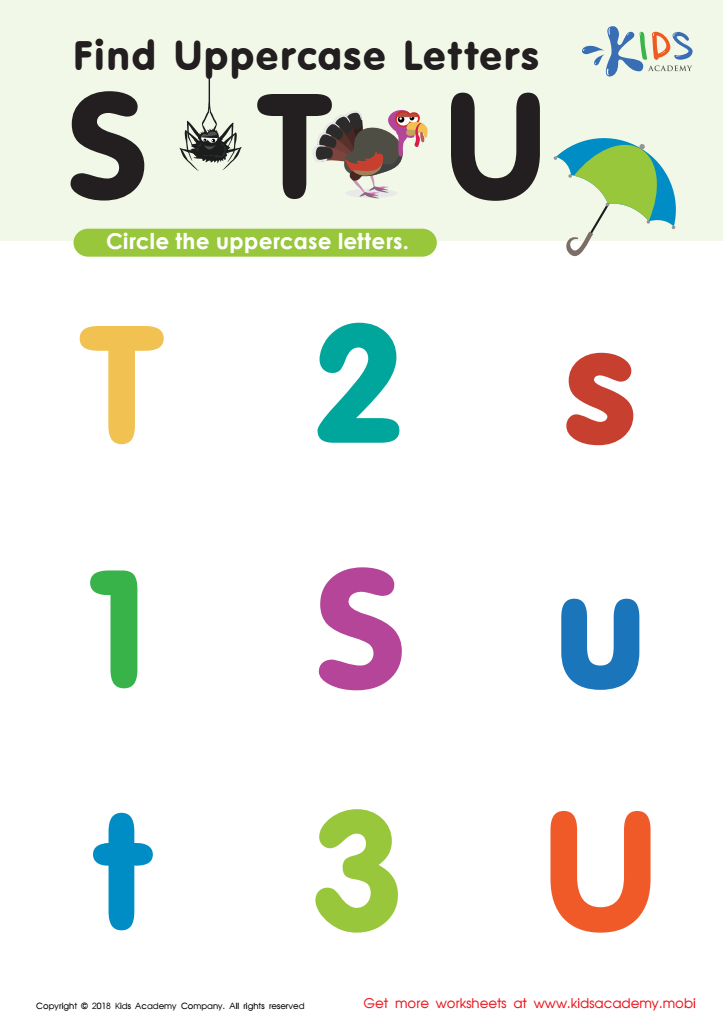
Find Uppercase Letters Worksheet
 Assign to My Students


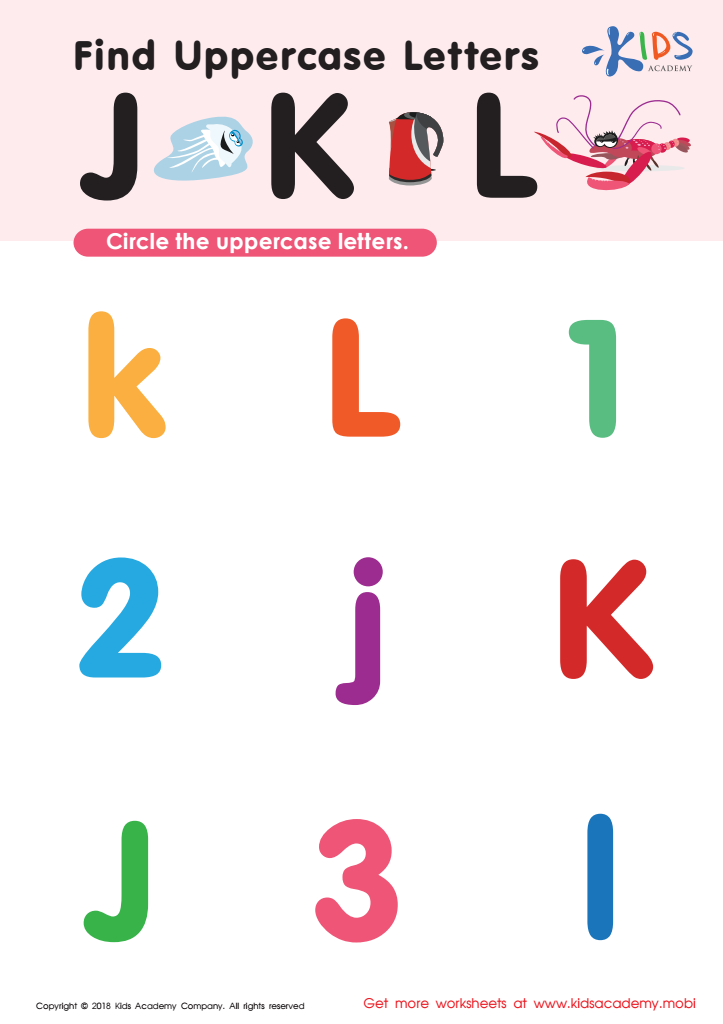
Find Uppercase Letters J, K, and L Worksheet

Find Uppercase Letters A, B, and C Worksheet
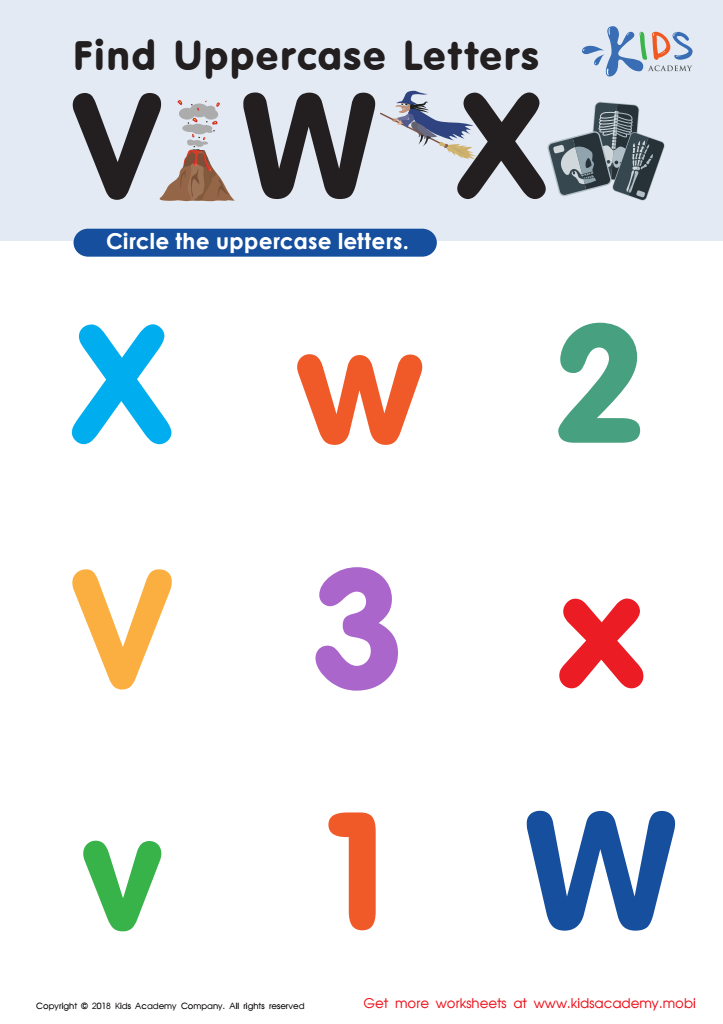
Find Uppercase Letters V, W, X Worksheet
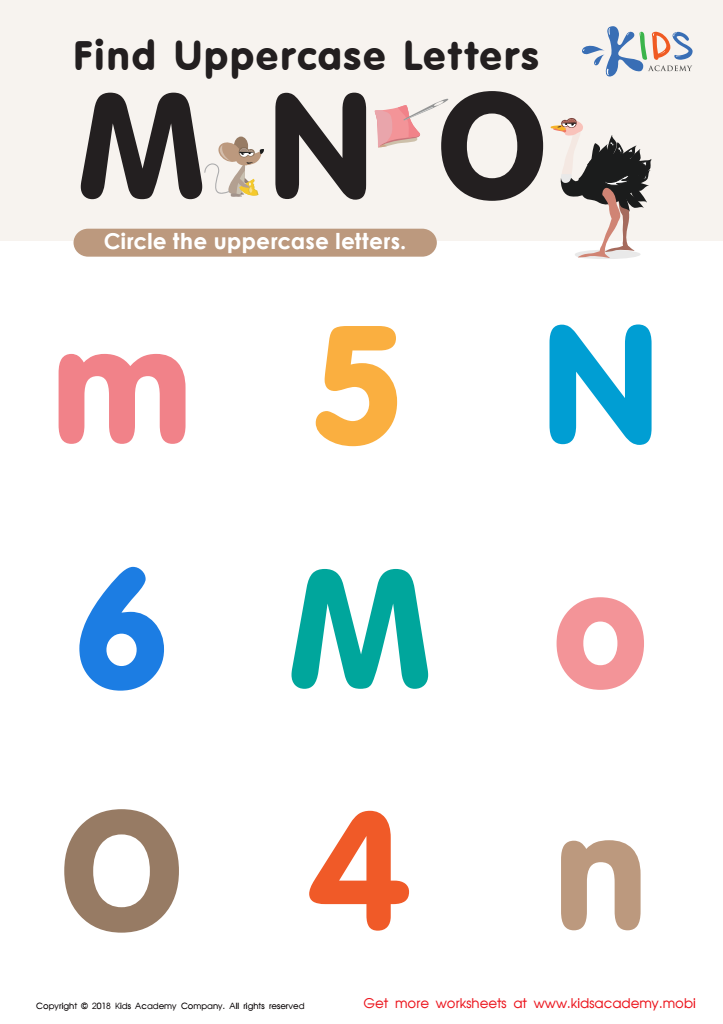
Find Uppercase Letters M, N, and O Worksheet






Understanding uppercase and lowercase letter identification is crucial for 5-year-olds as it forms the foundation of literacy skills. At this developmental stage, children are beginning to recognize that letters are symbols representing sounds, which is essential for reading and writing.
Firstly, uppercase letters are often more visually recognizable because they stand out due to their size and shape. Learning these letters helps young learners build confidence as they begin their reading journey. Additionally, the differentiation between uppercase and lowercase not only aids in language development but also enhances children's understanding of writing conventions, such as the rules surrounding proper nouns and sentence beginnings.
Moreover, distinguishing between uppercase and lowercase letters supports phonemic awareness—a critical skill for reading. By recognizing both forms, children can decode words more effectively. Engaging activities, such as letter matching games or integrating letters into art projects, can make learning enjoyable.
For parents and teachers, fostering this understanding early on ensures that children are well-prepared for more advanced literacy tasks, which will ultimately lead to greater academic success. Encouraging recognition through playful and interactive methods can instill a love for learning, making literacy a rewarding experience for young learners.







