Visual discrimination Normal Upper & Lowercase Letters Worksheets for 5-Year-Olds
4 filtered results
-
From - To
Enhance your 5-year-old's reading skills with our engaging Visual Discrimination Normal Upper & Lowercase Letters Worksheets. Designed by education experts, these worksheets help children distinguish between upper and lowercase letters, improving their visual discrimination. Fun and interactive activities ensure that learning is enjoyable while solidifying foundational reading skills. Ideal for preschool and kindergarten, our worksheets aid in cognitive development, preparing young minds for future academic success. Download now from Kids Academy and watch your child excel in letter recognition through expertly crafted exercises that boost confidence and learning proficiency in early literacy.

Find Lowercase Letters g h i Worksheet
 Assign to My Students


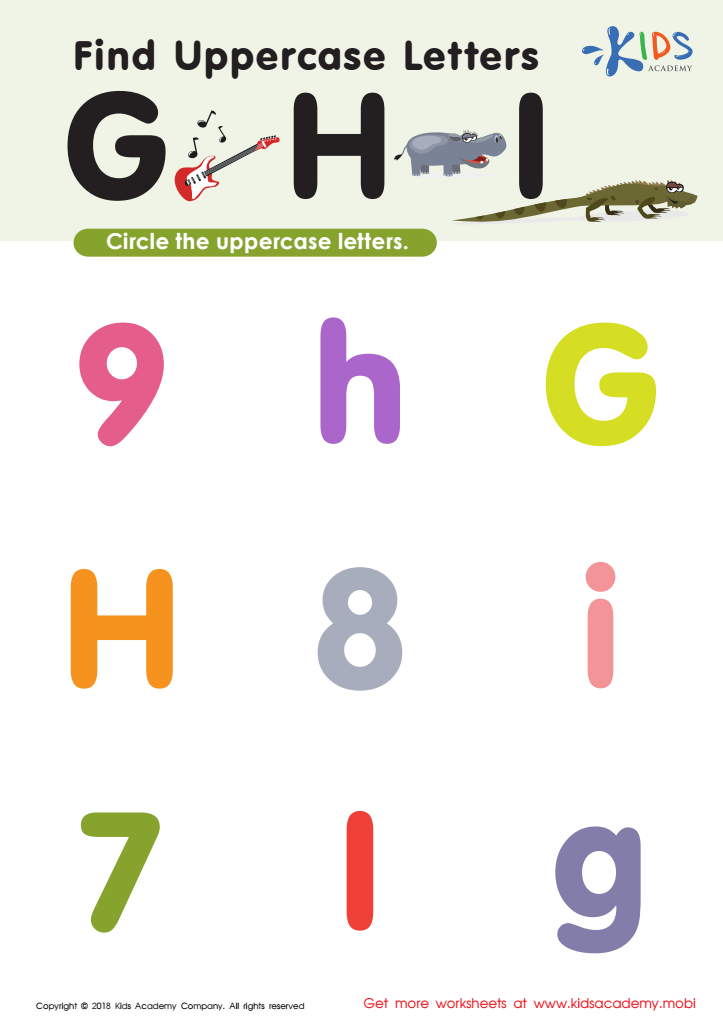
Find Uppercase Letters G, H, and I Worksheet
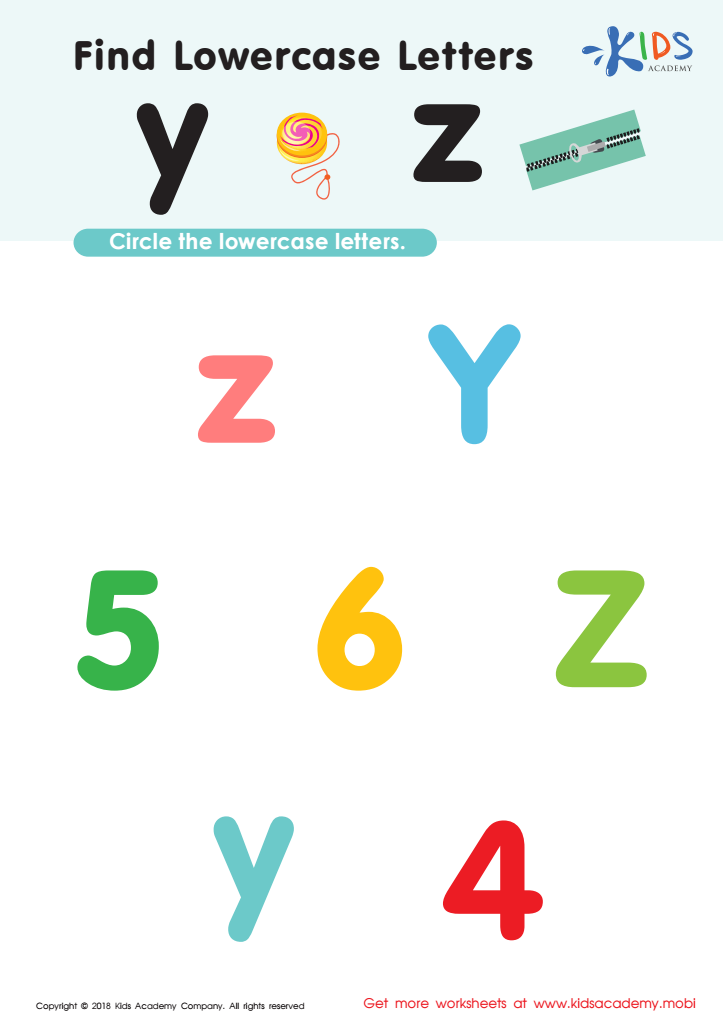
Find Lowercase Letters y z Worksheet
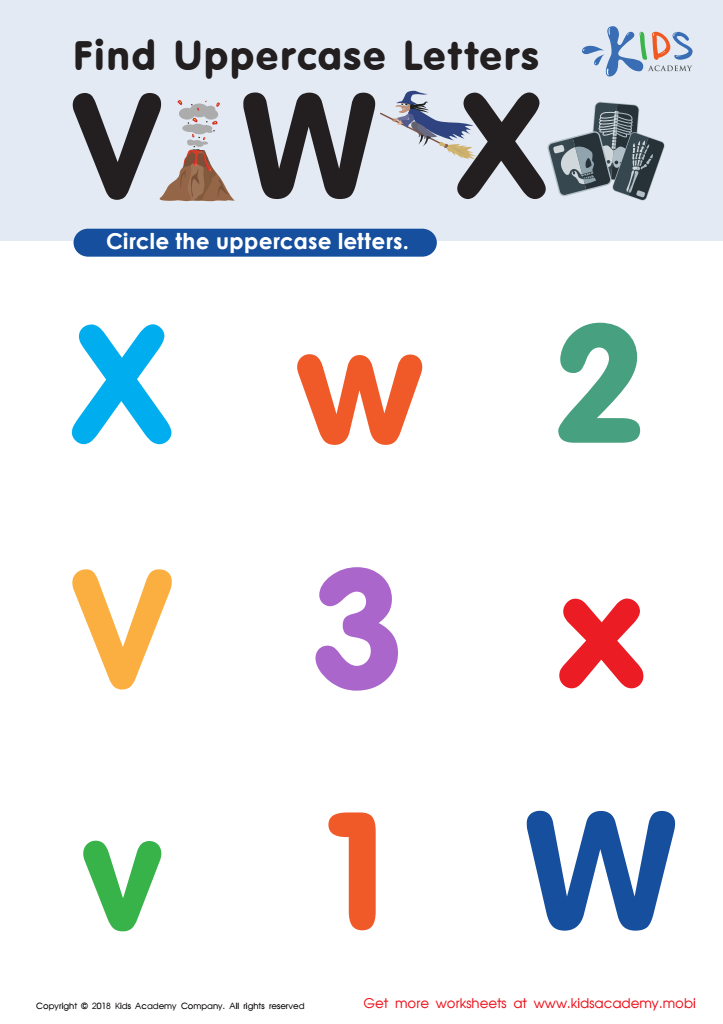
Find Uppercase Letters V, W, X Worksheet






Visual discrimination is the ability to recognize and differentiate between visual stimuli, such as shapes, colors, and letters. For five-year-olds, mastering this skill, particularly when it comes to distinguishing normal upper and lowercase letters, is crucial for several reasons.
Firstly, reading readiness is a primary benefit. Recognizing the differences between "B" and "b" or "D" and "d" ensures that children can properly decode words when they encounter them in books, instructions, or labels. This foundational skill directly influences their ability to learn to read, which is pivotal as they transition into more structured academic settings.
Secondly, writing skills depend heavily on this ability. When children can distinguish between the letters, they can reproduce them accurately, improving their handwriting and enabling clearer communication. Writing exercises that emphasize both forms encourage proper formation and spacing, reinforcing fine motor skills critical for overall development.
Thirdly, early instillation of visual discrimination skills boosts confidence. Kids who grasp these concepts are more comfortable with classroom activities and are less likely to become frustrated, fostering a more positive attitude towards learning.
Lastly, attention to detail extends beyond literacy. This skill addresses broader cognitive development, helping children in various aspects of life, such as navigating signs, following written cues, and enhancing their overall observation skills.
In summary, focusing on visual discrimination of normal upper and lowercase letters at this age lays a key educational foundation, powering both literacy and broader cognitive development.







