Letter recognition Normal Beginning Sounds Worksheets for Ages 6-7
3 filtered results
-
From - To
Unlock the joy of learning with our "Letter Recognition Normal Beginning Sounds Worksheets for Ages 6-7"! Tailored to assist early readers, these engaging worksheets are designed to enhance letter recognition and phonemic awareness. Each worksheet focuses on identifying the beginning sounds of words, fostering critical phonics skills. Vibrant visuals, fun exercises, and age-appropriate challenges ensure that your child will stay motivated and encouraged as they practice. Empower your child's reading journey with these expertly crafted resources that align with educational standards. Perfect for classroom use or at-home learning, make reading readiness exciting and fun!
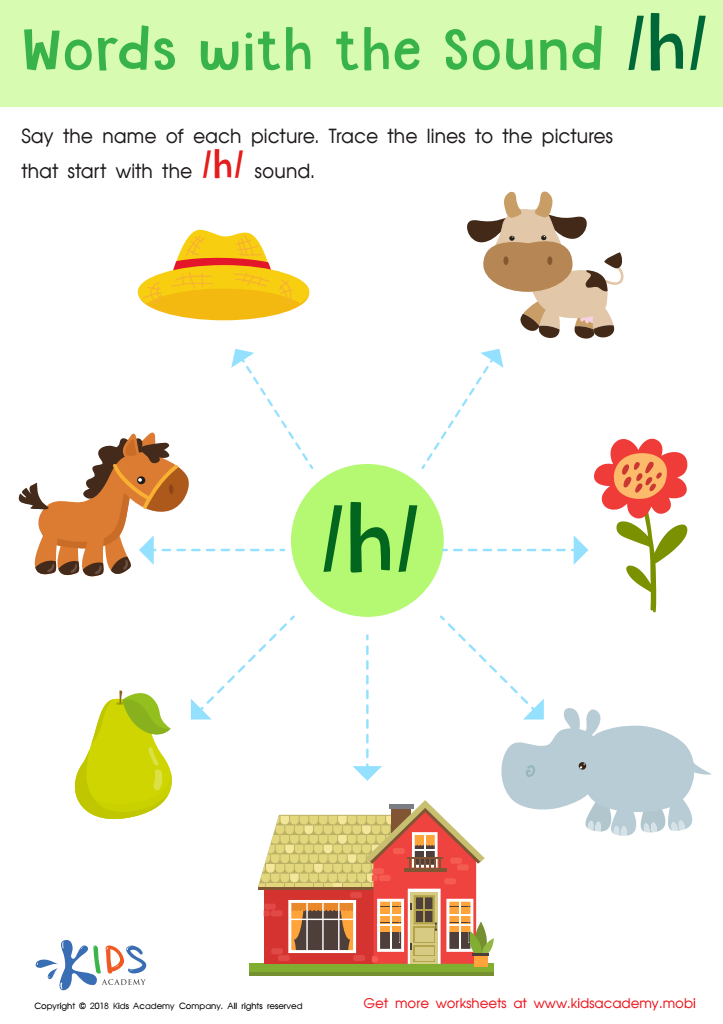
Words with sound h Reading Worksheet
 Assign to My Students
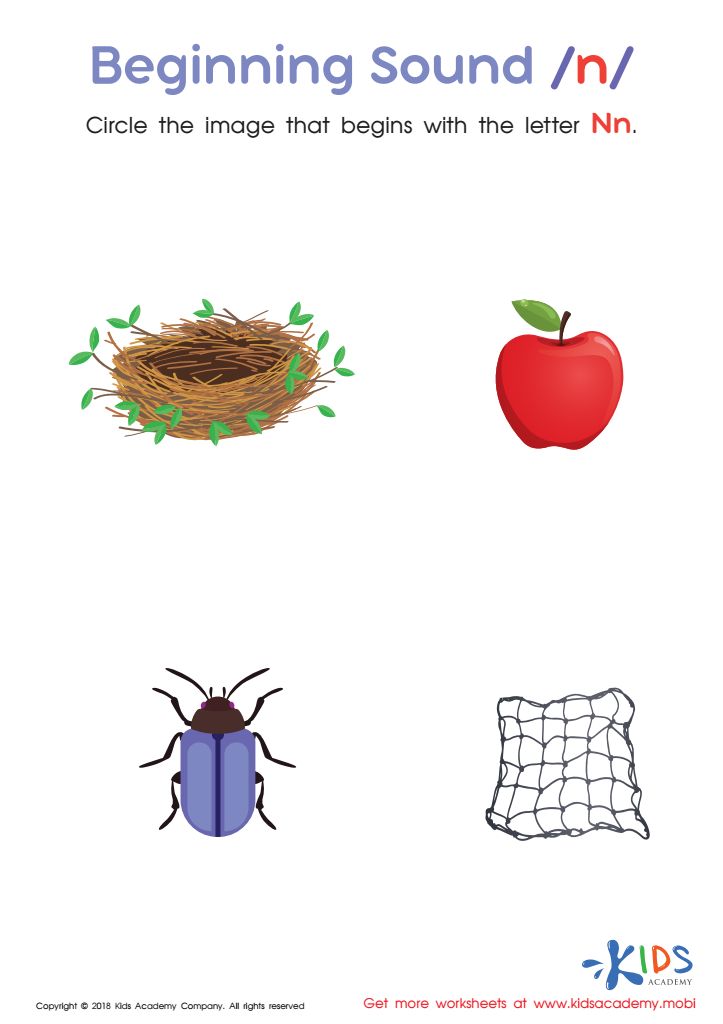
Beginning Sound «n» Worksheet
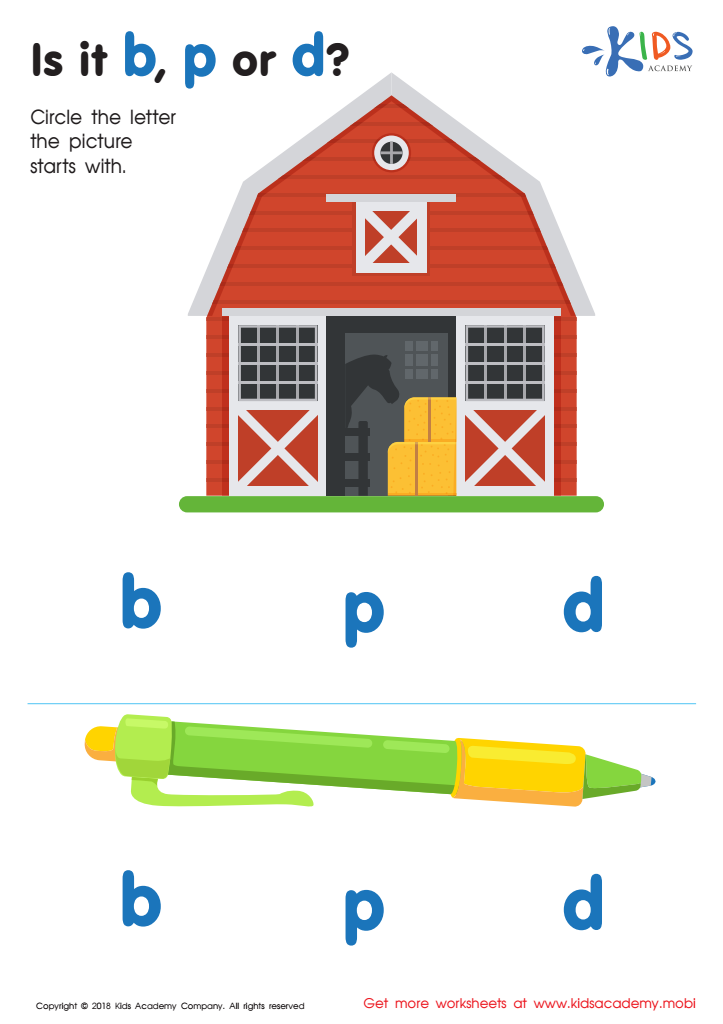
Is it b, p or d? Worksheet








Letter recognition and understanding beginning sounds are critical for 6-7 year olds as foundation skills for reading and writing. At this age, children often transition from recognizing individual letters to understanding that letters represent distinct sounds. Mastery in these areas significantly facilitates early literacy development.
-
Reading Skills: Alphabet knowledge equips children with the ability to decode new words, an essential skill for reading. Recognizing letters and associated sounds allows children to blend them into words, laying the groundwork for fluent reading.
-
Writing Proficiency: Knowledge of letters and sounds aids children in spelling and composing words. Recognizing beginning sounds helps them make educated guesses about the spelling and composition of words, enhancing their writing competencies.
-
Cognitive Development: These skills also play a part in broader cognitive growth. Differentiating between letters and sounds improves attention to detail, memory, and mental organization, contributing to problem-solving skills.
-
Confidence and Motivation: As children succeed in recognizing letters and sounds, it boosts their confidence. This positive reinforcement encourages continued learning and participation in classroom activities.
-
Communication: Developing these foundational literacy skills aids children in effectively understanding and expressing ideas, both verbally and in writing—critical for overall academic success.
Ensuring children at this age acquire these skills is paramount to their educational journey. Parents and teachers can foster an engaging, supportive learning environment to nurture this crucial stage of development.







