
Alphabet sequencing Normal Letter Recognition Worksheets for Ages 6-7
3 filtered results
Difficulty Level
Grade
Age
-
From - To
Subject
Activity
Standards
Boost your child's literacy skills with our "Alphabet Sequencing Normal Letter Recognition Worksheets" designed for ages 6-7! These engaging activities help young learners practice identifying and ordering alphabet letters. Perfect for early grade classrooms or homeschooling, our worksheets make mastering the ABCs fun and interactive. Children gain confidence as they complete puzzles and exercises that enhance their understanding of letter sequences. These worksheets are an excellent tool for reinforcing foundational reading skills, setting the stage for future academic success. Support your child’s educational journey with reliable, teacher-approved materials from Kids Academy.
Favorites
With answer key
Interactive
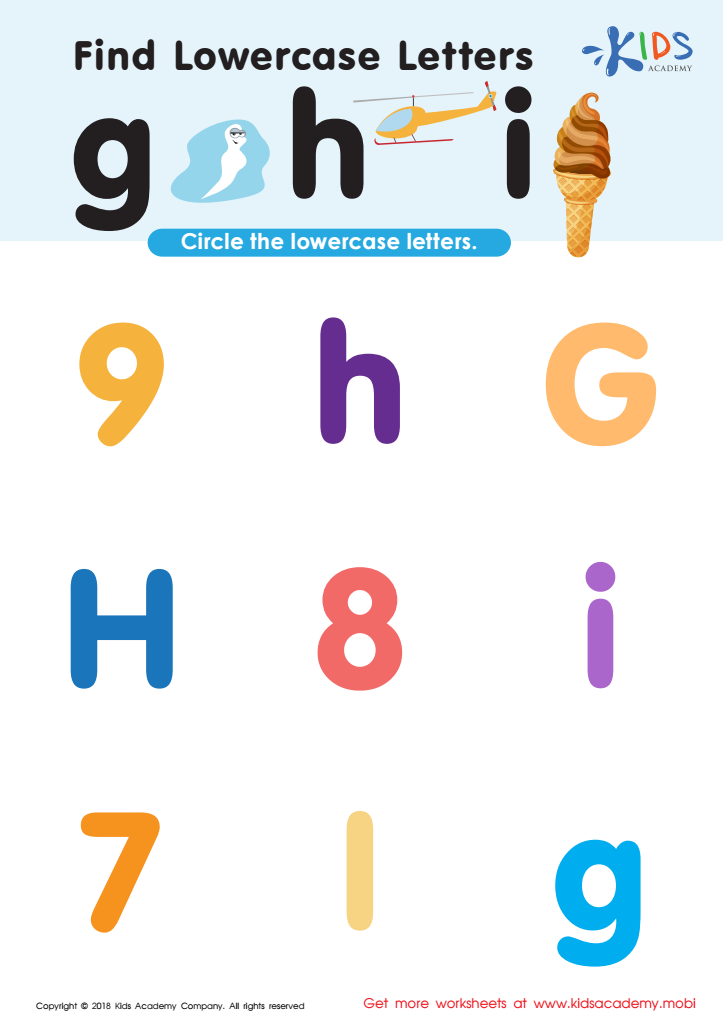
Find Lowercase Letters g h i Worksheet
Turn learning into a fun journey with your child! Use this free worksheet to find and circle the lowercase letters hidden amongst uppercase letters and numbers. Your child will understand what you're teaching them as they enjoy the search.
 Assign to My Students
Find Lowercase Letters g h i Worksheet
Worksheet
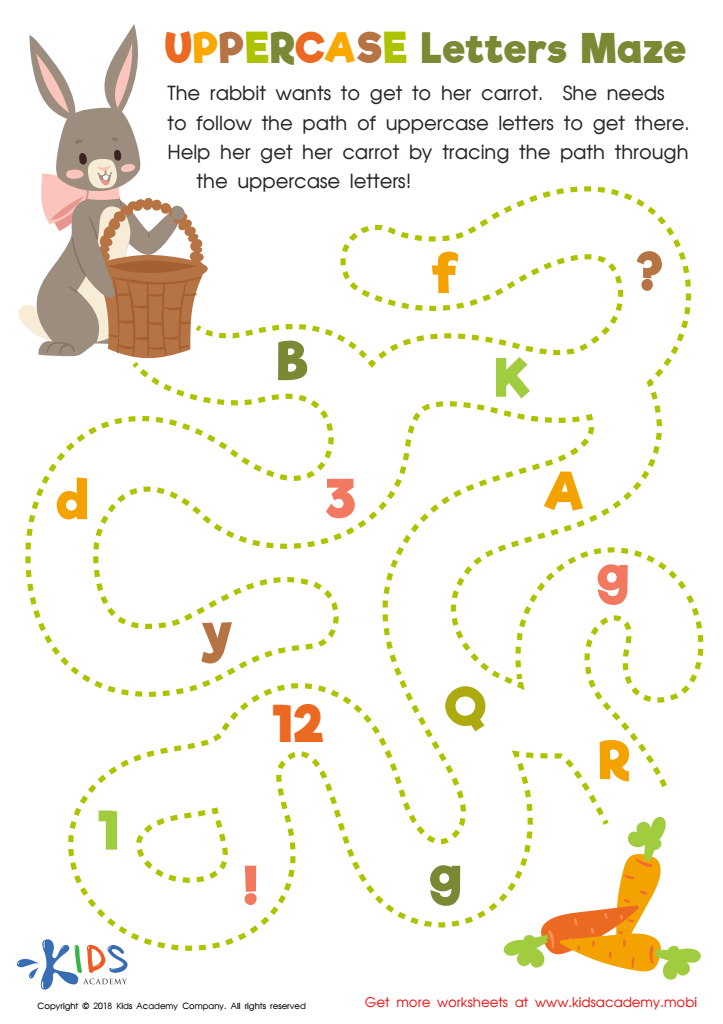
Uppercase Letters Maze Worksheet
Kids can have fun helping a rabbit find her carrot by picking the path with uppercase letters. This worksheet teaches letter differentiation while building confidence. Kids will have a great time while getting an essential skill!
Uppercase Letters Maze Worksheet
Worksheet
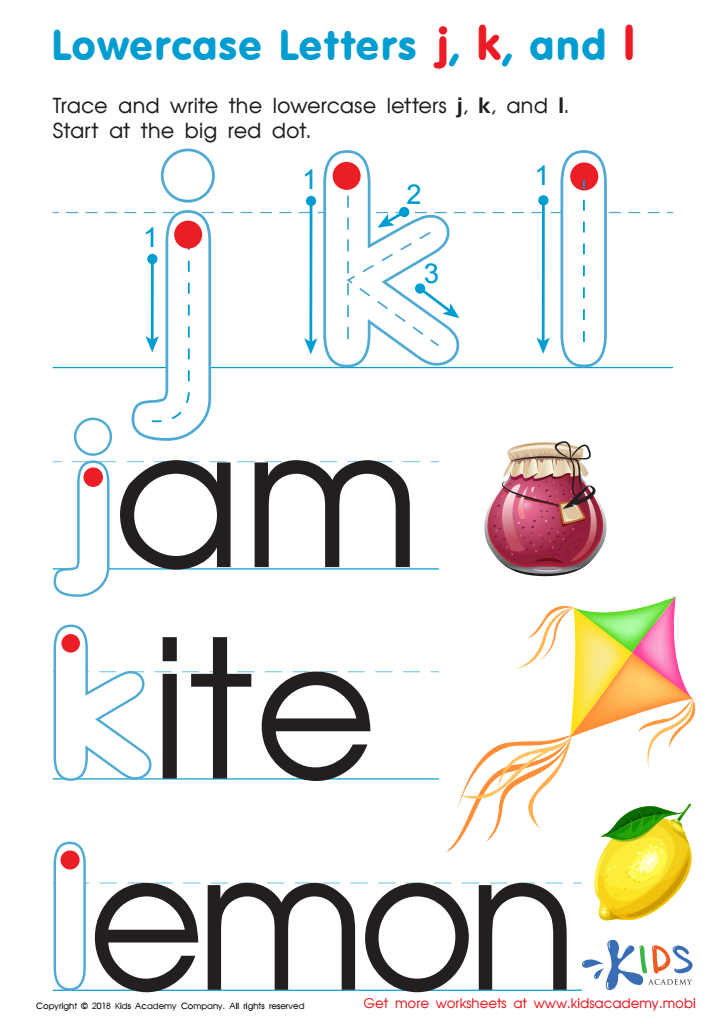
Lowercase Letters j k l Worksheet
Teach your child the difference between uppercase and lowercase letters. Have them trace and write the lowercase letters j, k, and l, starting at the red dot. Guide your child's hand to form the letters correctly.
Lowercase Letters j k l Worksheet
Worksheet
Join Kids Academy for Free
Who is primarily going to use this learning content?








Parents and teachers should prioritize alphabet sequencing and normal letter recognition for children aged 6-7 because these skills are foundational for literacy development. At this critical stage, children are transitioning from recognizable letters as isolated symbols to understanding their sequential order, which is crucial for reading and writing. Mastery of alphabet sequencing aids in phonemic awareness, allowing kids to grasp how letters combine to form sounds and words, thereby facilitating smoother reading experiences.
Effective letter recognition enables children to identify, differentiate, and memorize letters, which enhances their ability to decode words accurately. This foundational skill supports overall reading fluency and comprehension, ensuring children can follow along with texts, understand narratives, and build their vocabulary. Furthermore, a strong grasp of the alphabet fosters confidence and enthusiasm for learning, encouraging a positive attitude towards school and academic pursuits.
From an educational perspective, early proficiency in these areas often predicts future academic success and literacy levels. Without a firm understanding of letter sequencing and recognition, children may struggle with more complex literacy skills later on, impacting their academic performance across subjects. Therefore, parents and teachers promoting and reinforcing these skills provide children with vital tools for their educational journey and lifelong learning.








