
Handwriting improvement Normal Letter Recognition Worksheets for Ages 6-7
3 filtered results
Difficulty Level
Grade
Age
-
From - To
Subject
Activity
Standards
Enhance your child's handwriting skills with our Handwriting Improvement Normal Letter Recognition Worksheets for ages 6-7. These expertly designed resources foster better letter formation, helping young learners to recognize and write letters with ease and accuracy. Packed with engaging activities, these worksheets not only aid in improving handwriting technique but also boost confidence in reading and writing. Ideal for both classroom use and home practice, our worksheets provide a comprehensive and fun way to support your child’s literacy development. Bring the joy of learning to your child with our carefully crafted handwriting improvement worksheets.
Favorites
With answer key
Interactive
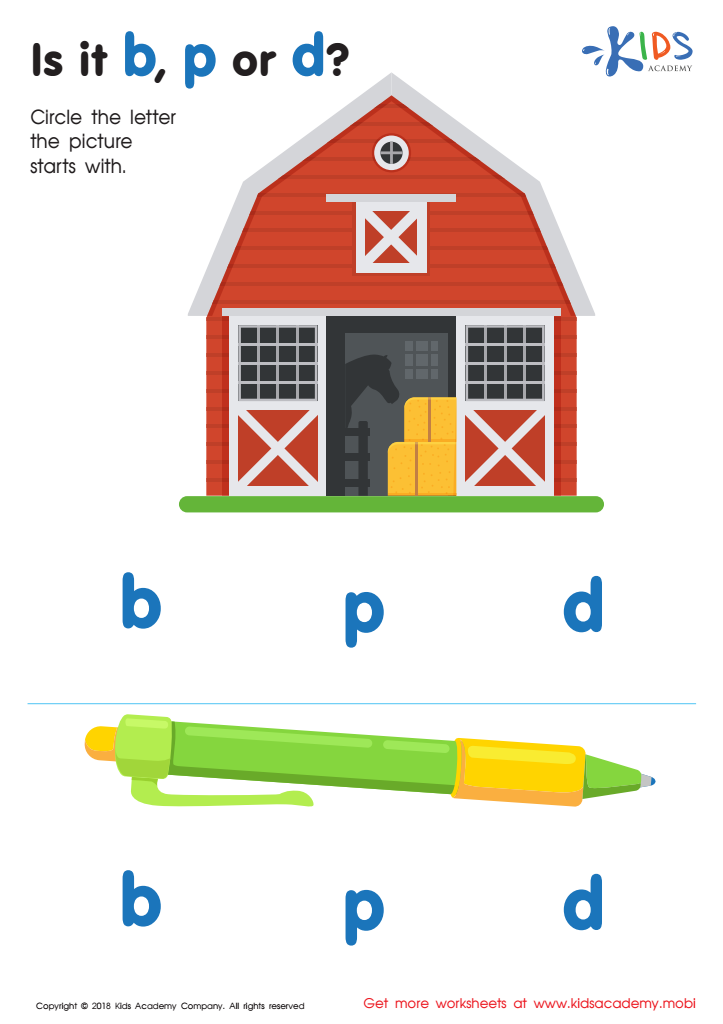
Is it b, p or d? Worksheet
Test your child's identification skills with this worksheet. They must identify the image and then circle the letter it begins with: 'b', 'p', or 'd' (e.g. an image of the sun would mean they circle 's').
 Assign to My Students
Is it b, p or d? Worksheet
Worksheet
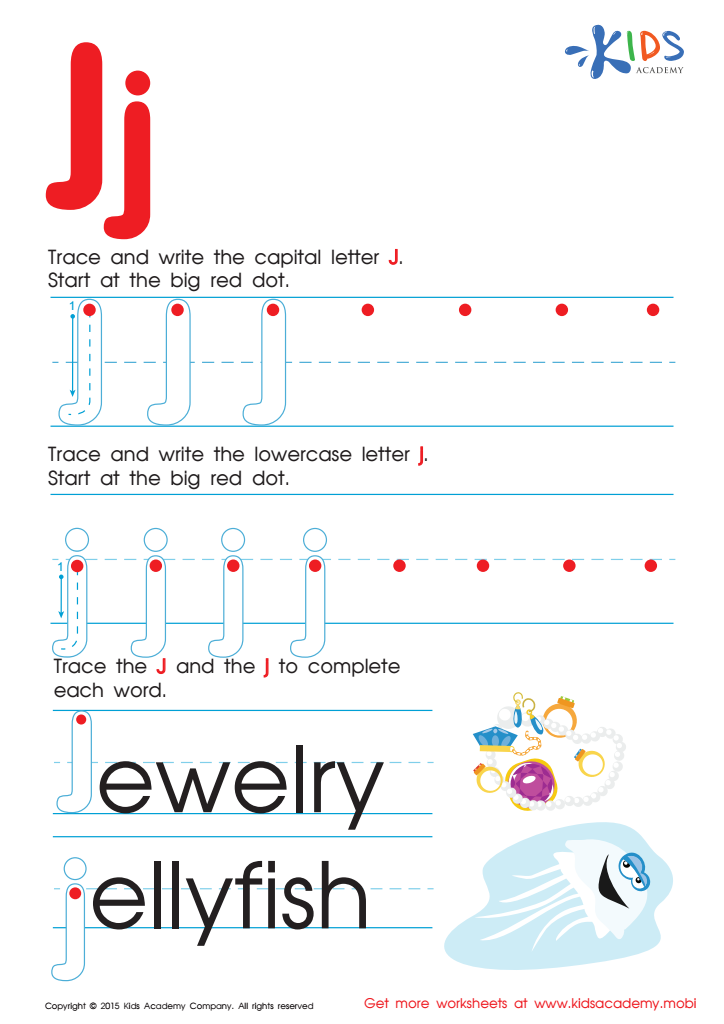
Letter J Tracing Page
Trace and write the letter "J" with our ABC worksheet - start at the big red dot! Have fun completing words like jewelry, jellyfish and more. Check out our kindergarten activities for more alphabet practice.
Letter J Tracing Page
Worksheet
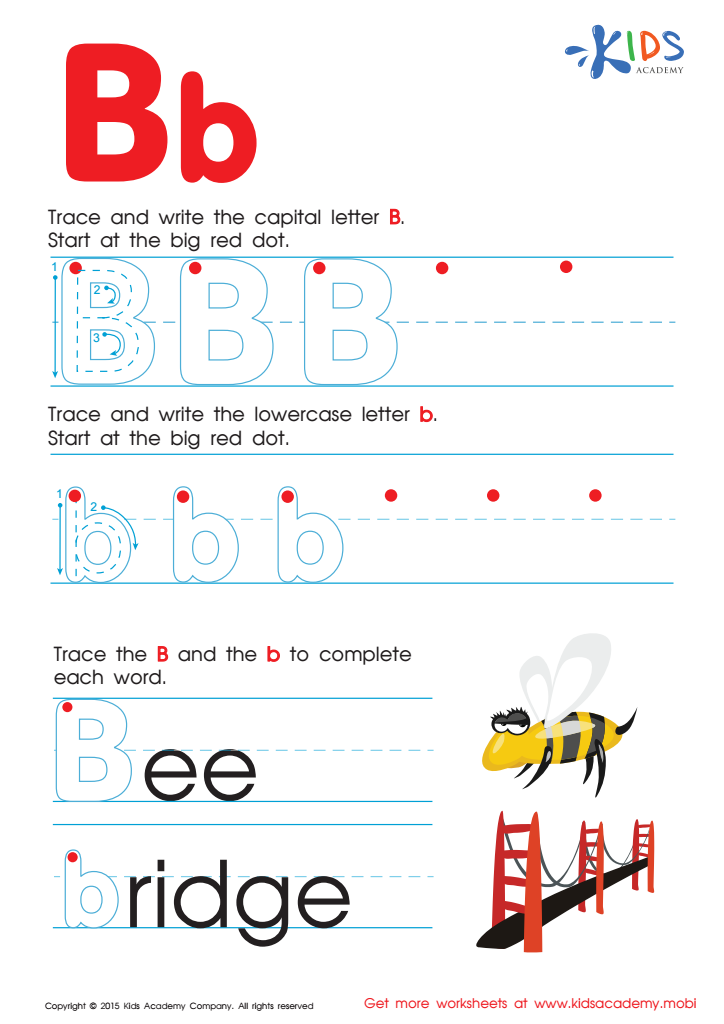
Letter B Tracing Page
Ready to learn the Alphabet? Put your pencil on the red dot and trace & write both capital & lowercase "B". Then have a look at the pictures. Catch the bee, cross the bridge & write the letters to complete the words. More ABC worksheets for kindergarten available!
Letter B Tracing Page
Worksheet
Join Kids Academy for Free
Who is primarily going to use this learning content?








Handwriting improvement and normal letter recognition are crucial for children aged 6-7, as they form the foundation for effective communication and academic success. At this developmental stage, children's fine motor skills are rapidly advancing, making it an optimal time to solidify good handwriting habits. Mastery in handwriting ensures that children can express their thoughts clearly and efficiently. This legibility is vital not only for their written assignments but also for enabling teachers and parents to understand their learning needs accurately.
Moreover, improving handwriting skills enhances children's ability to recognize letters, which directly impacts their reading capabilities. Early proficiency in recognizing and forming letters correctly supports advanced literacy skills, such as spelling and reading comprehension. It also boosts children’s confidence; neat handwriting allows them to feel proud of their work, fostering a positive attitude towards learning.
Poor handwriting can lead to frustration, decreased motivation, and a dislike for written tasks. Thus, parents and teachers should prioritize handwriting improvement to prevent these negative outcomes. Investing time and effort in enhancing these skills early on prepares children for more complex academic tasks, cultivates their intellectual growth, and contributes to their overall cognitive development.








