Lowercase letter writing Normal Letter Recognition Worksheets for Ages 6-7
3 filtered results
-
From - To
Discover our comprehensive "Lowercase Letter Writing Normal Letter Recognition Worksheets for Ages 6-7." These expertly designed worksheets enhance young learners' letter recognition skills while making writing fun and engaging. Ideal for children aged 6-7, this collection includes colorful and interactive exercises that foster correct letter formation, hand-eye coordination, and literacy fundamentals. Each worksheet combines enjoyable activities with practice drills to ensure students master lowercase letters confidently. Support your child's educational journey by downloading these effective resources today, and watch as their writing and reading abilities flourish. Trusted by educators, our worksheets build strong foundations for lifelong learning.
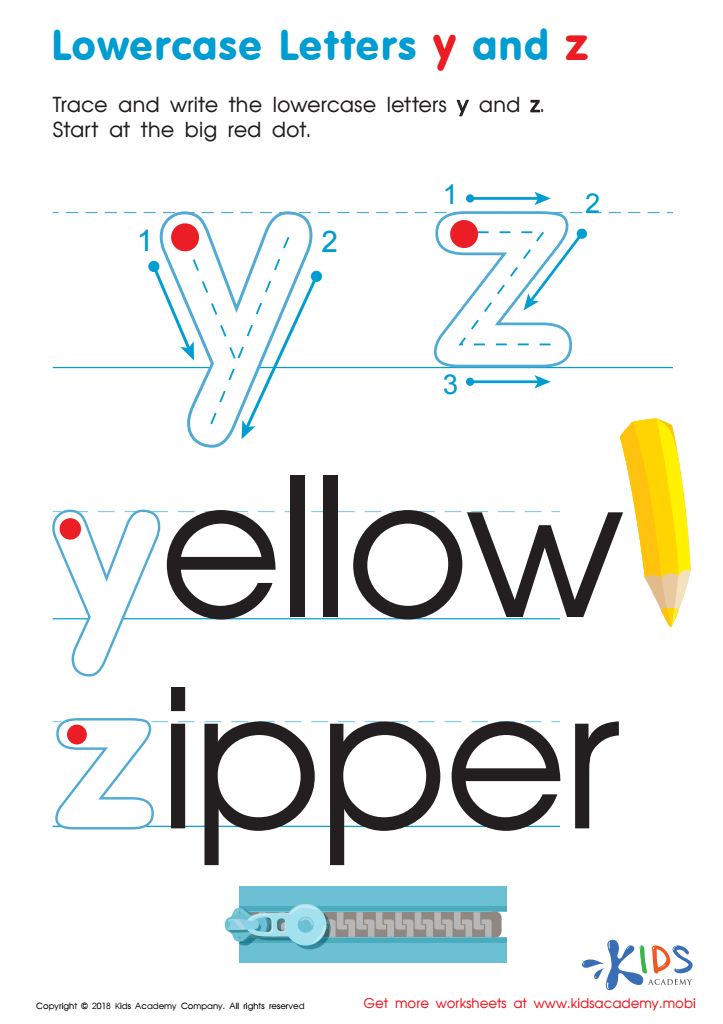
Lowercase Letters y z Worksheet
 Assign to My Students
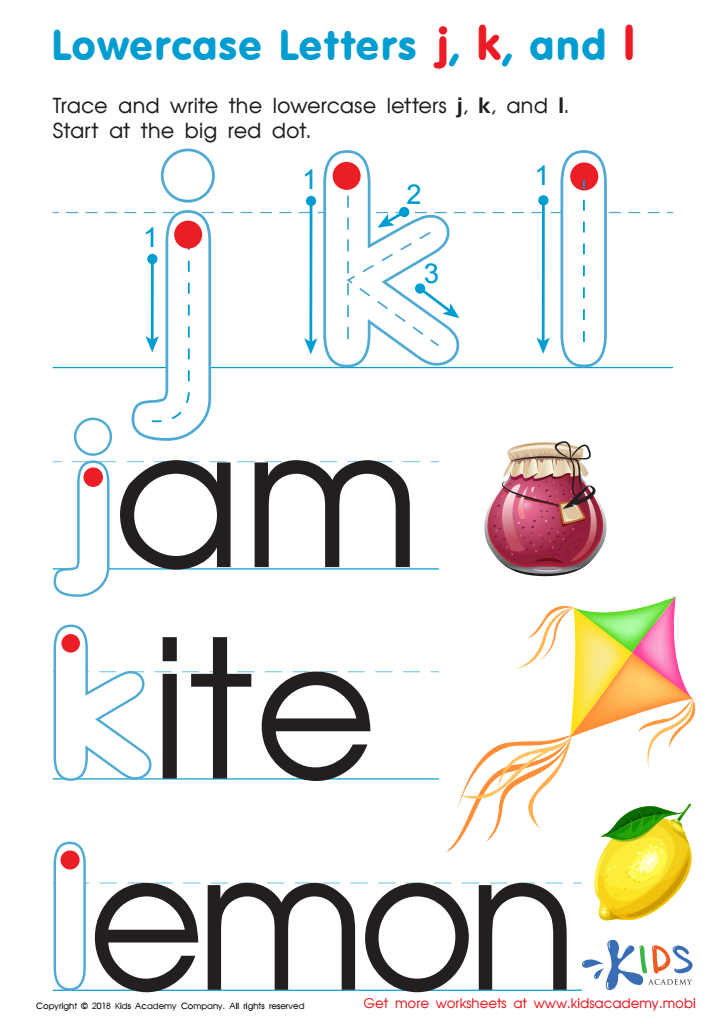
Lowercase Letters j k l Worksheet
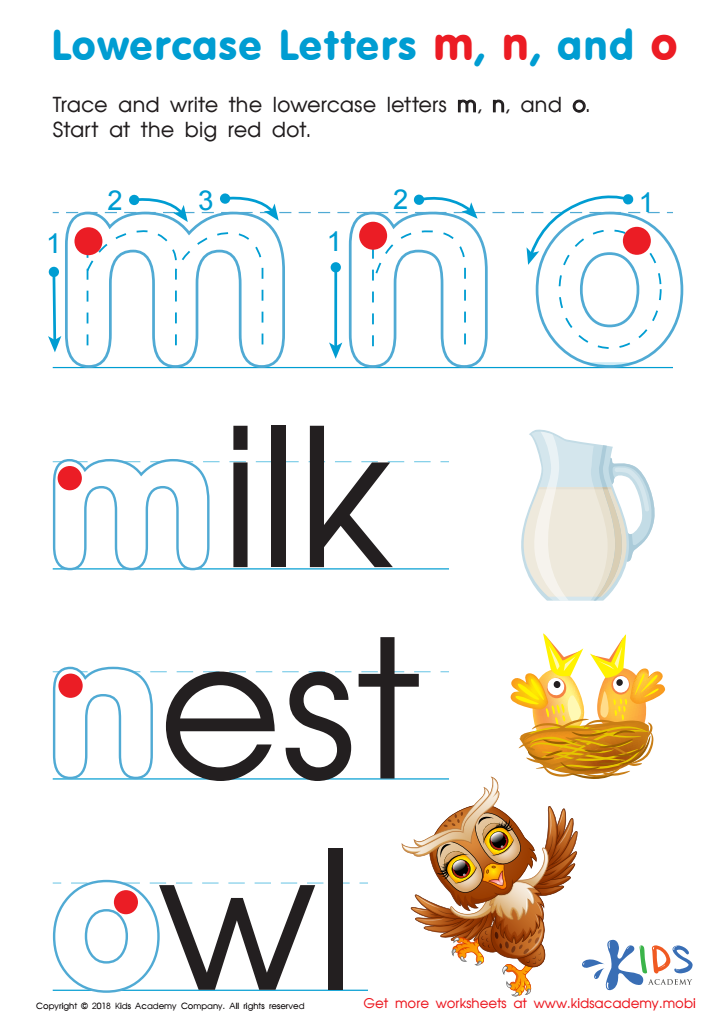
Lowercase Letters m n o Worksheet








Parents and teachers should recognize the importance of lowercase letter writing and normal letter recognition in children aged 6-7 for several reasons. At this developmental stage, children's reading and writing skills are rapidly evolving, and fluency in recognizing and penning lowercase letters can significantly impact their literacy journey.
First and foremost, most text in children's books, as well as in everyday reading materials, is in lowercase letters. Proficiency in recognizing and writing these letters helps children transition smoothly from learning letters to reading words, sentences, and eventually, entire books independently. This creates a strong foundation for their reading skills, promoting better comprehension and a love for reading.
Moreover, correctly writing and identifying lowercase letters fosters better handwriting. Consistent and legible writing is crucial as it supports clear communication and boosts the child's confidence in their abilities. It also aids in spelling accuracy and improved focus during writing tasks. Mastering these foundational skills at an early age paves the way for academic success in various subjects beyond literacy, including mathematics where clear number and letter formation matter.
Finally, these skills also help in enhancing fine motor development and visual differentiation, key components in overall intellectual and physical development. Hence, ensuring children are proficient in lowercase letter writing and recognition is a vital educational goal for any early grade teacher or parent.








