Motor skills development Normal Letter Recognition Worksheets for Ages 6-7
3 filtered results
-
From - To
Enhance your child's motor skills and early reading abilities with our "Normal Letter Recognition Worksheets for Ages 6-7." Designed to foster fine motor skills, these engaging activities help children recognize and differentiate between letters. Each worksheet provides an interactive and enjoyable path to mastering handwriting, pencil control, and letter formation. As kids trace, draw, and match letters, they’ll build the coordination and confidence essential for academic success. Perfect for home or classroom use, our worksheets offer a comprehensive approach to early literacy and development, empowering young learners to excel in their educational journey. Discover more at Kids Academy.

Letter H Tracing Page
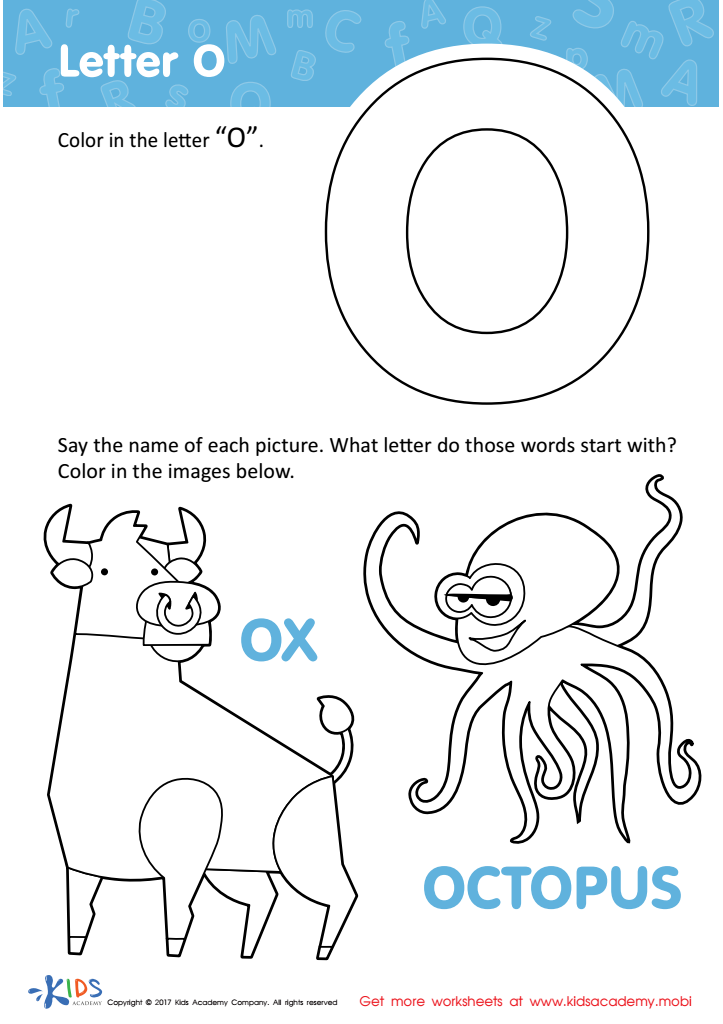
Letter O Coloring Sheet
 Assign to My Students
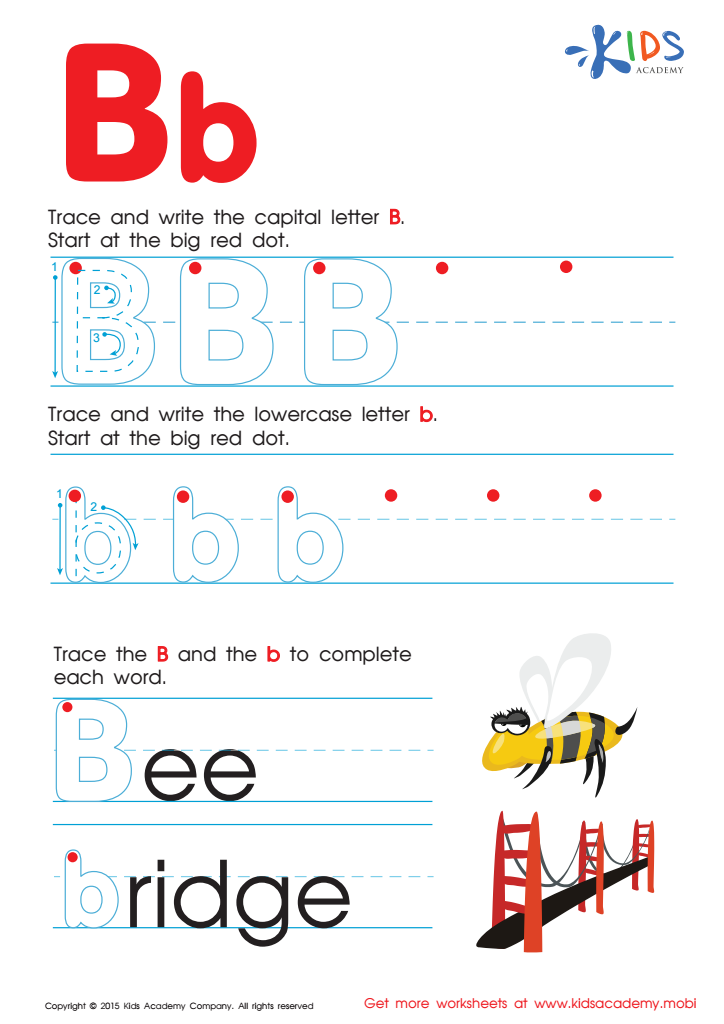
Letter B Tracing Page








Parents and teachers should give significant attention to motor skills development and normal letter recognition in children aged 6-7 as these skills are foundational for academic success and overall well-being. Motor skills, which include both fine motor skills like drawing or writing and gross motor skills like running or jumping, are crucial for daily activities and effective communication. Proper development in these areas ensures children can physically interact with their world, which is essential for learning and social interaction.
Normal letter recognition is vital at this stage because it lays the groundwork for reading and writing, two fundamental skills in education. At ages 6-7, children are transitioning from recognizing letters to decoding words and forming sentences. Proficiency in letter recognition paves the way for strong literacy skills, fostering a love for reading, improving comprehension, and facilitating clear writing. These abilities are instrumental in virtually all subjects, from mathematics to science, and are linked to better academic outcomes.
Supporting children in developing motor skills and letter recognition helps avoid frustrations and learning delays that can impact their confidence and engagement in school. By nurturing these skills, parents and teachers help create a solid foundation for lifelong learning and personal development, enabling children to thrive in various environments.








