Vowel Recognition Normal Letter Recognition Worksheets for Ages 6-7
4 filtered results
-
From - To
Introduce young learners to the fundamentals of reading with our Vowel Recognition Normal Letter Recognition Worksheets for Ages 6-7. Designed to build strong phonics and literacy skills, our worksheets engage children in fun and educational activities that help them identify vowels within words, discern between different letters, and improve overall letter recognition. Tailored to the developmental needs, they make learning enjoyable while laying a solid foundation for future reading success. Perfect for classroom use or homeschooling, these worksheets provide endless opportunities for practice, ensuring students remain challenged and motivated. Discover the benefits at Kids Academy today!
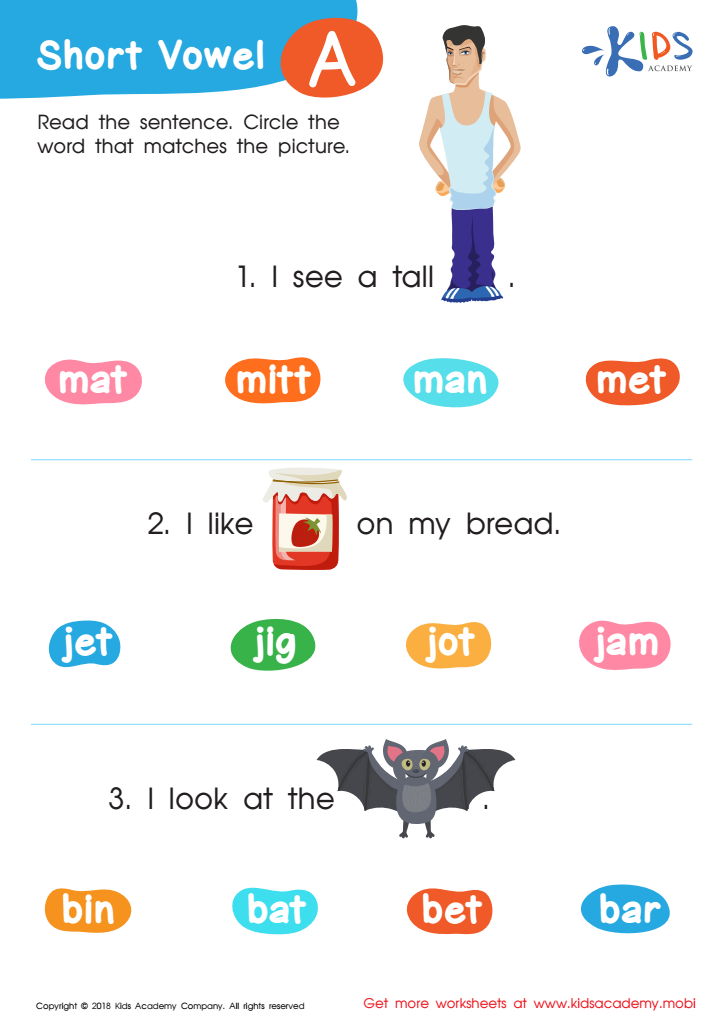
Short Vowel /a/ Worksheet
 Assign to My Students
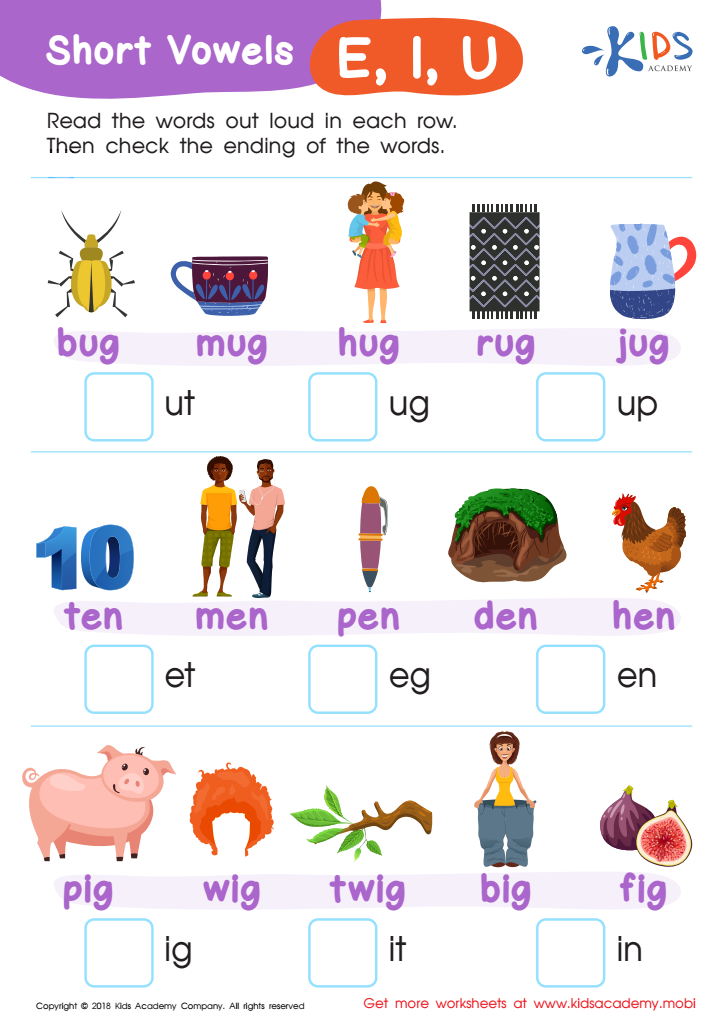
Short Vowels /e/, /i/, and /u/ Worksheet
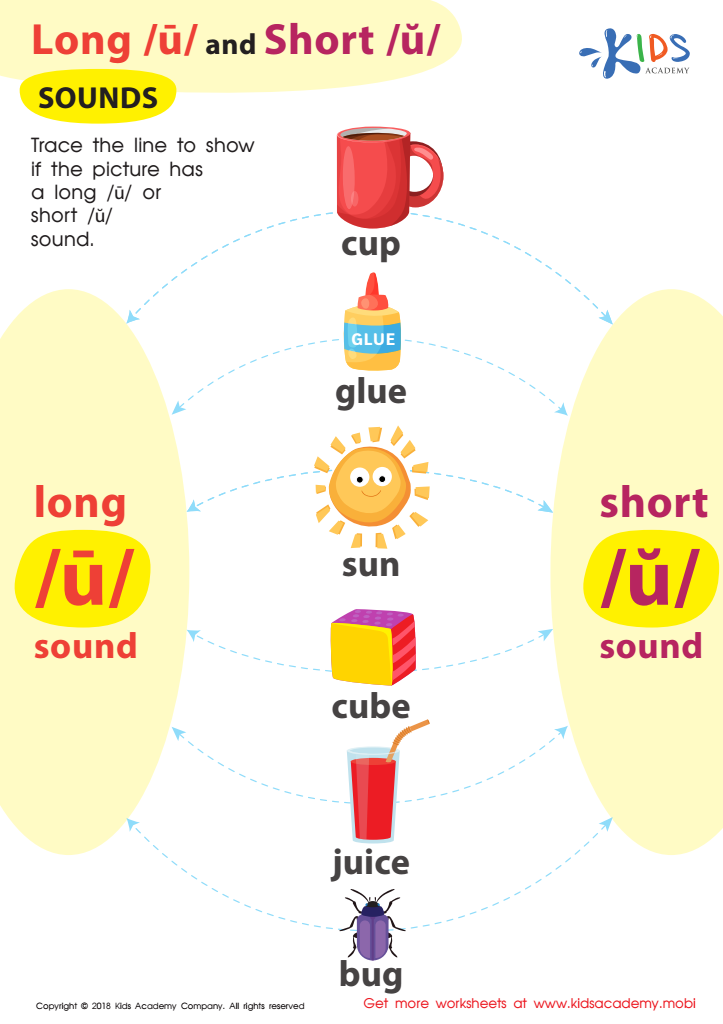
Reading: Long U and Short U Sounds Worksheet
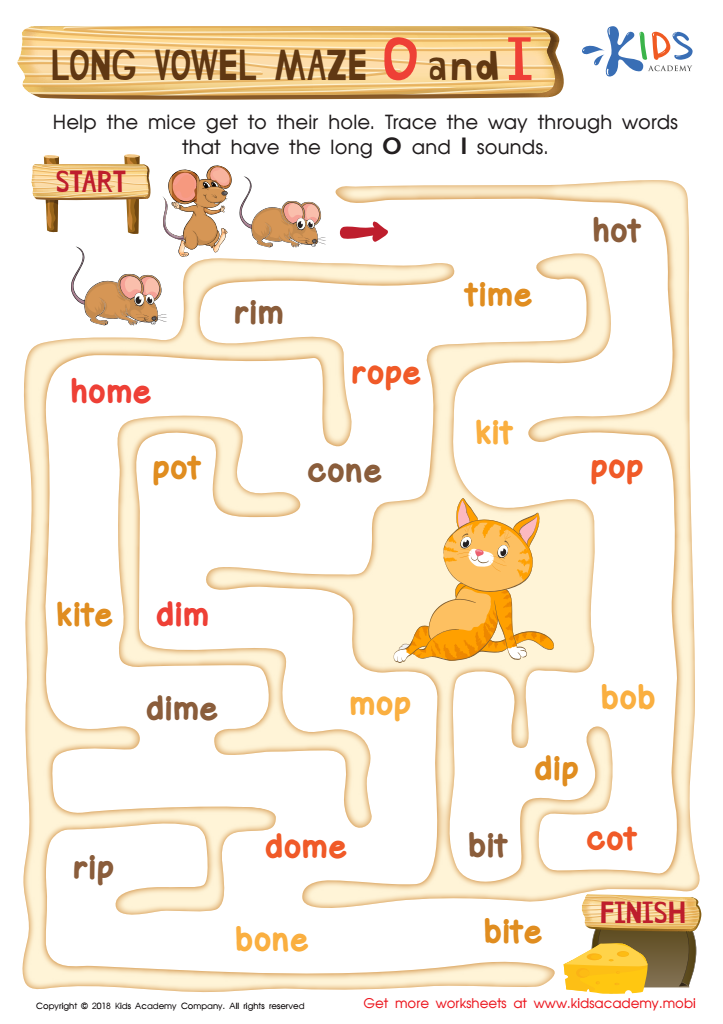
Long Vowel Maze /o/ and /i/ Worksheet








Vowel recognition and normal letter recognition are fundamental skills for children aged 6-7, crucial for their early reading and writing development. At this age, children are typically in kindergarten or first grade, where they're just beginning to learn the foundations of literacy.
Vowel recognition, specifically, plays a critical role because vowels are the building blocks of syllables and words. Understanding vowels helps children decode various vowel sounds in different words, allowing them to enhance their pronunciation and reading fluency. Without a secure grasp of vowel sounds, children may struggle with reading speed and accuracy, affecting their overall comprehension.
Normal letter recognition, on the other hand, ensures that children can correctly identify and differentiate between all 26 letters of the alphabet. This is essential for word formation, spelling, and writing. Recognizing letters effortlessly is a prerequisite for automaticity in reading, where children can read without having to pause and think about each letter.
Parents and teachers should prioritize these skills because early literacy experiences are predictive of future academic success. By ensuring that children are proficient in vowel and normal letter recognition, parents, and teachers set the stage for a lifelong love of reading and learning. Boosting these skills paves the way for effective communication, critical thinking, and overall cognitive development.








