Phonics recognition Normal Letter Sounds Worksheets for Ages 6-7
3 filtered results
-
From - To
Enhance your child’s reading foundation with our Phonics Recognition Normal Letter Sounds Worksheets designed for ages 6-7. These engaging, printable worksheets from Kids Academy focus on helping young learners master the sounds of each letter, a crucial skill for reading development. Our worksheets blend fun activities, such as identifying and pairing letters with their sounds, to ensure learning is enjoyable and effective. Perfect for classroom use or homeschooling, these resources are tailored to build confidence in phonics through interactive, hands-on practice. Empower your child to become a fluent reader with our expertly crafted phonics worksheets.
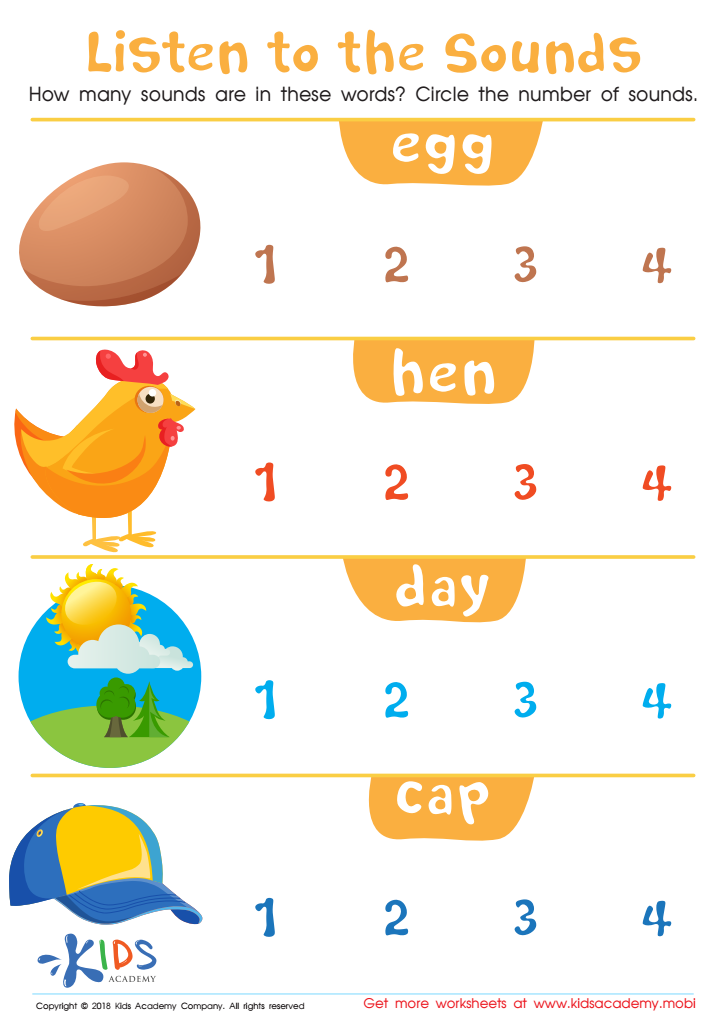
Listen to the Sounds Worksheet
 Assign to My Students
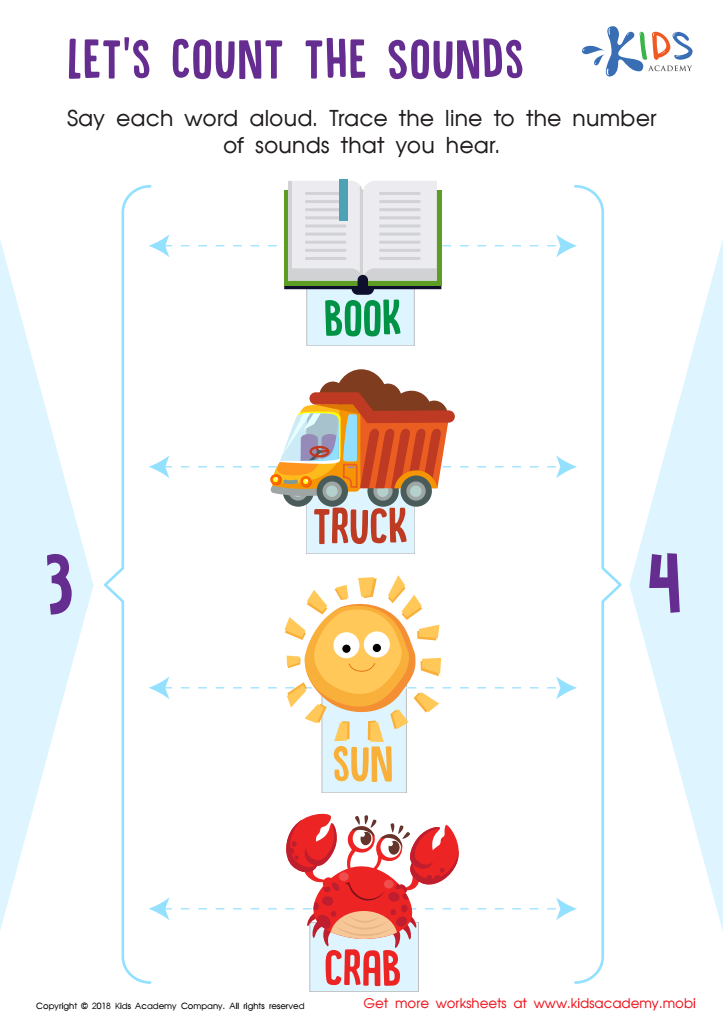
Let's Count the Sounds Worksheet
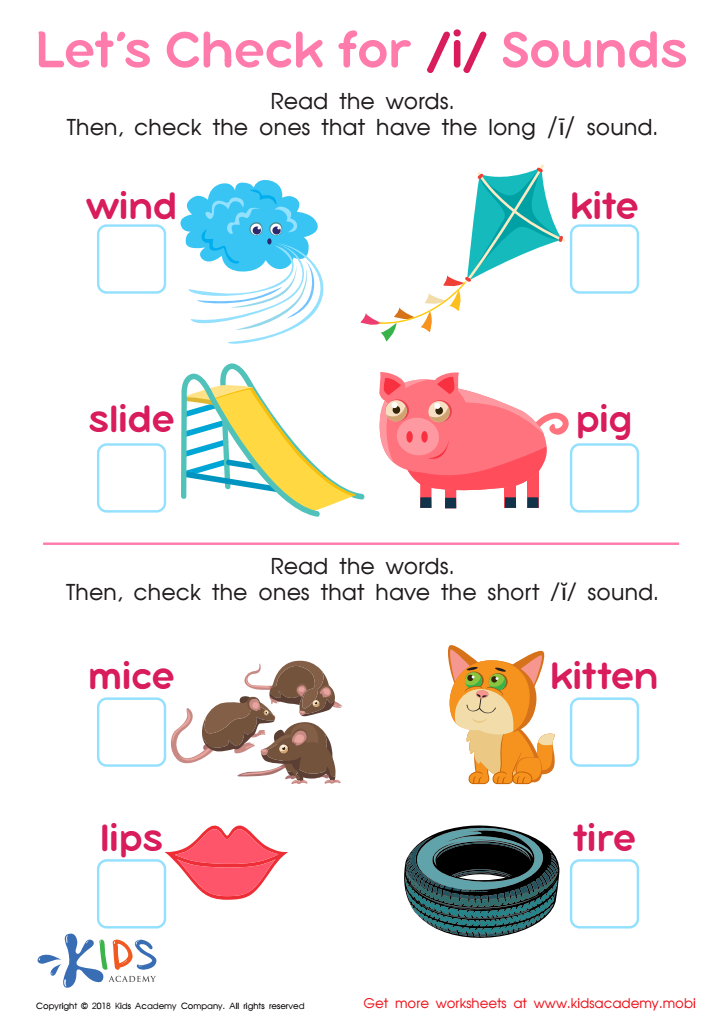
Let's Check for «i» Sounds Worksheet








Phonics recognition and normal letter sounds form the backbone of early literacy, making them crucial for children aged 6-7. At this foundational stage, these skills are essential for developing strong reading abilities and overall language competence.
Phonics teaches children the relationship between sounds (phonemes) and their corresponding letters or groups of letters (graphemes). When children understand these relationships, they can decode words efficiently, leading to improved reading accuracy and fluency. This capability is critical for reading comprehension, as fluid reading allows the brain to focus on understanding the narrative rather than struggling with word recognition.
Moreover, phonics provides children with critical skills for spelling and writing. Recognizing common letter-sound patterns helps them spell words correctly and boosts confidence in their writing abilities. This is especially important in early grades, where the fear of mistakes can impede participation and learning.
Engaging with phonics also stimulates cognitive development by enhancing memory, attention, and auditory processing. These skills contribute to better academic performance in other subjects and foster a lifelong love for reading.
Parents and teachers play a pivotal role in enforcing phonics through consistent practice, support, and positive reinforcement. Focusing on phonics during these formative years establishes a solid foundation for future educational success, making it a priority for young learners’ growth and development.






