Vocabulary expansion Normal Two Letter Phonics Worksheets for Ages 6-7
5 filtered results
-
From - To
Expand your child's vocabulary with our engaging Normal Two Letter Phonics Worksheets, designed for ages 6-7. These worksheets focus on enriching your little learner’s phonics skills by practicing common two-letter combinations. Each activity promotes reading fluency, word recognition, and helps children make connections between sounds and letters. Your child will master key phonetic concepts, boosting their confidence in reading and writing. The creative and age-appropriate exercises make learning enjoyable, ensuring steady progress in vocabulary expansion. Perfect for at-home practice or classroom use, these worksheets support your child's journey toward linguistic excellence. Visit our site to access these fantastic resources!
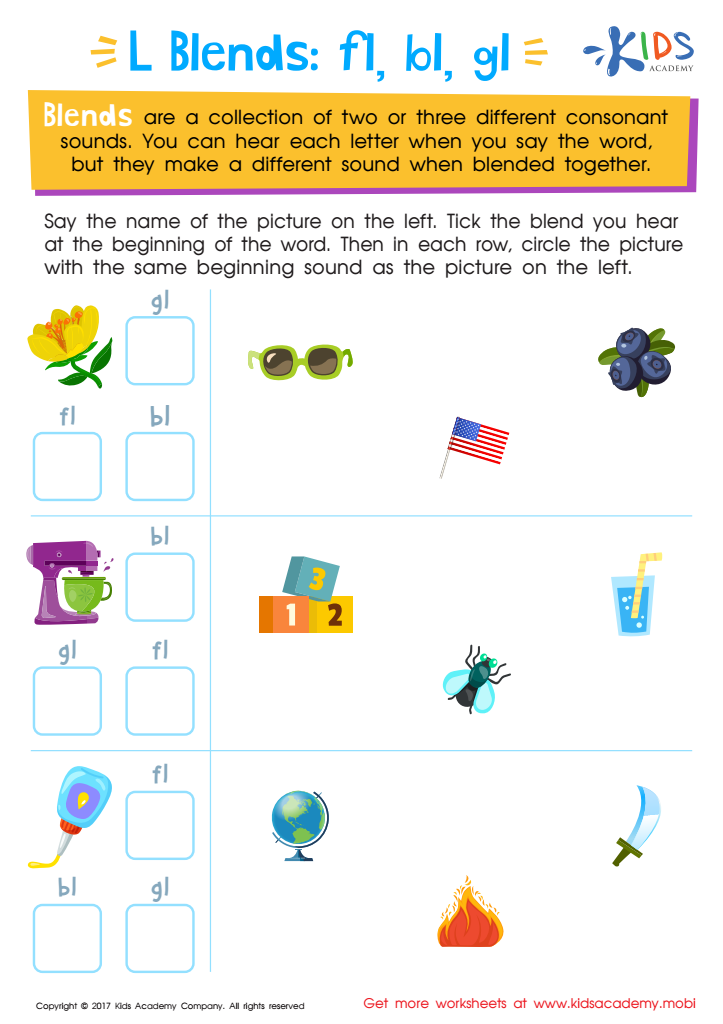
Blending Consonants: "Fl", "Bl" and "Gl" Printable
 Assign to My Students
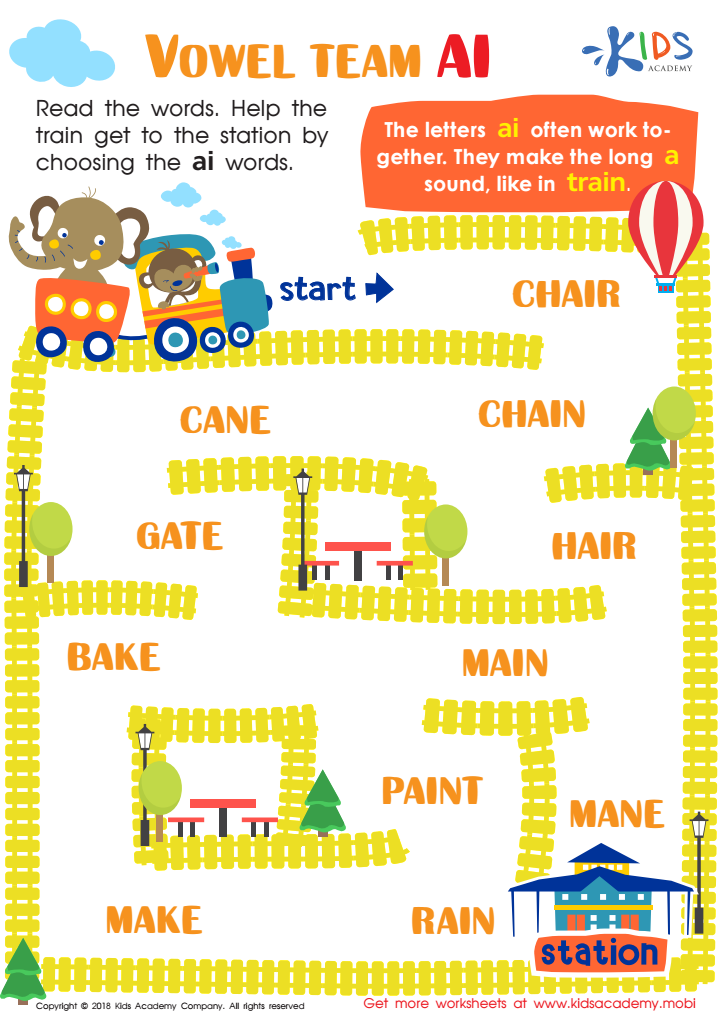
Vowel team ai Worksheet
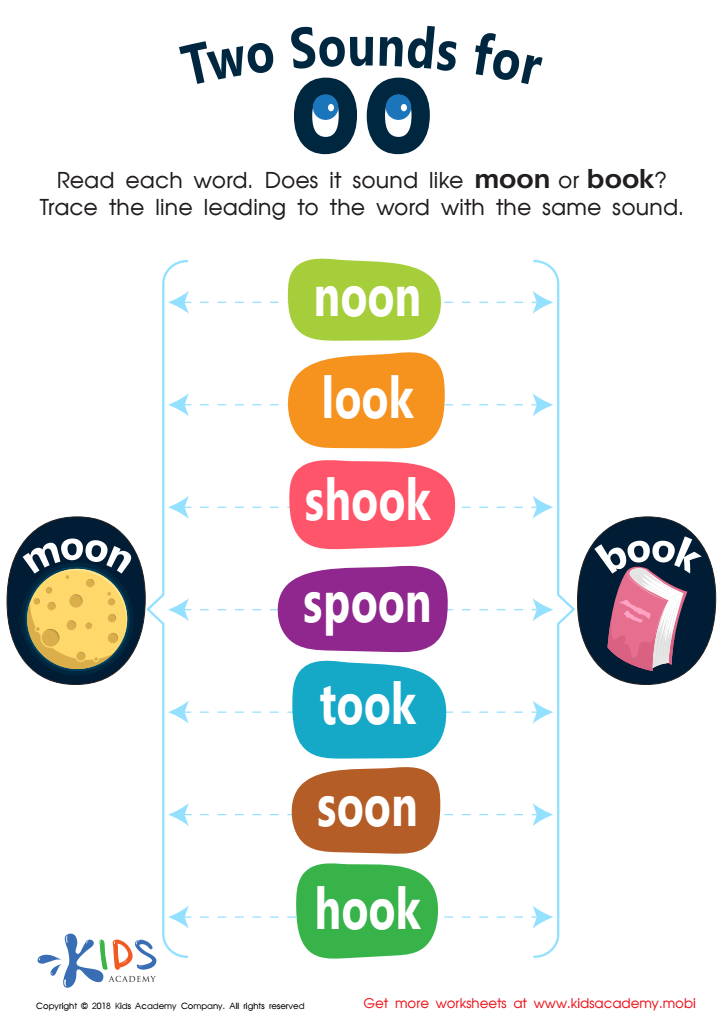
Two Sounds for OO Worksheet
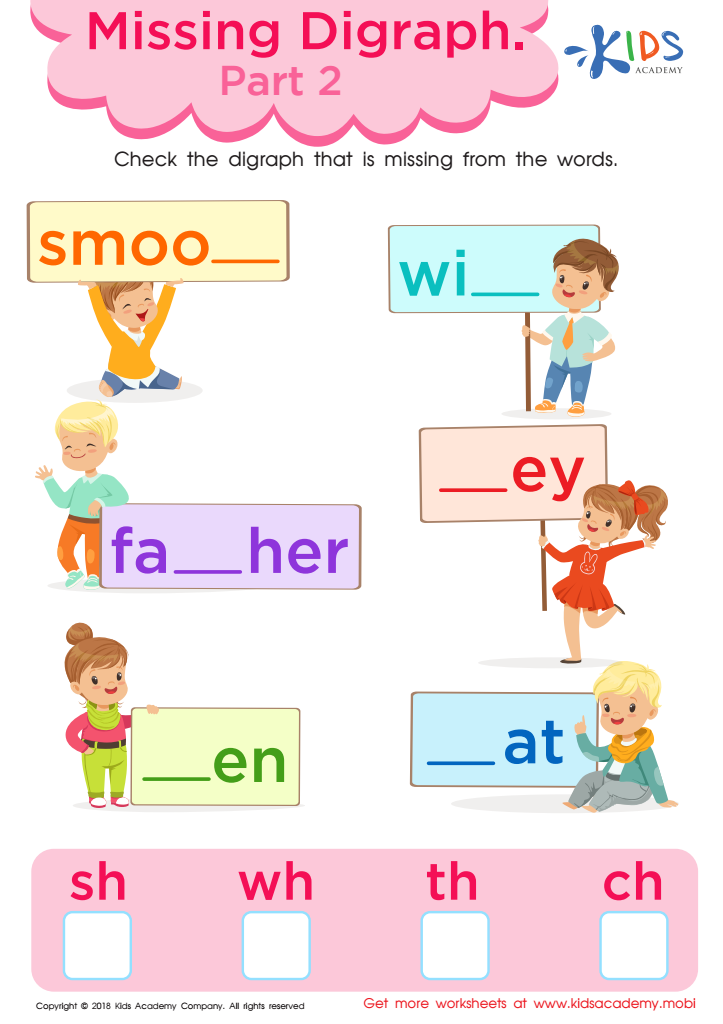
Missing Digraph: Part 2 Worksheet
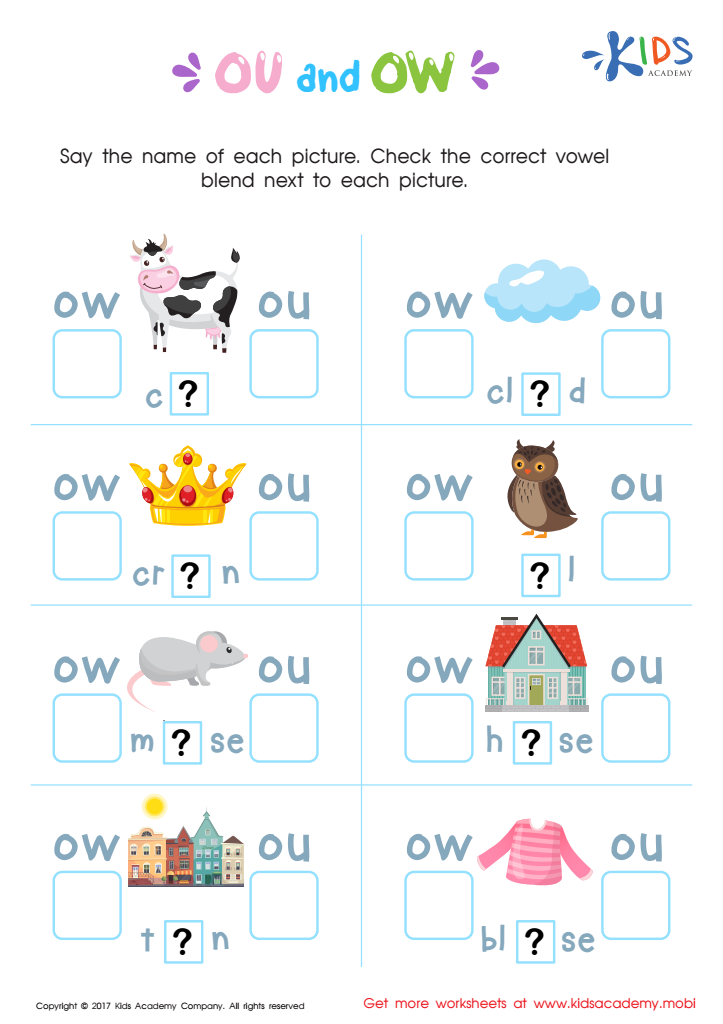
OU and OW Words Worksheet



As children transition from early childhood to the early grade school years, expanding their vocabulary becomes crucial for several fundamental reasons. At ages 6-7, young learners are not just practicing basic skills but are also setting the groundwork for more complex language abilities. One foundational element is two-letter phonics, which includes combinations such as "at,” “in,” and “on.” Mastering these building blocks can significantly boost a child's reading fluency and comprehension.
Firstly, a robust vocabulary enables children to express their thoughts and emotions more accurately. Effective communication is vital for developing social skills and building strong relationships. Secondly, it aids in enhancing reading skills. Understanding two-letter phonics helps children decode words more efficiently, improving their ability to read smoothly and understand texts better. This is essential for academic success across all subjects.
Moreover, early vocabulary expansion supports cognitive development. It encourages critical thinking, problem-solving, and analytic skills, as children start to make connections between words, contexts, and meanings.
Lastly, nurturing vocabulary at this stage sets the foundation for lifelong learning. Children who enter school with a rich vocabulary tend to excel academically and are better equipped to tackle challenging texts and new learning opportunities.
Therefore, integrating normal two-letter phonics into early literacy activities can dramatically uplift a child's learning trajectory, fostering both academic and personal growth.






