Alphabet understanding Normal Upper & Lowercase Letters Worksheets for Ages 6-7
3 filtered results
-
From - To
Enhance your child's alphabet mastery with our Alphabet Understanding Normal Upper & Lowercase Letters Worksheets for ages 6-7. Tailored specifically for early learners, these engaging activities help kids differentiate and practice writing both uppercase and lowercase letters. Each worksheet is designed to reinforce letter recognition, build handwriting skills, and strengthen phonetic awareness in a fun and interactive manner. Perfect for kindergartners and first graders, these printables provide the foundational tools needed for reading and writing success. Give your child the confidence to excel in their literacy journey with our expert-designed alphabet worksheets. Download now and start learning!
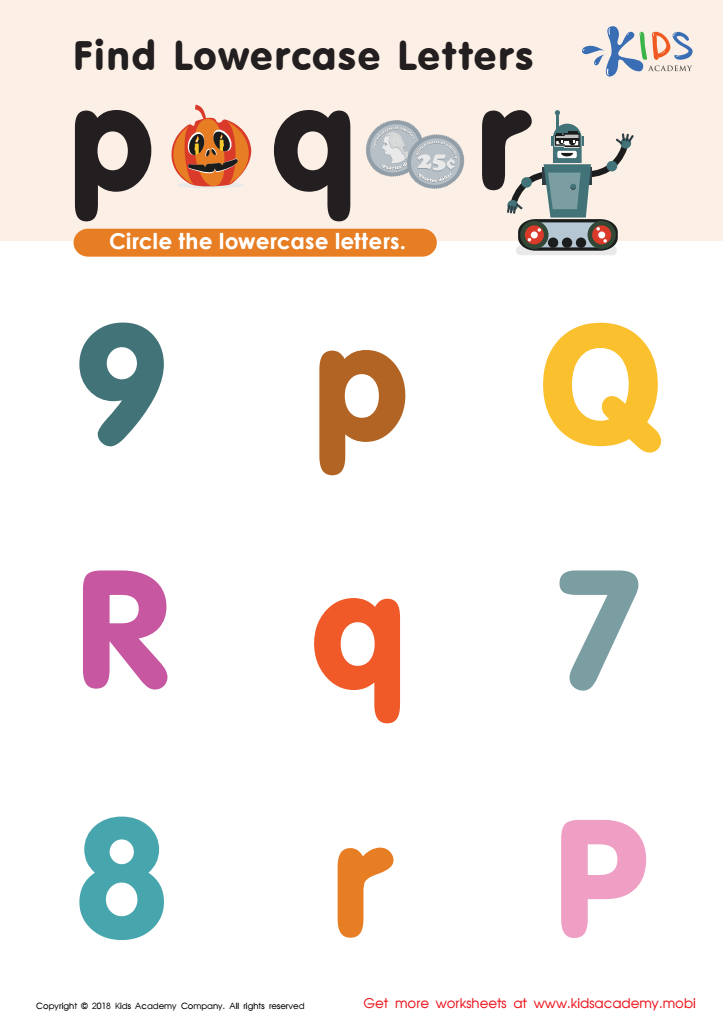
Find lowercase Letters p q r Worksheet
 Assign to My Students

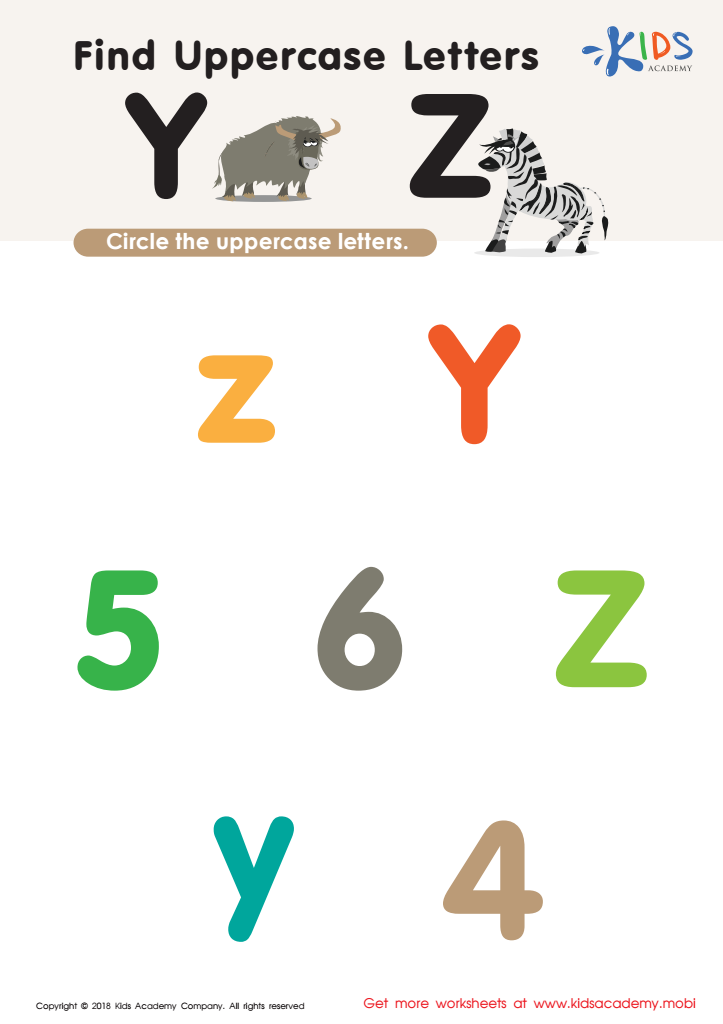
Find Uppercase Letters Y Z Worksheet
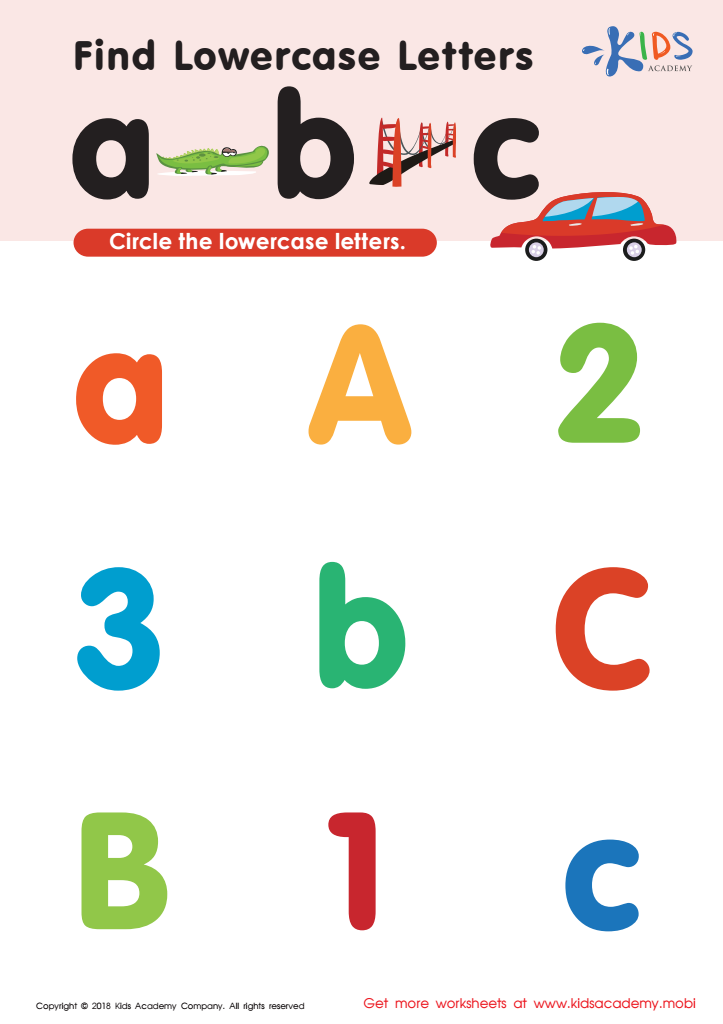
Find lowercase letters a b c Worksheet






Understanding both uppercase and lowercase letters forms the cornerstone of young children's literacy development. For 6- and 7-year-olds, a firm grasp of the alphabet in its different forms (uppercase and lowercase) is crucial for several reasons. Firstly, it enhances reading skills. Most of the text they will encounter in books, worksheets, and other educational materials is written in lowercase letters. Familiarity with the alphabet in both cases allows children to recognize words quickly, aiding in fluent reading.
Secondly, it bolsters writing proficiency. Knowing how uppercase and lowercase letters are formed and used helps children write legibly and correctly. This foundational skill is essential for completing school assignments, communicating effectively, and expressing ideas coherently.
Thirdly, understanding the varied forms of letters improves cognitive development. It fosters better visual discrimination skills as children learn to notice and differentiate letter shapes. This skill translates into improved attention to detail, not just in reading and writing, but across other academic areas.
Finally, mastering the concept of uppercase and lowercase letters boost children’s confidence. As young learners become proficient readers and writers, their self-esteem grows, setting a positive trajectory for their future academic endeavors. Therefore, educators and parents must ensure children attain this fundamental literacy milestone.







