Letter Tracing Practice Normal Upper & Lowercase Letters Worksheets for Ages 6-7
3 filtered results
-
From - To
Welcome to our engaging Letter Tracing Practice worksheets designed for children ages 6-7! These worksheets provide an effective and fun way for young learners to master both uppercase and lowercase letters. With brightly colored illustrations and appealing layouts, your child will practice essential handwriting skills while enhancing their letter recognition. Our user-friendly format encourages independent learning, making it ideal for home or classroom use.
Whether your child is just starting to learn letters or refining their writing skills, these tracing worksheets are an excellent tool for building confidence and proficiency. Start their educational journey today and watch their writing flourish!
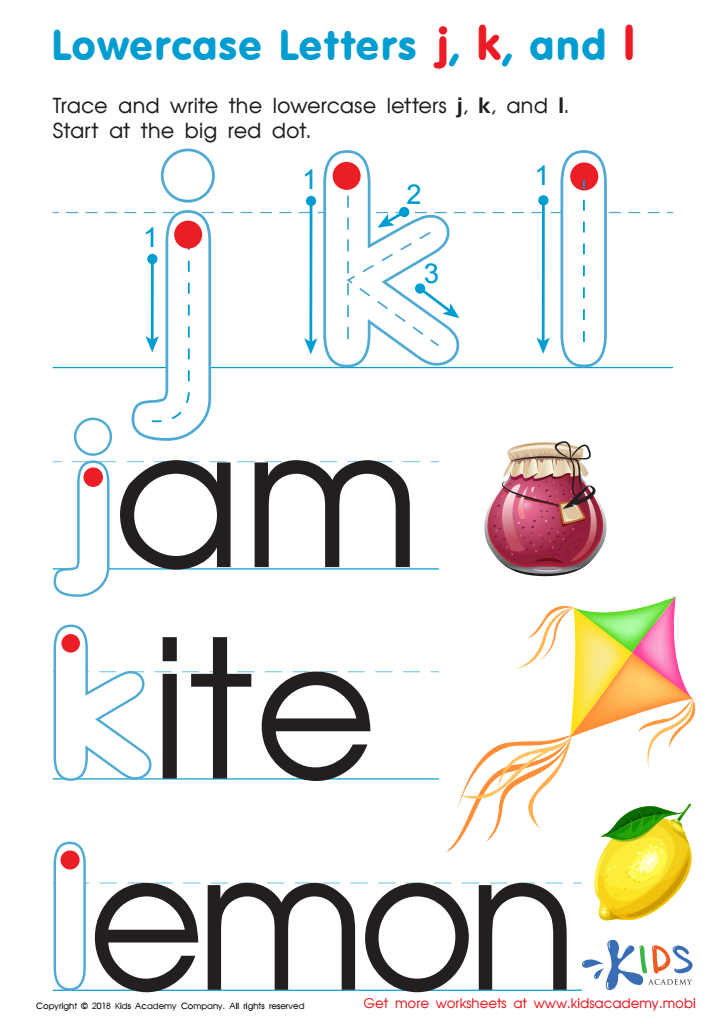
Lowercase Letters j k l Worksheet
 Assign to My Students





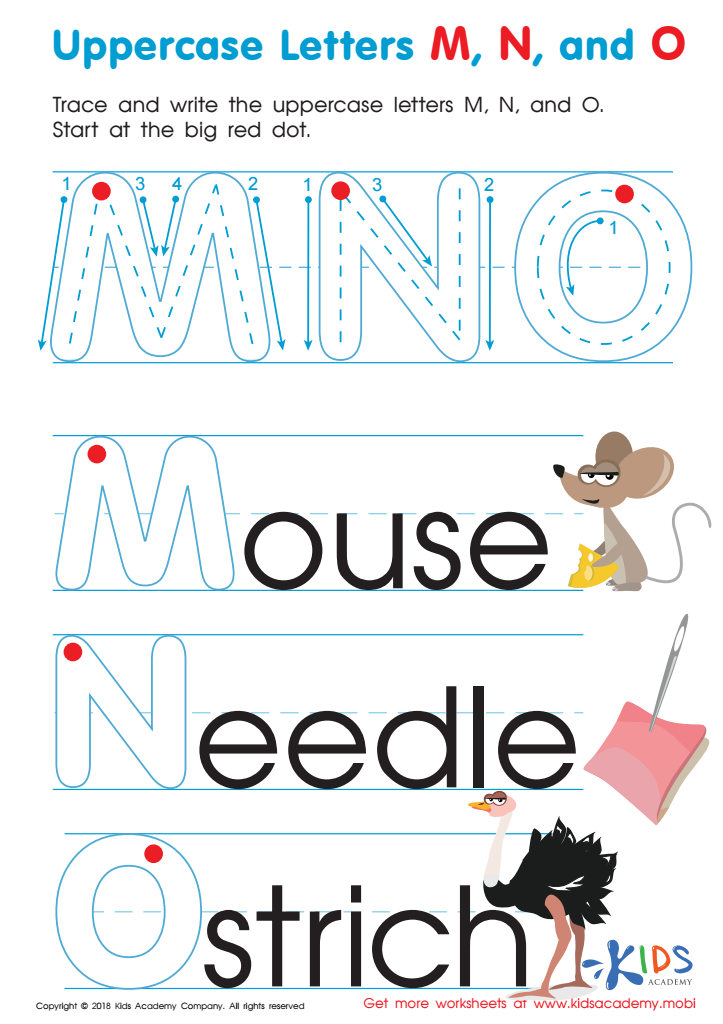
Uppercase Letters M, N, and O Worksheet
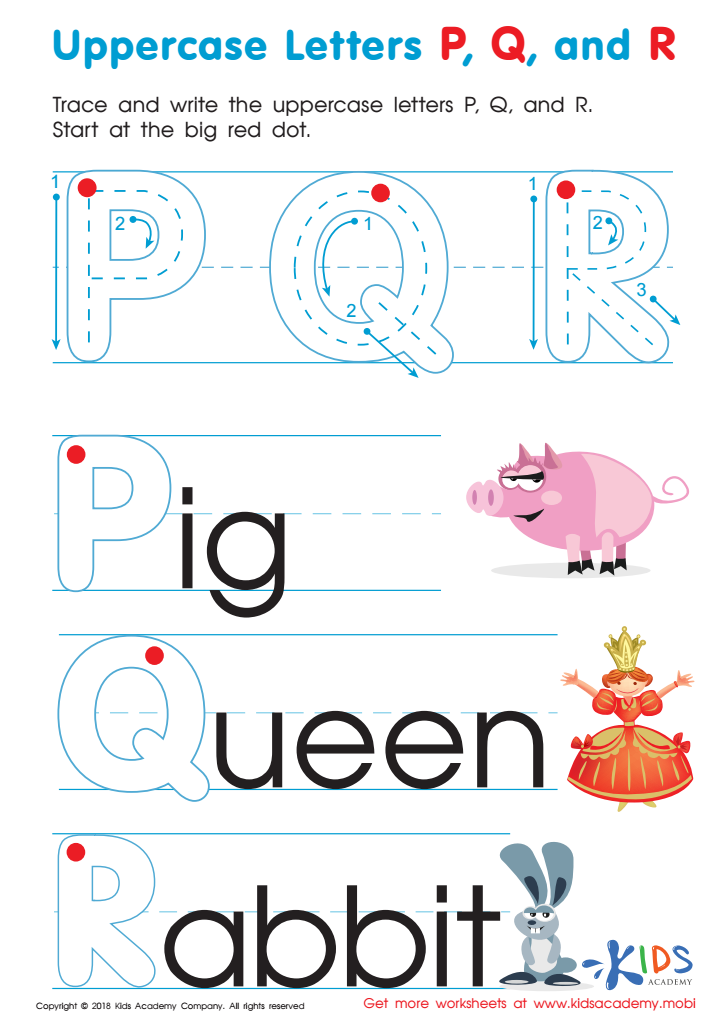
Uppercase Letters P, Q, and R Worksheet






Letter tracing practice is an essential component of early literacy development for children aged 6-7. At this age, children are transitioning from recognizing letters to writing them. This practice helps solidify their understanding of both uppercase and lowercase letters, which is critical for reading and writing proficiency.
Firstly, tracing strengthens fine motor skills as children learn to control a writing instrument, enhancing their hand-eye coordination. This physical development is crucial, as it lays a foundation for more complex writing tasks in the future. Secondly, letter tracing promotes cognitive processing, reinforcing letter shapes and encouraging memory retention. When children trace letters, they engage with their sensory skills, reinforcing their knowledge of the alphabet through tactile experiences.
Additionally, mastering letter formation contributes to the development of a child's confidence in their writing abilities. As they progress, they become more comfortable expressing thoughts through writing, which plays a vital role in their overall literacy journey. Teachers and parents should care about this practice because it not only impacts academic success but also fosters a positive attitude toward learning. Encouraging consistent letter tracing during these formative years will set a strong foundation for lifelong literacy skills, essential for effective communication and overall learning.







