Uppercase identification Normal Upper & Lowercase Letters Worksheets for Ages 6-7
5 filtered results
-
From - To
Enhance your child's understanding of uppercase letters with our engaging Uppercase Identification Worksheets, designed specifically for ages 6-7. These resources provide a fun and interactive way for young learners to identify normal uppercase and lowercase letters. Our carefully crafted worksheets promote letter recognition, aiding in the development of essential reading and writing skills. Perfect for classroom or home use, these worksheets feature vibrant illustrations and interactive activities that motivate your child to learn while enjoying the process. Foster a love for letters and lay a strong foundation for their literacy journey with our captivating uppercase identification worksheets today!
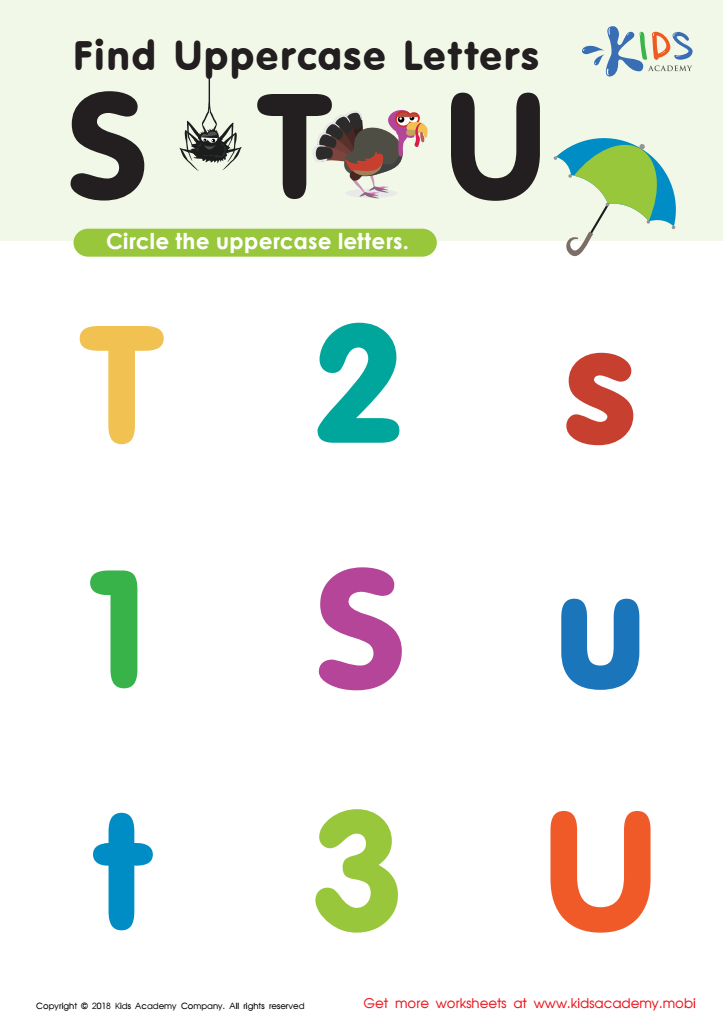
Find Uppercase Letters Worksheet
 Assign to My Students
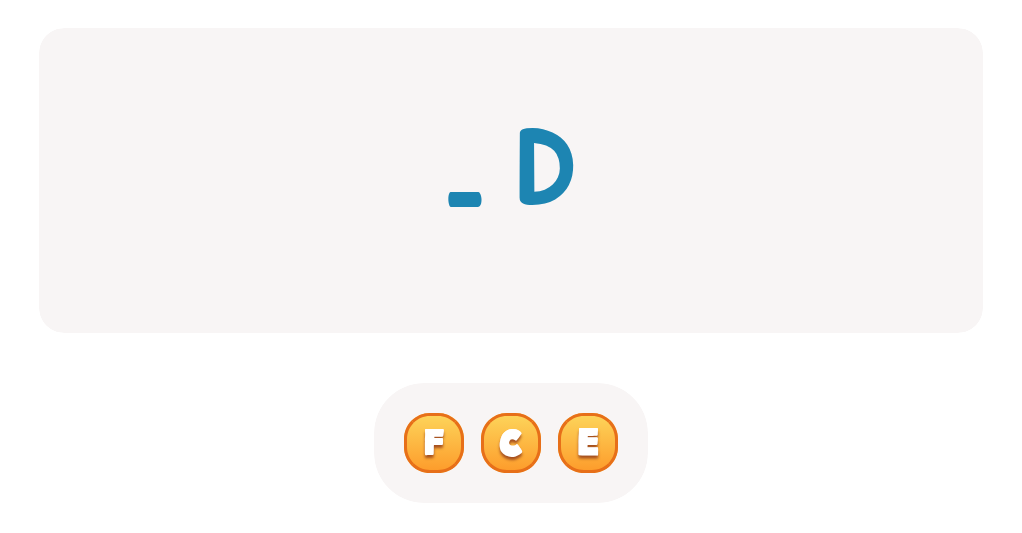

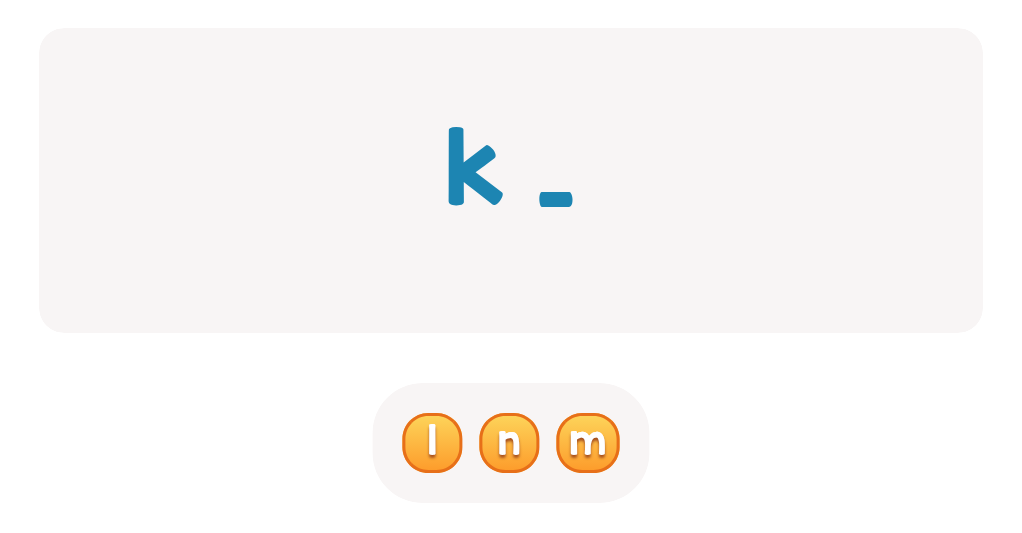
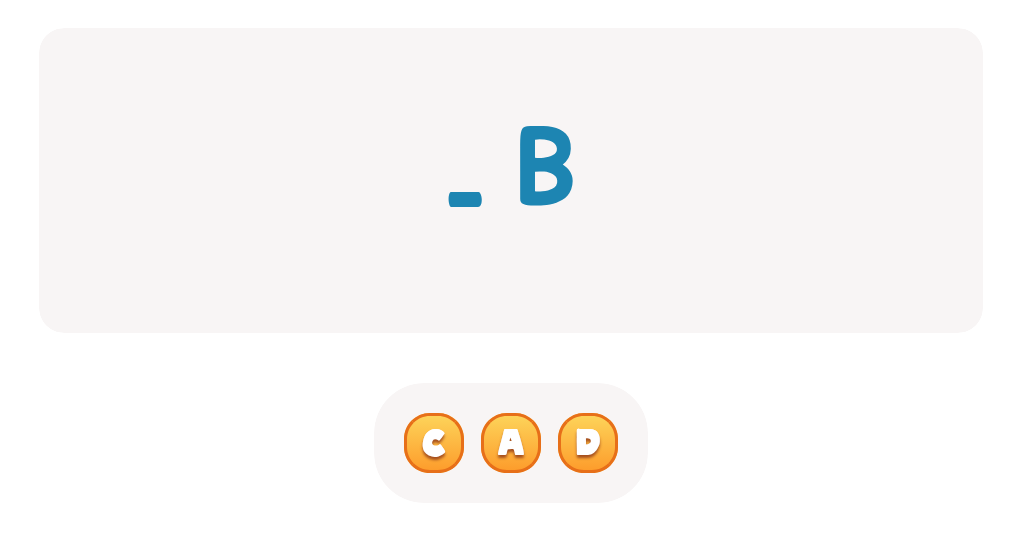
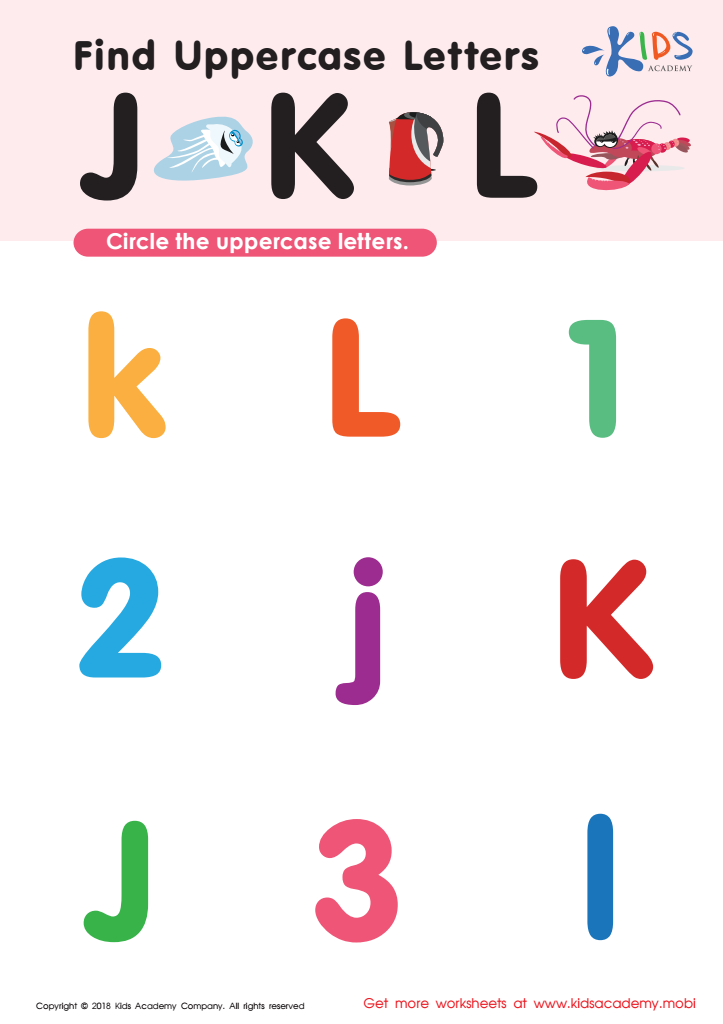
Find Uppercase Letters J, K, and L Worksheet

Find Uppercase Letters A, B, and C Worksheet
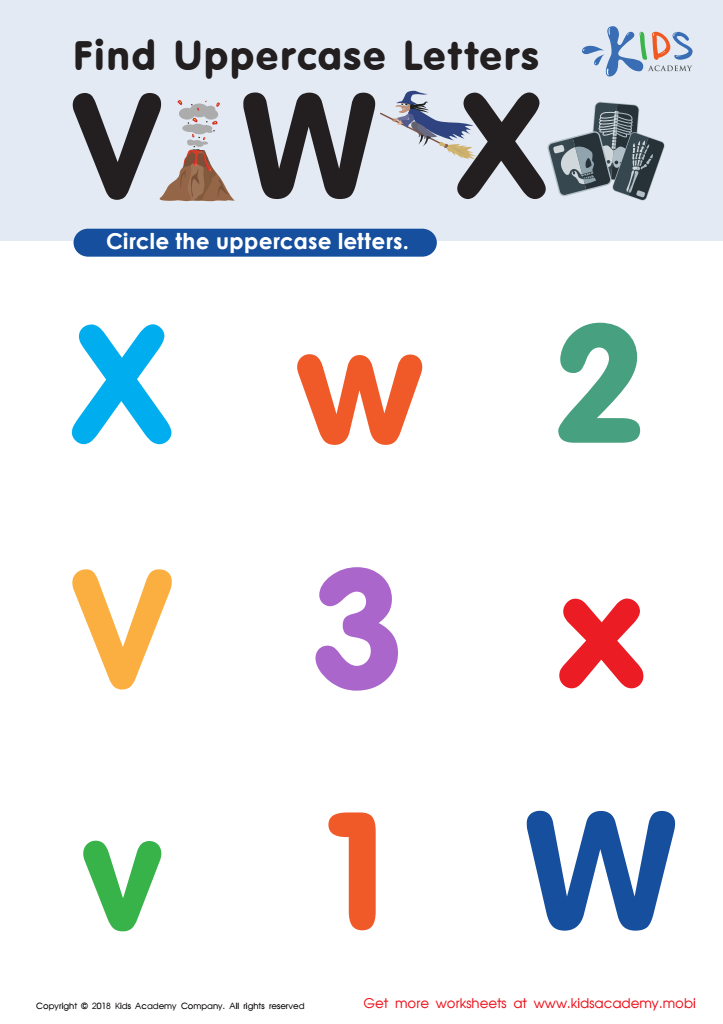
Find Uppercase Letters V, W, X Worksheet
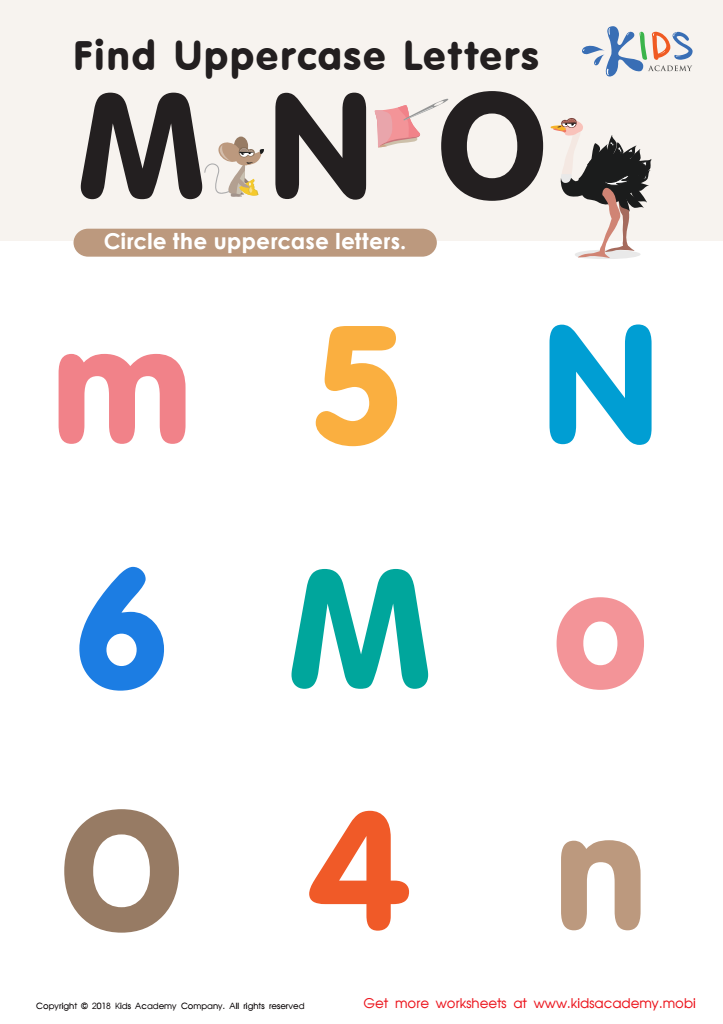
Find Uppercase Letters M, N, and O Worksheet






Identifying uppercase (capital) and lowercase (small) letters is crucial for children aged 6-7, as it lays the foundation for literacy skills. During this developmental stage, children begin to encounter written text more frequently, whether they are reading books, completing assignments, or writing their names. Understanding the difference between uppercase and lowercase letters is essential for reading fluency, spelling, and writing coherently.
Uppercase letters often signal the beginning of sentences and proper nouns, helping children grasp sentence structure and comprehension. Recognizing lowercase letters allows for smoother reading flow, as most textual material is primarily written in lowercase. Furthermore, familiarity with both forms fosters confidence in writing and allows children to engage with text creatively.
For teachers and parents, supporting uppercase and lowercase letter identification promotes literacy development. Engaging children through fun activities, such as letter games, crafts, or classroom discussions, can reinforce their learning and make it an enjoyable experience. By prioritizing this skill, educators and caregivers can encourage a lifelong love for reading and writing, ultimately setting the stage for academic success. It is an essential building block for effective communication and self-expression, crucial skills in today’s world.







