Moral lesson understanding Normal Reading Worksheets for Ages 6-7
3 filtered results
-
From - To
Unlock your child's potential with our engaging Normal Reading Worksheets designed for ages 6-7. Each worksheet not only enhances reading skills but also imparts essential moral lessons, fostering ethical awareness in young learners. Through compelling stories and thought-provoking activities, children grasp the importance of values like honesty, kindness, and responsibility. The worksheets are crafted to make learning enjoyable and meaningful, ensuring that your child develops both their cognitive skills and moral compass simultaneously. Perfect for parents and educators aiming to cultivate both academic proficiency and character development in early readers. Begin your child’s journey to becoming a thoughtful, empathetic individual today.
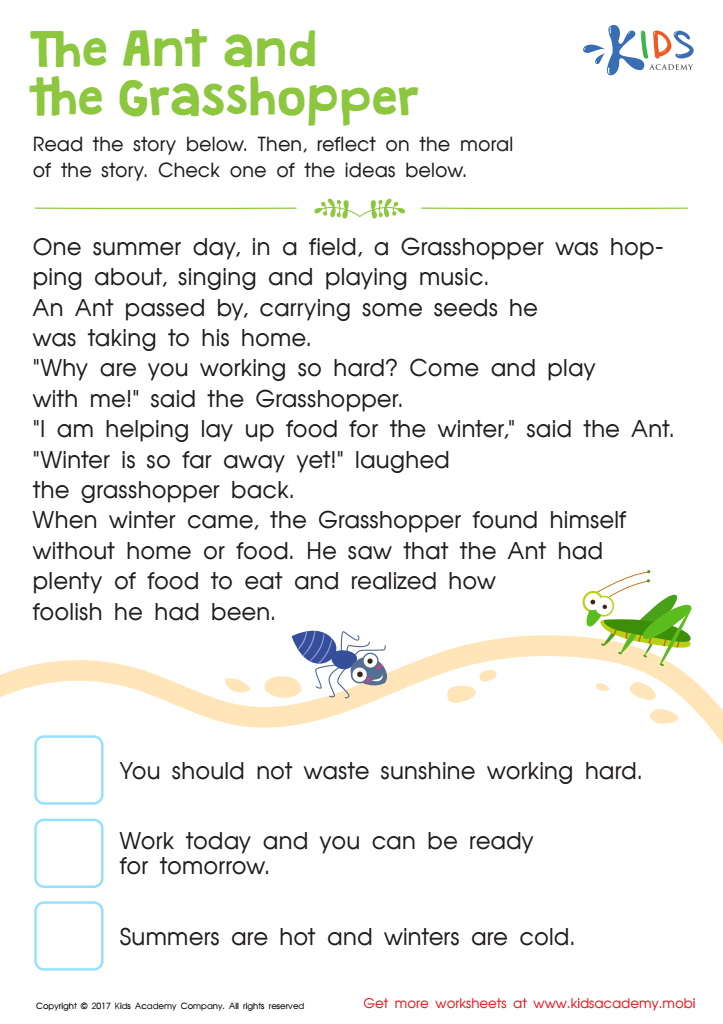
The Ant and The Grasshopper Printable
 Assign to My Students
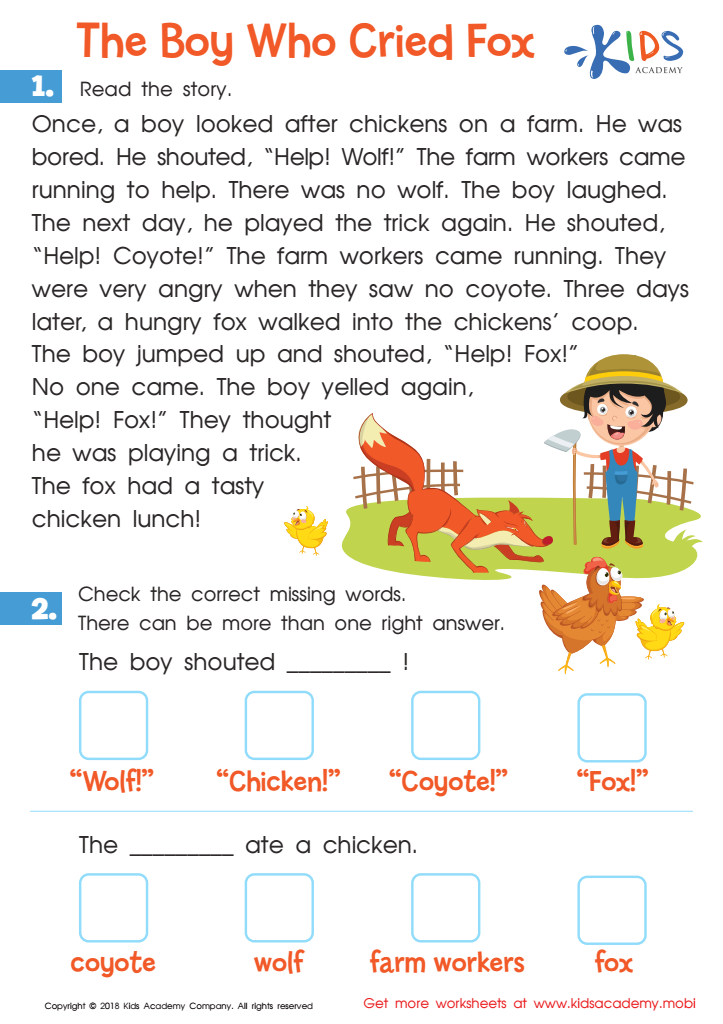
The Boy Who Cried Fox Worksheet
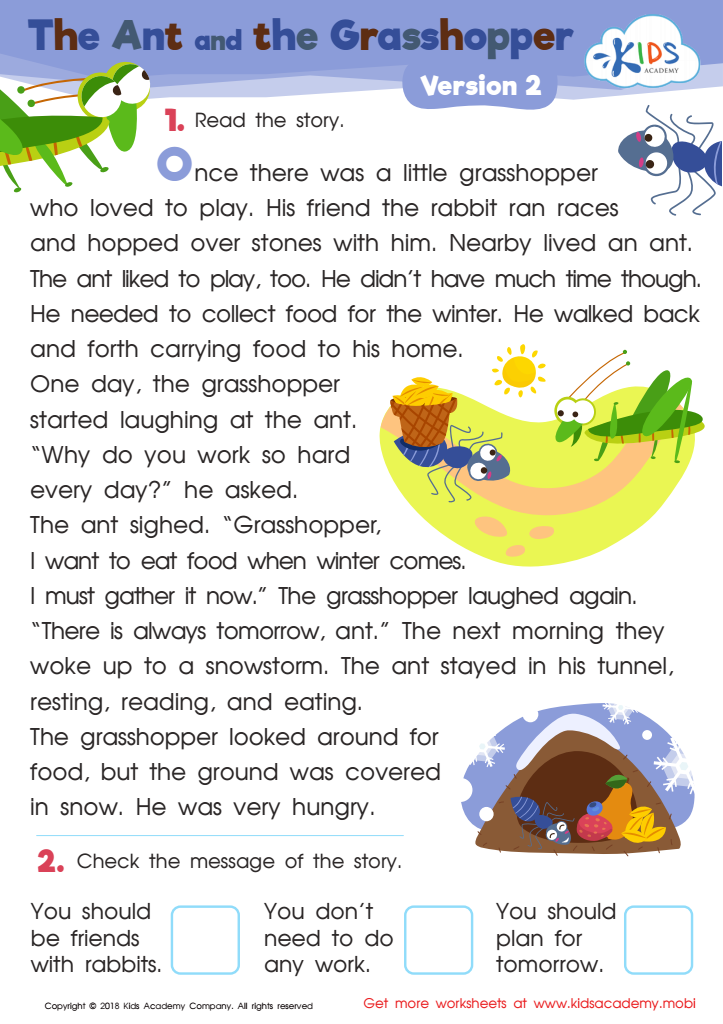
The Ant and The Grasshopper Version 2 Worksheet








At ages 6-7, children are at a crucial developmental stage where they rapidly pick up new skills and values. Understanding moral lessons through reading is particularly vital for them because it shapes their sense of right and wrong early on. Stories are powerful tools for teaching moral values as they present scenarios children can relate to, instilling empathy, kindness, honesty, and respect in engaging and memorable ways.
When parents and teachers incorporate moral lessons into reading, they nurture not only literacy skills but also social-emotional development. Moral stories often encourage discussions, helping children articulate their thoughts, understand different perspectives, and reflect on their behavior. Being able to identify and discuss moral lessons reinforces critical thinking and ethical decision-making.
Moreover, shared reading experiences build stronger parent-child and teacher-student bonds. These close interactions provide an opportunity for adults to model positive behaviors and guide children through complex emotions and situations that arise within stories.
Ultimately, caring about moral lesson understanding in early reading isn't just about teaching morals; it's about laying a foundation for well-rounded, considerate, and responsible individuals. By integrating these lessons, parents and educators create a richer, more comprehensive learning environment that prepares children for the complexities of the world.








