Analytical thinking Normal Reading Comprehension Worksheets for Ages 6-7
3 filtered results
-
From - To
Develop your child's critical thinking and reading skills with our Analytical Thinking Normal Reading Comprehension Worksheets designed for ages 6-7. These worksheets engage young learners through interesting passages followed by thought-provoking questions that promote analytical reasoning. Ideal for developing an early love for reading, each exercise enhances vocabulary, comprehension, and the ability to infer and draw conclusions. Perfect for classroom or homeschool settings, our worksheets offer a balanced mix of fun and academic rigor. Help your child sharpen their analytical skills while enjoying the process of learning to read more effectively. Explore now and watch them thrive!
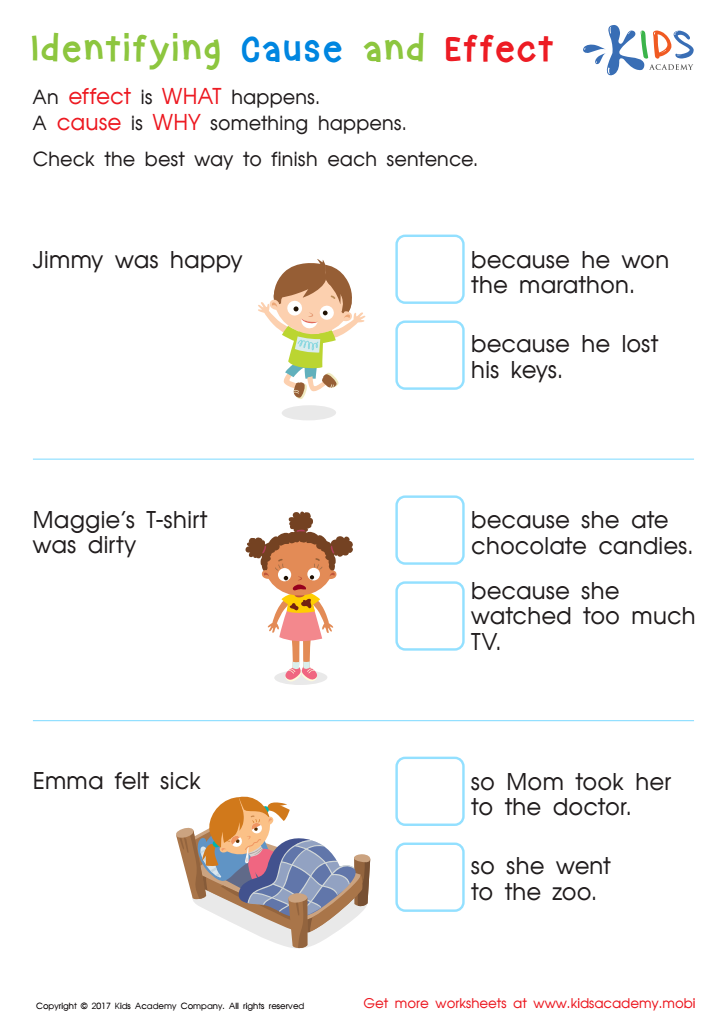
Indentifying Cause and Effect Worksheet
 Assign to My Students
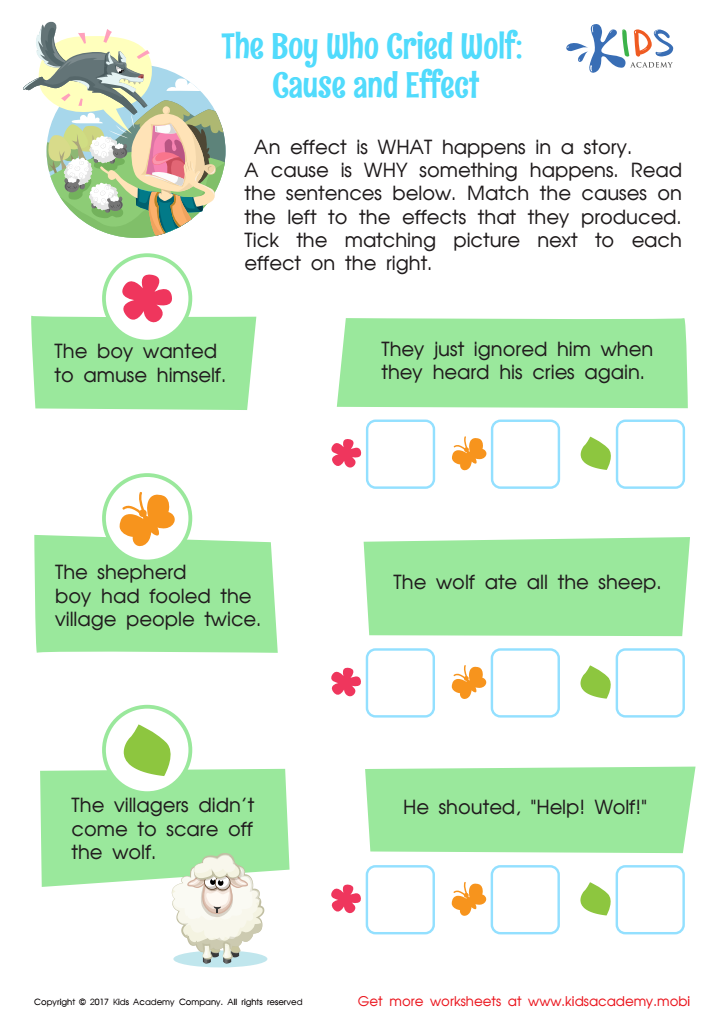
The Boy Who Cried Wolf: Cause and Effect Worksheet
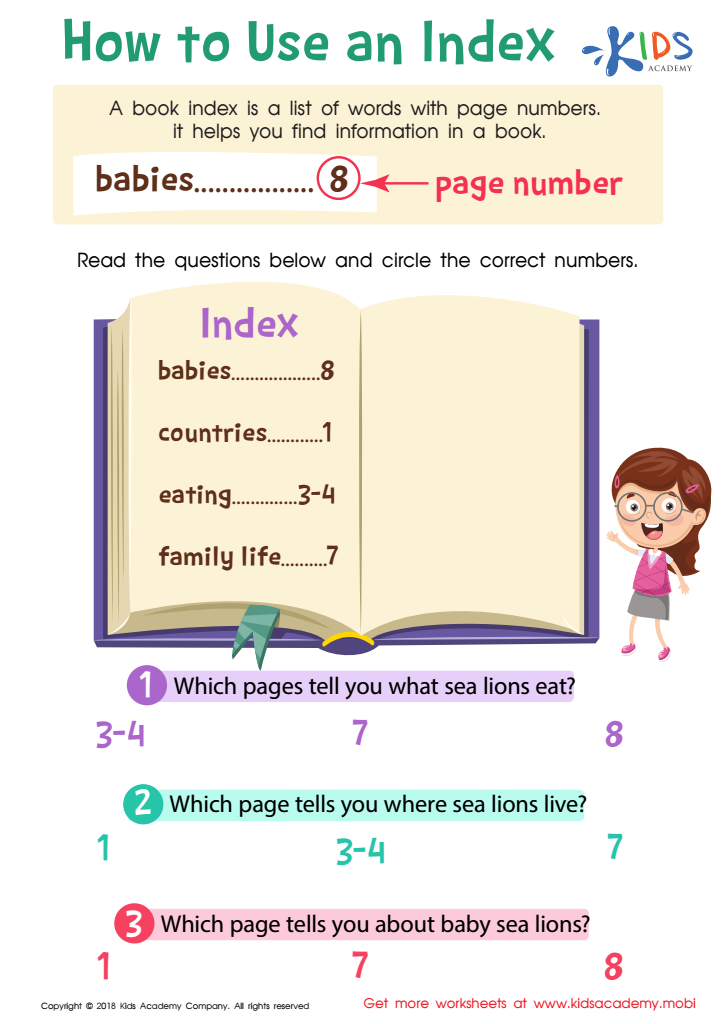
How Use Index Worksheet








Analytical thinking and normal reading comprehension are essential skills that parents and teachers should prioritize for children ages 6-7. At this developmental stage, children are building foundational learning skills that set the tone for future academic success. Analytical thinking enables children to logically assess and solve problems, understand cause and effect, and critically evaluate information. These cognitive abilities are vital for all areas of learning and for making informed decisions in everyday life.
Reading comprehension, on the other hand, is more than just reading words on a page; it involves understanding, interpreting, and engaging with the content. For young children, mastering reading comprehension significantly boosts their ability to grasp complex concepts, follow instructions, and ignite a passion for learning. Strong comprehension skills lay a foundation for effectively learning other subjects such as math, science, and social studies.
Integrating analytical thinking and reading comprehension fosters a nurturing and stimulating learning environment, promoting greater confidence and independence in children. As a result, parents and teachers play a critical role in developing these skills, equipping children with the tools necessary for long-term academic achievement and practical life skills. By focusing on these aspects early on, we enable children to become proficient learners and critical thinkers.








