Counting practice Normal Science Worksheets for Ages 6-7
3 filtered results
-
From - To
Enhance your child's numerical skills with Counting Practice Normal Science Worksheets, perfect for ages 6-7. Designed to make counting fun and engaging, these worksheets help children understand basic scientific concepts through interactive counting exercises. Each worksheet is crafted to bolster counting proficiency, laying a strong foundation for future math and science courses. Tailored for young learners, the exercises incorporate everyday objects and scenarios relatable to kids, keeping them both interested and challenged. Discover a delightful way for your child to practice counting while nurturing an early love for science with our expertly designed worksheets.
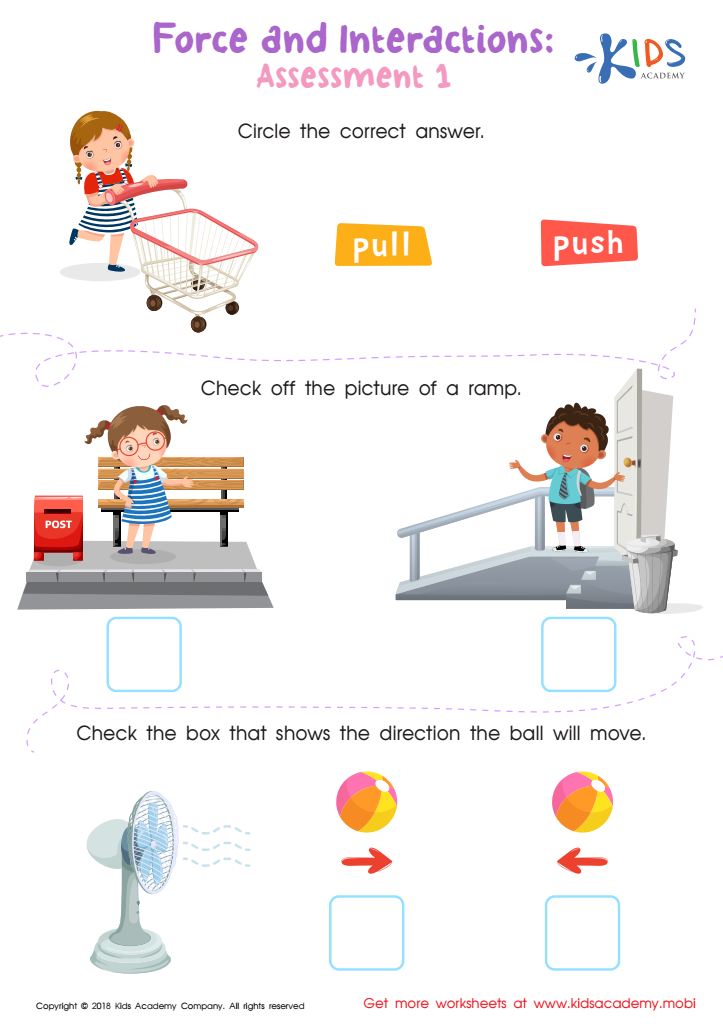
Force and Interactions: Assessment 1 Worksheet
 Assign to My Students
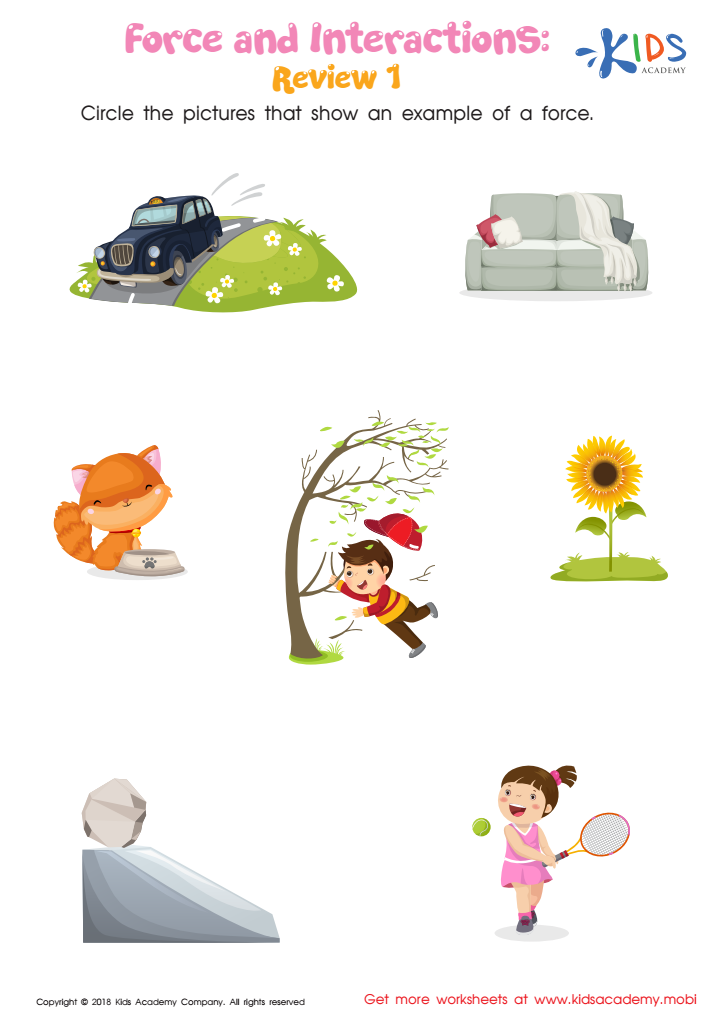
Force and Interactions: Review 1 Worksheet
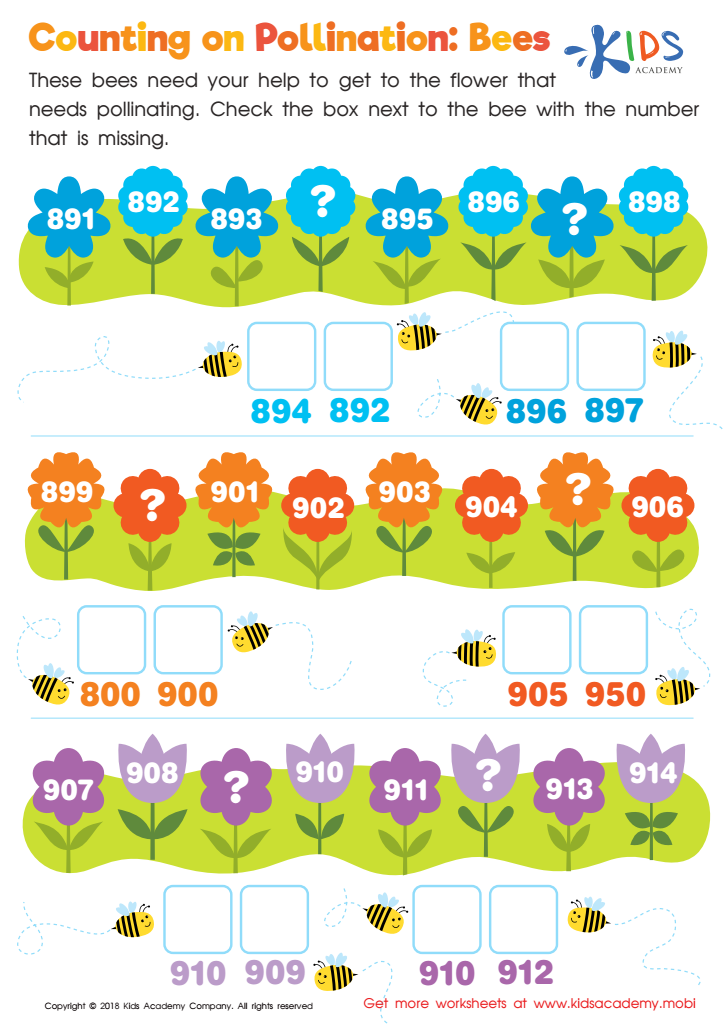
Counting on Pollination: Bees Worksheet








Counting practice is an essential foundation in early childhood education, particularly for children aged 6-7. At this formative age, children are developing crucial cognitive skills that support their ability to understand and manipulate numbers. Counting is not just about reciting numbers; it also involves understanding quantities, the importance of number order, and the concept of more or less. Regular counting practice helps solidify these concepts, enabling children to build a robust mathematical foundation.
For parents and teachers, encouraging counting practice aligns with developmental milestones and educational standards. Normal science for young children often integrates counting in exploratory and hands-on activities, helping them connect mathematical concepts with real-world applications. This approach fosters not only numerical comprehension but also critical thinking and problem-solving skills. By emphasizing counting practice, children are better prepared for more advanced mathematical concepts they will encounter in higher grades.
Moreover, maintaining consistency in counting exercises facilitates confidence and competence in mathematics, which can influence a child’s overall academic performance. When parents and teachers show interest and provide support in this area, they create a positive and encouraging learning environment. This nurtures a child’s intrinsic curiosity and enthusiasm for learning, setting the stage for lifelong academic and personal success.







