Developing analytical skills Normal Science Worksheets for Ages 6-7
3 filtered results
-
From - To
Boost your child's critical thinking and problem-solving abilities with our expertly designed Normal Science Worksheets for Ages 6-7 at Kids Academy. These engaging worksheets focus on developing analytical skills through fun, age-appropriate exercises. Each worksheet encourages young learners to observe, hypothesize, and draw conclusions, enhancing their scientific literacy and curiosity. From exploring the basics of life sciences to understanding simple physical concepts, these worksheets provide a solid foundation for future learning. Perfect for use in the classroom or at home, our activities will captivate and challenge your child while fostering a lifelong love of science.
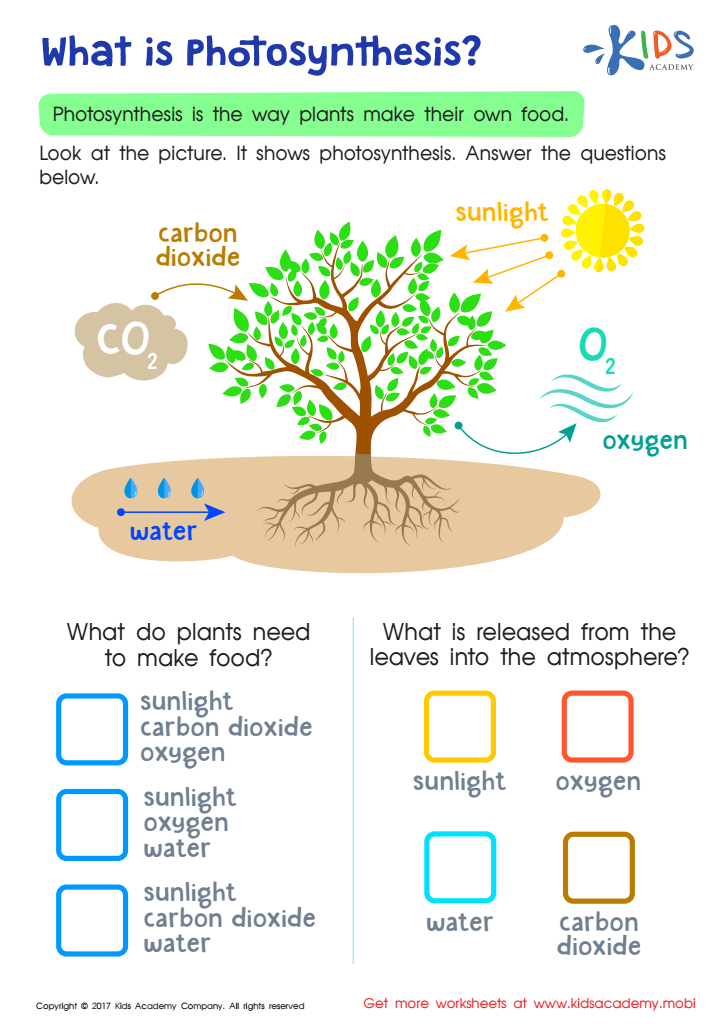
What is Photosynthesis Printable
 Assign to My Students
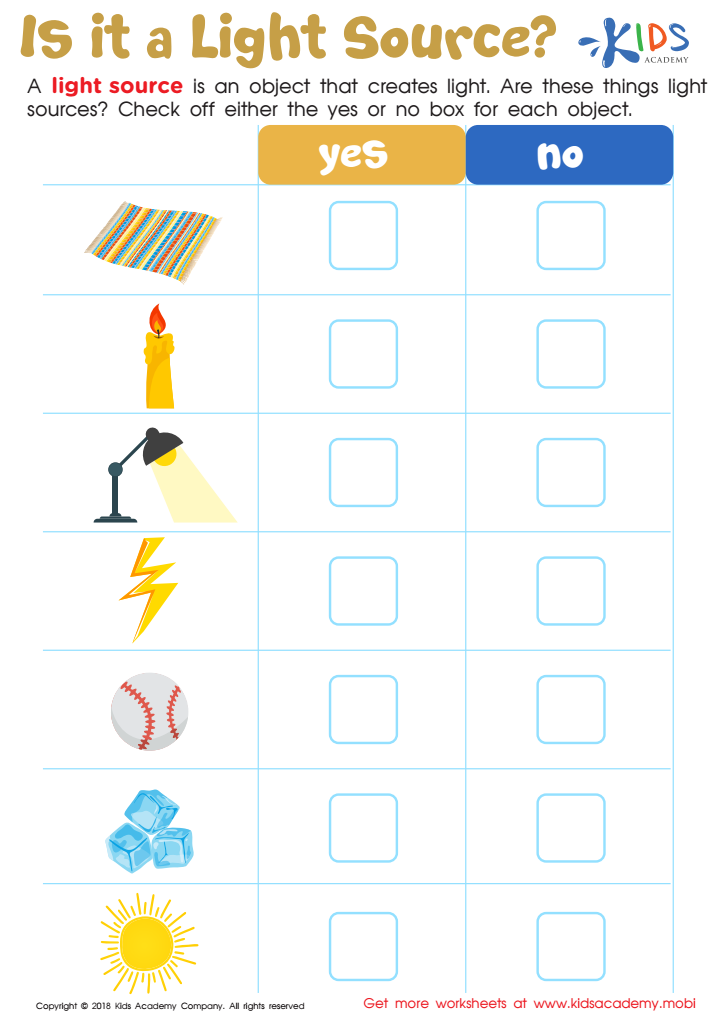
Is It a Light Source? Worksheet

How Light Travels Worksheet








Developing analytical skills in young children, specifically those aged 6-7, is crucial as it lays the foundation for their future learning and problem-solving abilities. At this age, children’s brains are highly receptive to new information and experiences, making it the perfect time to introduce basic analytical thinking.
Analytical skills foster logical reasoning, enhance critical thinking, and improve the ability to understand and interpret patterns. Encouraging these skills helps children become better problem-solvers, which is vital not just in science, but across all subjects and in everyday situations. By teaching children how to observe, hypothesize, experiment, and draw conclusions, parents and teachers equip them with tools necessary for independent thinking and deeper comprehension.
Normal science activities, such as sorting objects, identifying differences and similarities, or conducting simple experiments, stimulate curiosity and intellectual engagement. These exercises promote a sense of accomplishment and boost confidence, motivating children to explore and learn more. Additionally, practicing analytical skills helps improve attention to detail and persistence.
In summary, nurturing these skills in children aged 6-7 prepares them for a lifetime of learning. It cultivates a mindset that is inquisitive, reflective, and adaptive, essential qualities for success in an increasingly complex world. Through parental and educational support, we can unlock the latent potential in every child.







