
Word identification Normal Elementary Phonics Worksheets for Ages 6-8
3 filtered results
Difficulty Level
Grade
Age
-
From - To
Subject
Activity
Standards
Boost your child's reading skills with our Word Identification Normal Elementary Phonics Worksheets designed for ages 6-8. These engaging and educational worksheets help young learners recognize and identify words, laying a solid foundation for fluent reading. Expertly crafted, they offer a range of activities that focus on phonemic awareness, letter-sound correspondence, and word recognition. Ideal for classroom use or at-home practice, our worksheets make learning fun and accessible. Give your child the tools they need to succeed in reading with Kids Academy's comprehensive and interactive worksheets, setting them up for success in their literacy journey.
Favorites
With answer key
Interactive
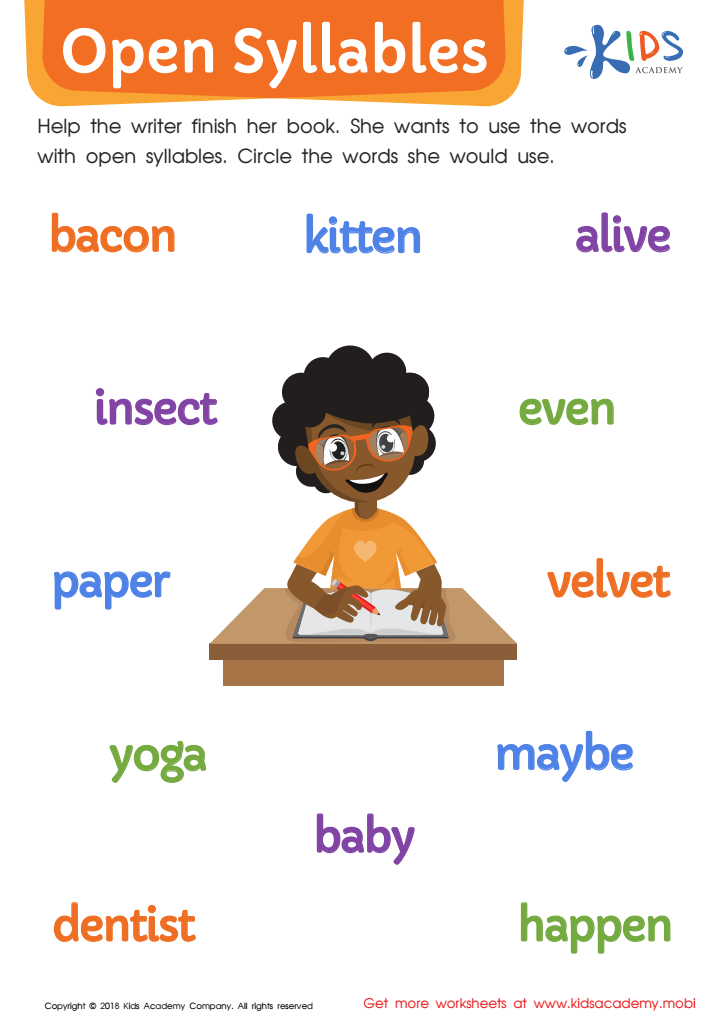
Open Syllables Worksheet
Before beginning this worksheet, make sure your child knows what open syllables are. If not, take time to teach them with examples. Then, help the writer finish her book by circling words with open syllables. She needs your child's help!
Open Syllables Worksheet
Worksheet
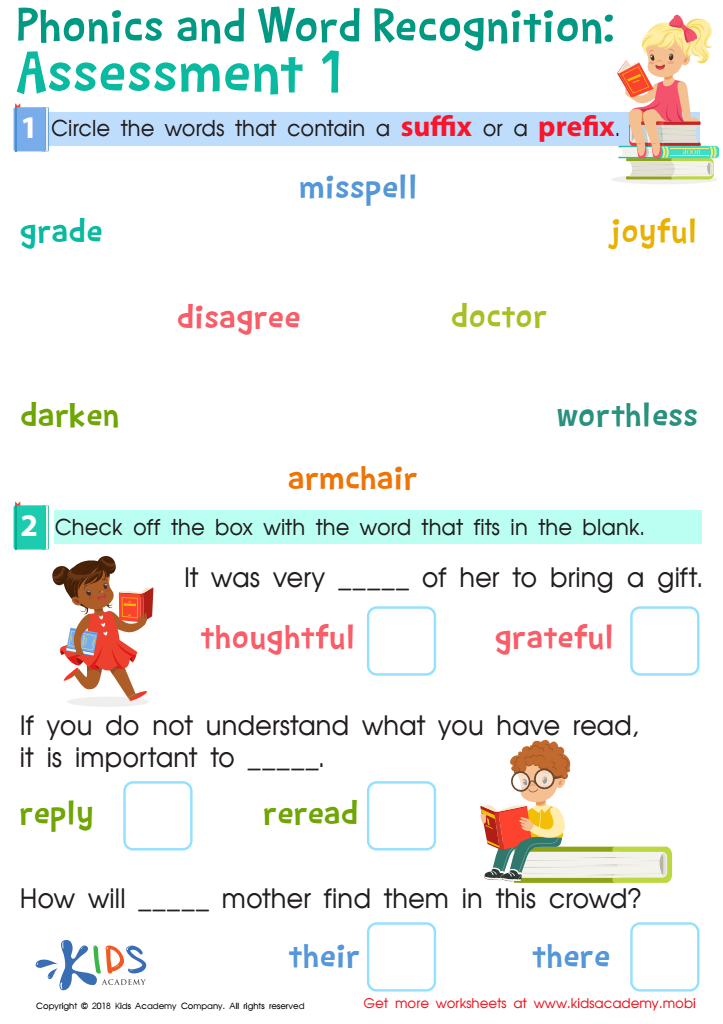
Phonics and Word Recognition: Assessment 1 Worksheet
Explain prefixes (words added to start of another word to give it a new meaning) and suffixes (added to end of word to change its meaning) to your kids with examples like 'unhappy' (prefix) and 'forgetful' (suffix). Now, help your child complete this worksheet, including circling words and checking boxes.
Phonics and Word Recognition: Assessment 1 Worksheet
Worksheet
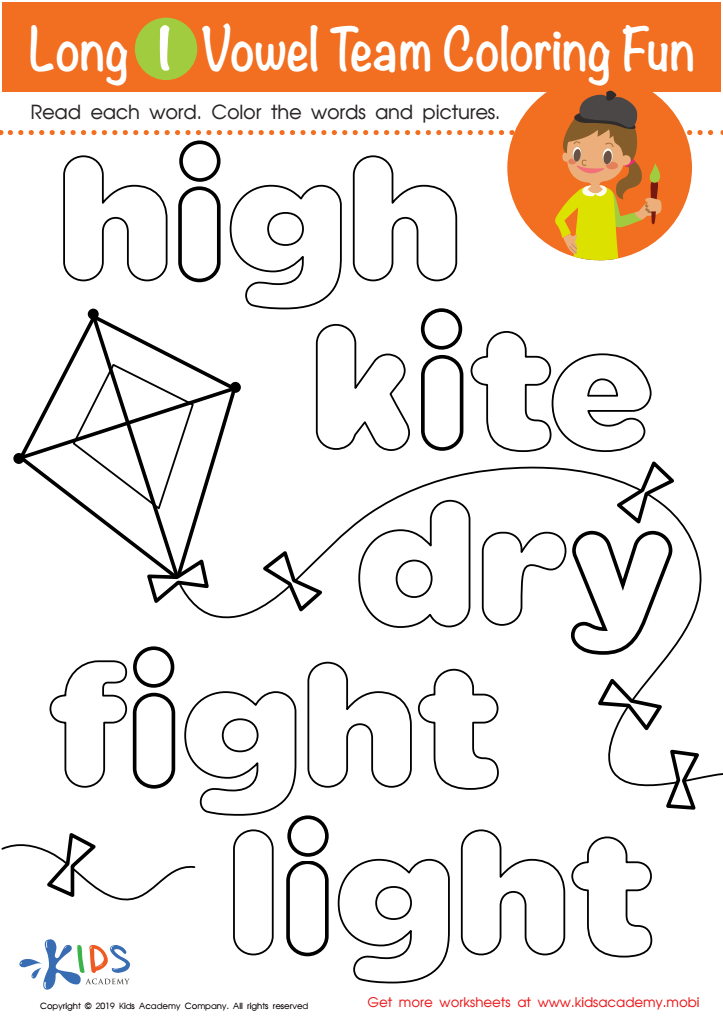
Long I Vowel Team Coloring Worksheet
This worksheet provides practice with letter combinations that make the long "i" sound while enhancing creativity and motor skills with a fun coloring activity. Unknowingly, new readers learn key phonics skills while having fun!
Download (PDF)
 Assign to My Students
Assign to My Students
Long I Vowel Team Coloring Worksheet
Worksheet
Join Kids Academy for Free
Who is primarily going to use this learning content?




Caring about word identification and normal elementary phonics for children aged 6-8 is crucial because these early language skills lay the foundation for successful reading and writing. At this formative stage, children transition from recognizing simple words to decoding more complex ones, which supports their overall literacy development. Strong word identification skills enable children to read accurately and fluently, which in turn fosters a love for reading and boosts comprehension abilities.
Phonics instruction, which teaches the relationship between letters and their sounds, is essential for word identification. It empowers children to decode unfamiliar words independently, enhancing their confidence and reducing frustration. This early proficiency also influences long-term academic success, as literacy is integrally linked to all areas of learning, from math to science and social studies.
Parents and teachers play vital roles in supporting these skills by implementing systematic and engaging phonics programs, providing practice opportunities, and creating a positive reading environment. Attention to word identification and phonics can detect and address learning difficulties early, ensuring that children do not fall behind their peers. Ultimately, these foundational skills are not just about academic achievement; they are about equipping children with the tools they need for lifelong learning and critical thinking.






