
Alphabetical order understanding Normal Alphabet Worksheets for Ages 6-8
3 filtered results
Difficulty Level
Grade
Age
-
From - To
Subject
Activity
Standards
Discover a fun and engaging way for children aged 6-8 to master the concept of alphabetical order with our specially designed worksheets. These Normal Alphabet Worksheets help young learners organize words in a systematic manner, enhancing their reading, writing, and vocabulary skills. Each worksheet is crafted to promote critical thinking and reinforce understanding through interactive activities. From arranging words to sorting letters, children will develop their cognitive abilities while having fun. Encourage your child's confidence in language with our comprehensive resources, perfect for classroom use or at-home learning. Start their journey towards literacy with our playful and effective worksheets today!
Favorites
With answer key
Interactive
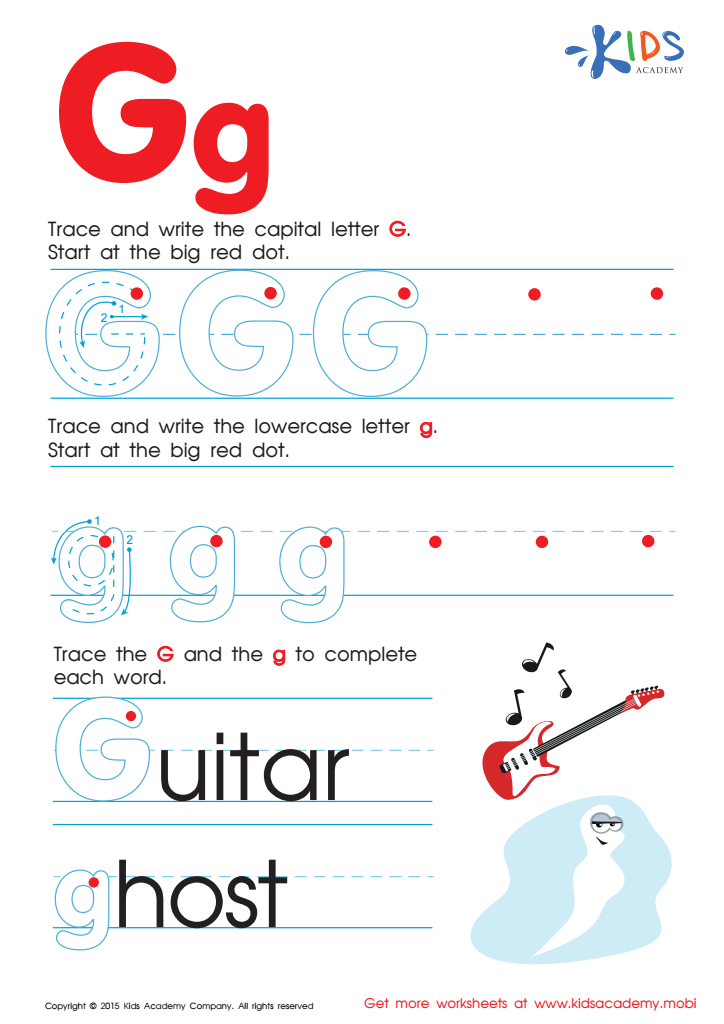
Letter G Tracing Page
Get ready to trace the letter "G" – with a big red spot as the starting point, trace the lines and watch the letter appear. Uppercase and lowercase letters are both easy and fun to write. Give it a go and finish the word "go". Play the guitar and say "hello" to a funny ghost!
Letter G Tracing Page
Worksheet
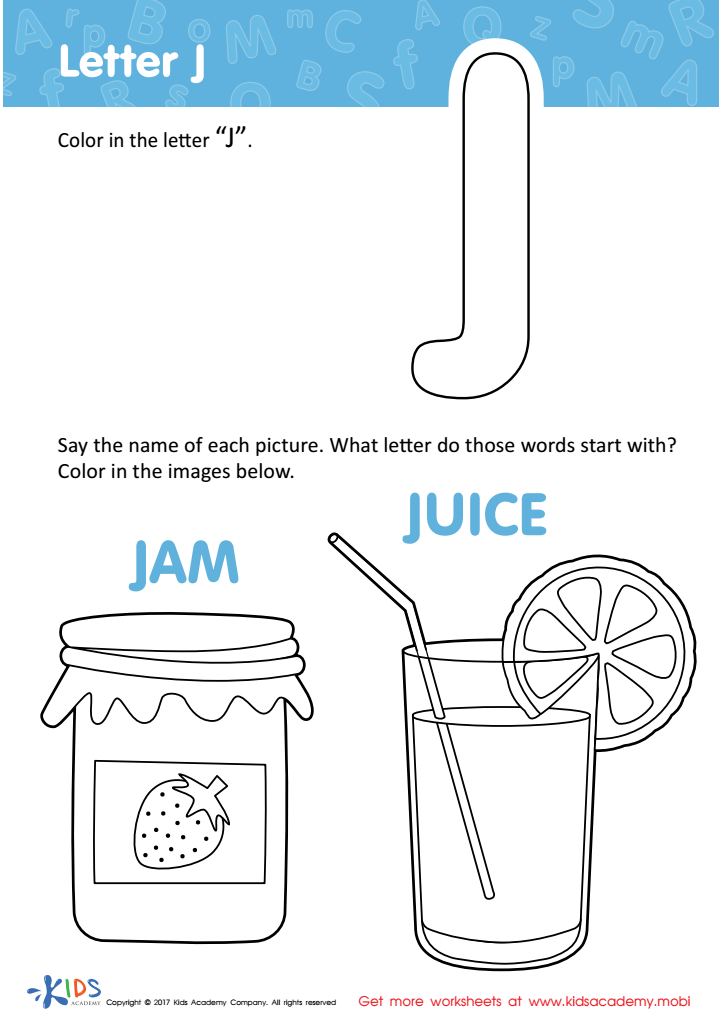
Letter J Coloring Sheet
Practice the letter 'J' with your little one with this fun coloring page! Pictures of jar, juice, jam and jelly make it an enjoyable experience for kids. Learning the letter and coloring is fun for even the youngest learners.
Download (PDF)
 Assign to My Students
Assign to My Students
Letter J Coloring Sheet
Worksheet
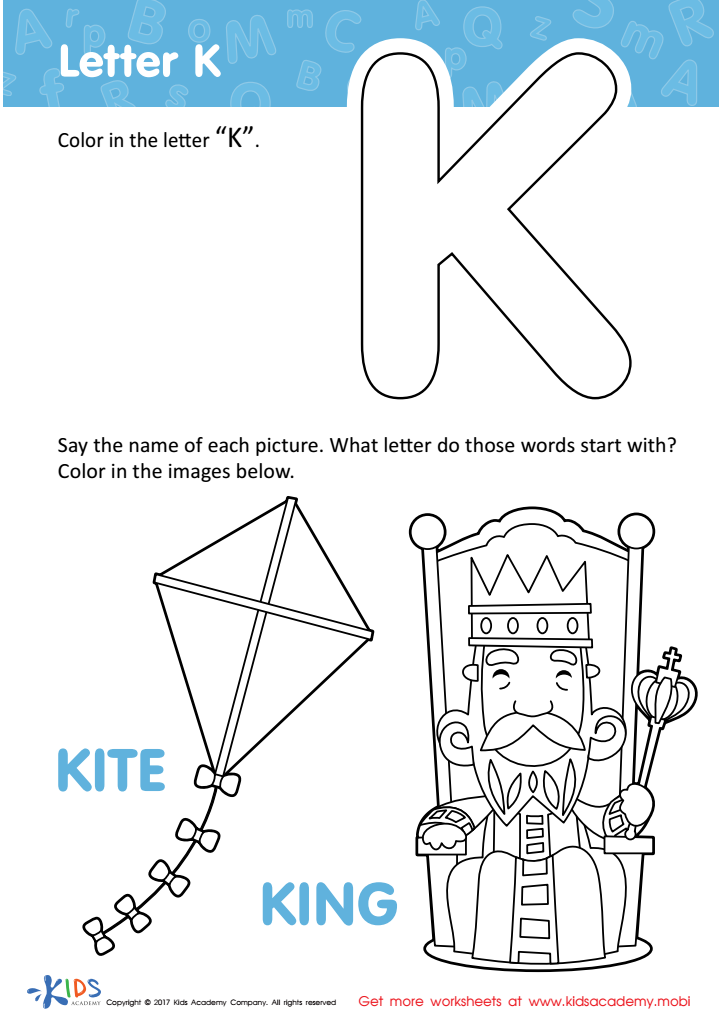
Letter K Coloring Sheet
This letter K coloring page captivates your child's creativity while learning the letter! Showcasing a king and kite, common words for their age group, it's sure to spark their imagination.
Download (PDF)
Assign to My Students
Assign to My Students
Letter K Coloring Sheet
Worksheet
Join Kids Academy for Free
Who is primarily going to use this learning content?







Understanding alphabetical order is crucial for children ages 6 to 8 as it lays the foundation for their literacy skills. This skill not only aids in effective reading and writing but also supports organizational skills that are essential for academic success. Most notably, children will encounter references that utilize alphabetical order, such as dictionaries, encyclopedias, and thesauruses. Familiarity with this system enables them to find information quickly, fostering a sense of independence in learning.
Moreover, practicing alphabetical order encourages phonemic awareness and spelling, as children learn to identify the beginning sounds and letters of words. This understanding enhances vocabulary development by exposing them to more words and how they relate to one another.
Additionally, mastering alphabetical order cultivates critical thinking and categorization skills. It introduces concepts of sequences and patterns, which are fundamental for future math and logic problems.
For parents and teachers, supporting children in this area can lead to greater confidence in their reading abilities, resulting in a positive attitude towards learning. Encouraging daily practice through games, songs, and reading activities ensures that children not only grasp alphabetical order but also appreciate the structure that language provides. Overall, it is a vital building block in their educational journey.







