Counting skills Normal Alphabet Worksheets for Ages 6-8
3 filtered results
-
From - To
Unlock your child's potential with our “Counting Skills Normal Alphabet Worksheets” designed specifically for ages 6-8. These interactive worksheets blend essential alphabet learning with foundational counting skills, fostering a comprehensive early education experience. Your child will enjoy diverse activities that engage their minds—counting objects, matching letters, and practicing number recognition alongside the alphabet. This fun approach not only enhances numeracy but also encourages literacy development. Perfect for home or classroom use, these worksheets provide structured learning while making practice enjoyable. Equip your young learner with critical skills to succeed academically and ignite their passion for learning today!
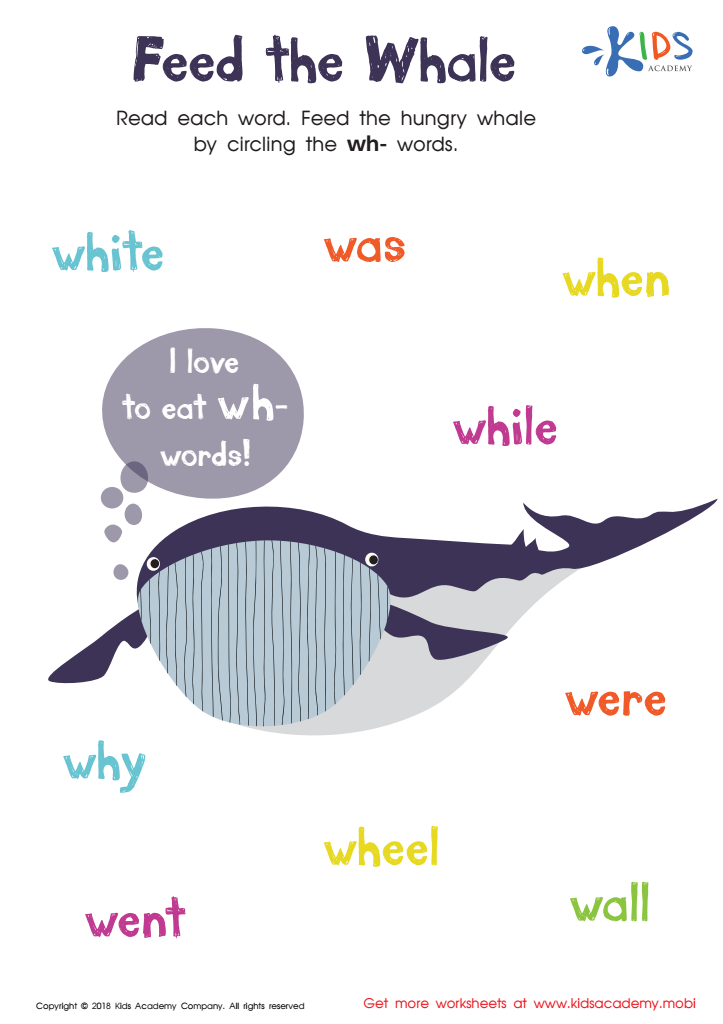
Feed the Whale Worksheet
 Assign to My Students
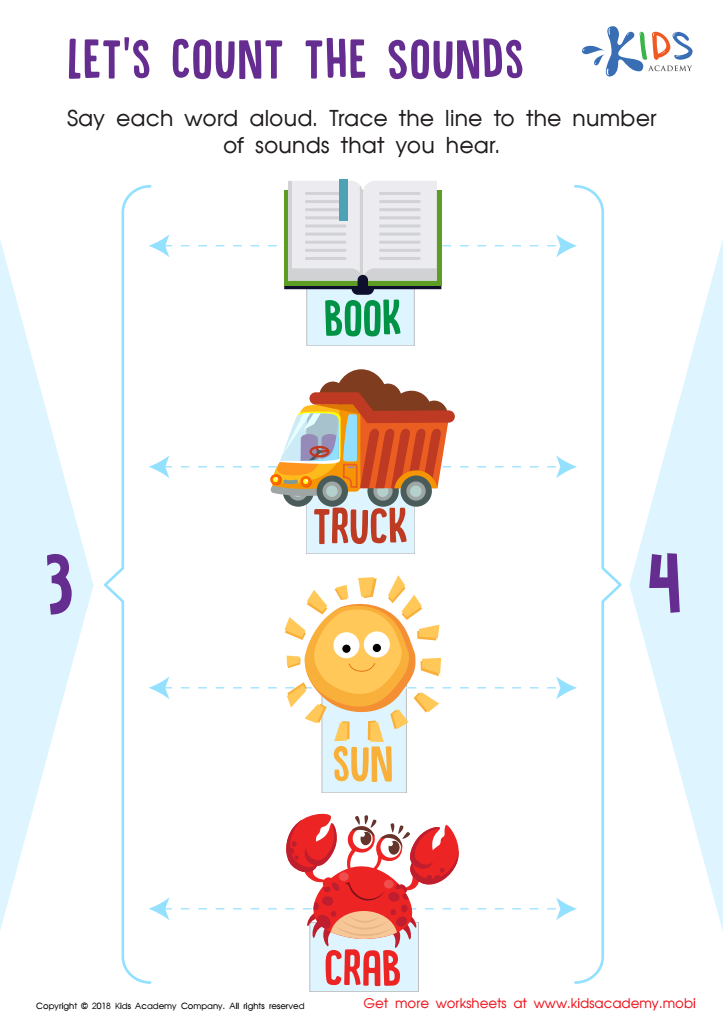
Let's Count the Sounds Worksheet
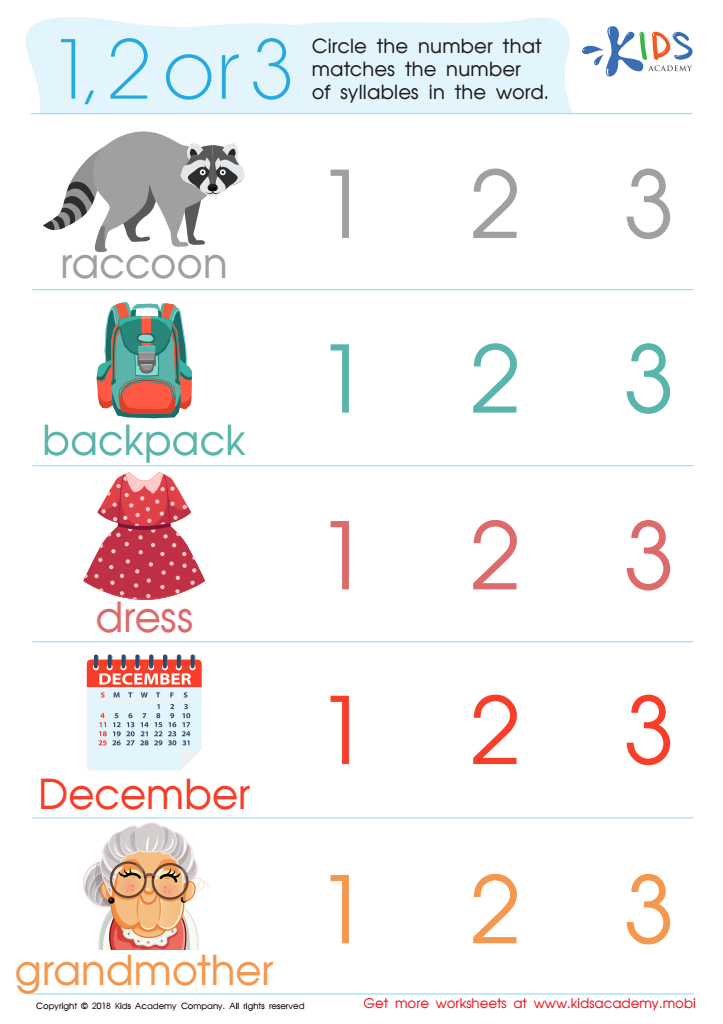
1, 2 or 3? Worksheet







Counting skills and proficiency with the normal alphabet are foundational components of early childhood education, particularly for children aged 6-8. At this stage, children are developing critical cognitive and language abilities that will shape their future learning experiences.
Understanding counting helps children grasp fundamental mathematical concepts, such as addition, subtraction, and even early problem-solving. When children can count accurately, they are better equipped to engage with more complex math as they progress and can also translate these skills into real-life applications like telling time, managing money, and measuring.
Simultaneously, mastering the alphabet is crucial for literacy development. It lays the groundwork for reading and spelling, essential skills for effective communication. When children become comfortable with letter recognition and the sounds they represent, they develop stronger vocabulary, reading fluency, and comprehension skills.
Parents and teachers play a vital role in fostering these skills through fun activities such as counting games, songs, or reading aloud. By actively supporting children in these areas, adults can contribute to a solid academic foundation, encouraging confidence, critical thinking, and a lifelong love of learning. In an increasingly complex world, those skills empower children to navigate their educational journeys successfully.







