Letter-sound association Normal Alphabet Worksheets for Ages 6-8
6 filtered results
-
From - To
Discover our engaging Letter-Sound Association Normal Alphabet Worksheets, specially designed for children ages 6-8! These worksheets help young learners connect letters to their corresponding sounds, enhancing their phonemic awareness—a crucial skill for reading and writing. With a variety of fun activities, including matching, tracing, and coloring, kids will enjoy mastering the fundamentals of language in an interactive way. Perfect for homeschoolers or classroom use, these printable resources support early literacy development and promote a love for learning. Give your child the tools to succeed in reading with our comprehensive and enjoyable alphabet worksheets today!
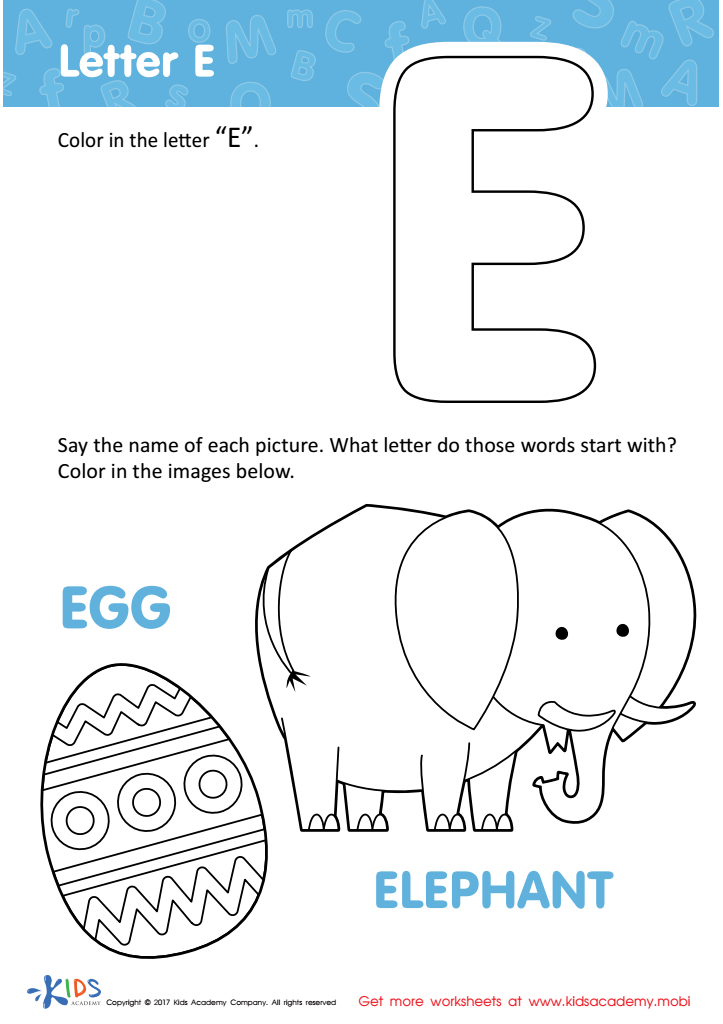
Letter E Coloring Sheet
 Assign to My Students
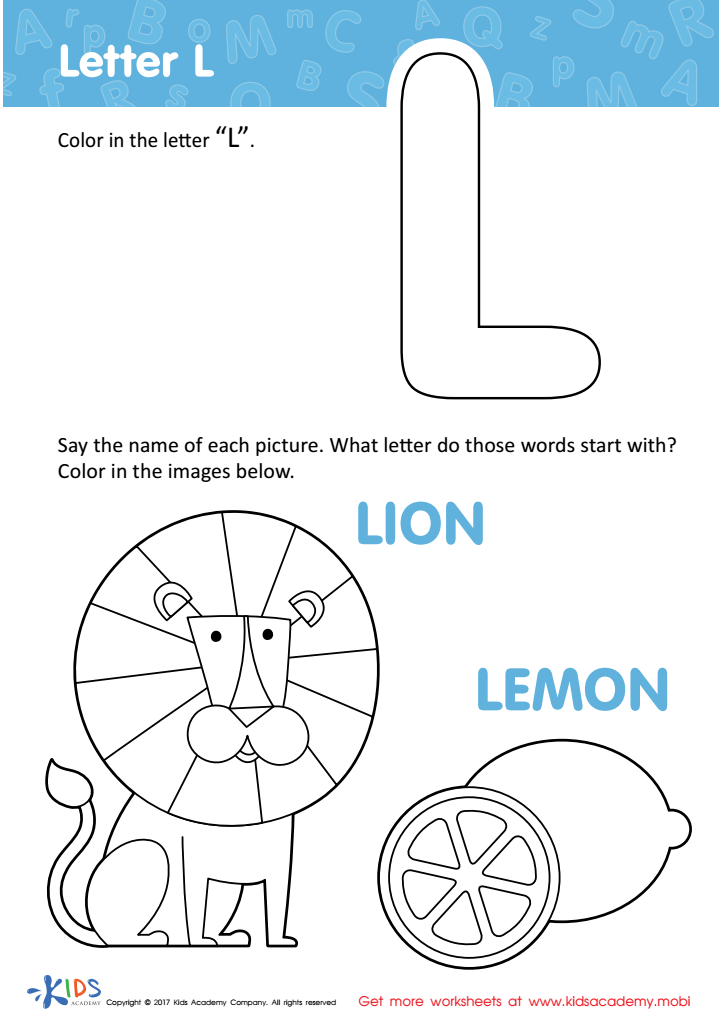
Letter L Coloring Sheet
Assign to My Students
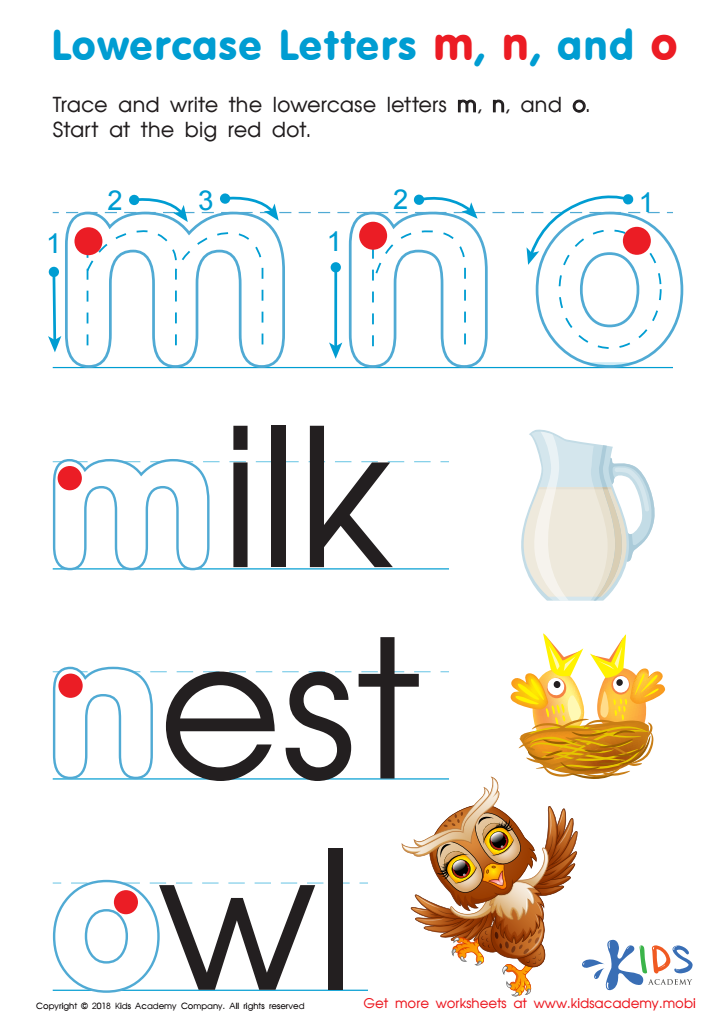
Lowercase Letters m n o Worksheet
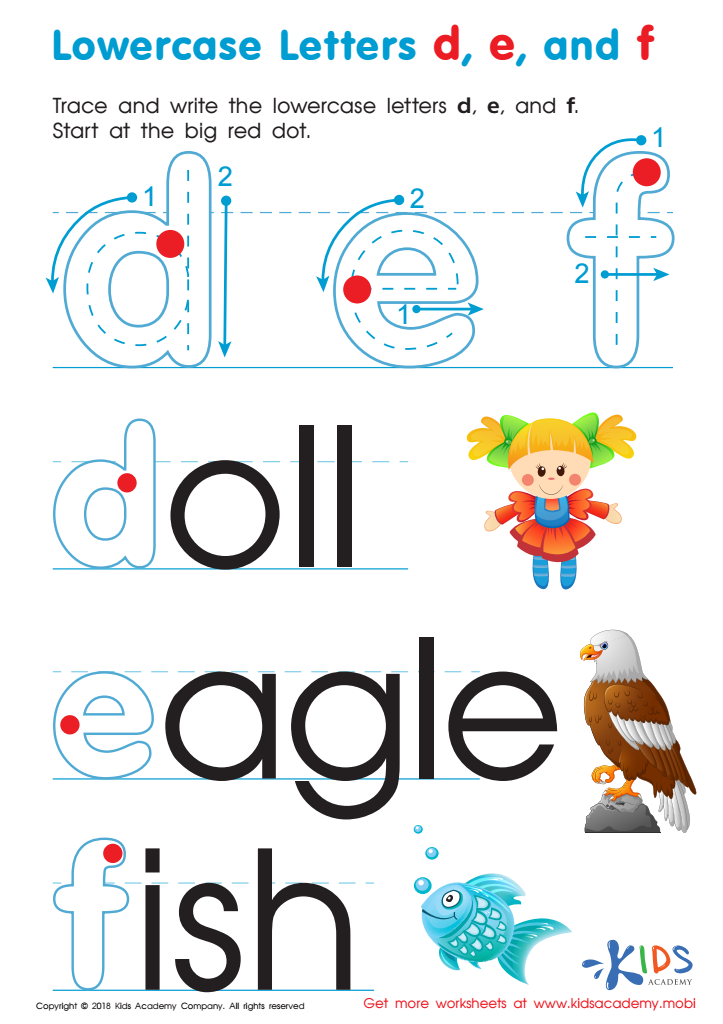
Lowercase Letters d e f Worksheet
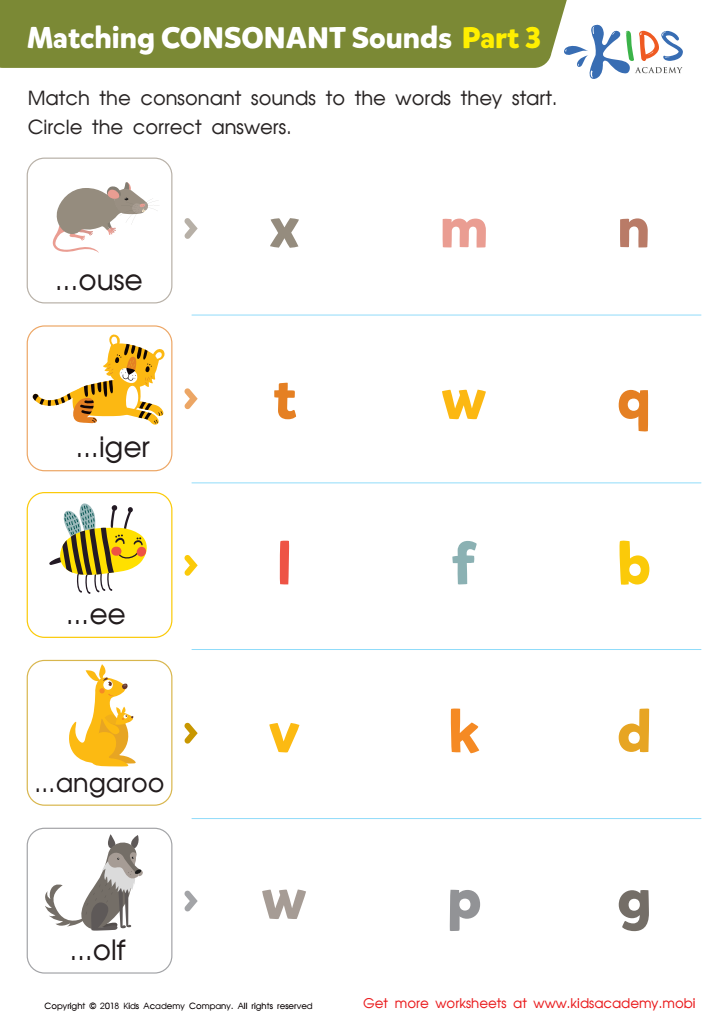
Matching Consonant Sounds: Part 3 Worksheet
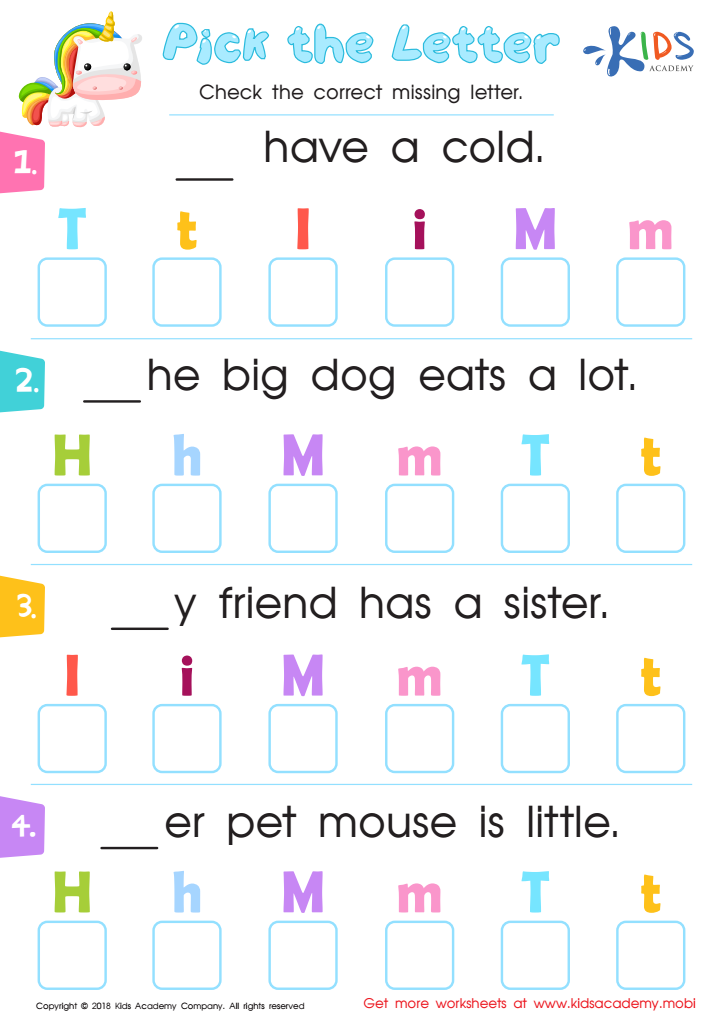
Pick the Letter Worksheet








Parents and teachers should prioritize letter-sound association for children aged 6-8 as it is a fundamental skill in literacy development. Understanding how letters correspond to specific sounds is essential for reading and writing proficiency. During these formative years, children start transitioning from learning letters in isolation to blending sounds to form words. Mastering this association aids their decoding skills, enabling them to read fluently and with comprehension.
Additionally, a solid grasp of letter-sound relationships supports vocabulary expansion and spelling accuracy, helping children communicate effectively. As literacy skills are closely linked to academic success, fostering this understanding can set the groundwork for a child’s overall learning trajectory.
Moreover, early engagement with letter-sound associations boosts children's confidence and enthusiasm for reading, making them more inclined to explore literature independently. This, in turn, nurtures critical thinking and analytical skills that are vital in higher education stages.
Ultimately, focusing on letter-sound associations not only helps children become competent readers and writers but also instills a lifelong love for learning and a strong foundational skill set that will be beneficial in all subjects. Therefore, prioritizing this essential skill is crucial for the child’s overall academic journey and personal development.







