
Reading fluency Normal Alphabet Worksheets for Ages 6-8
6 filtered results
Difficulty Level
Grade
Age
-
From - To
Subject
Activity
Standards
Boost your child's reading skills with our engaging "Reading Fluency Normal Alphabet Worksheets" designed specifically for ages 6-8. These worksheets emphasize essential reading fluency, helping young learners recognize letters, sounds, and words confidently. Each activity is crafted to encourage practice through fun and interactive exercises, fostering a love for reading. Ideal for home or classroom use, these worksheets support literacy development while keeping children engaged. Watch your child's reading abilities flourish as they progress through various levels of difficulty. Equip your little ones with the foundational skills they need for literacy success – download our fun-filled alphabet worksheets today!
Favorites
With answer key
Interactive
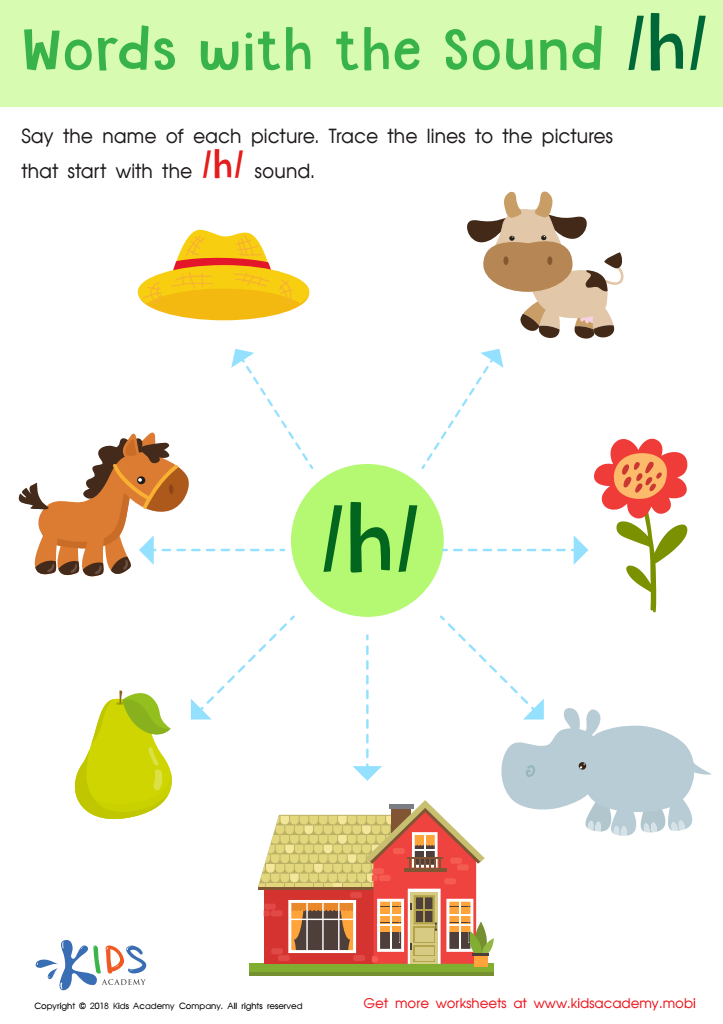
Words with sound h Reading Worksheet
The letter H can often be heard in words! Check your child's knowledge with an engaging worksheet from Kids Academy. Ask them to go around a circle and name each image aloud. Listen for the starting sound and trace the line from the middle letter to the images with the sound. This is a great way to practice phonics!
 Assign to My Students
Words with sound h Reading Worksheet
Worksheet
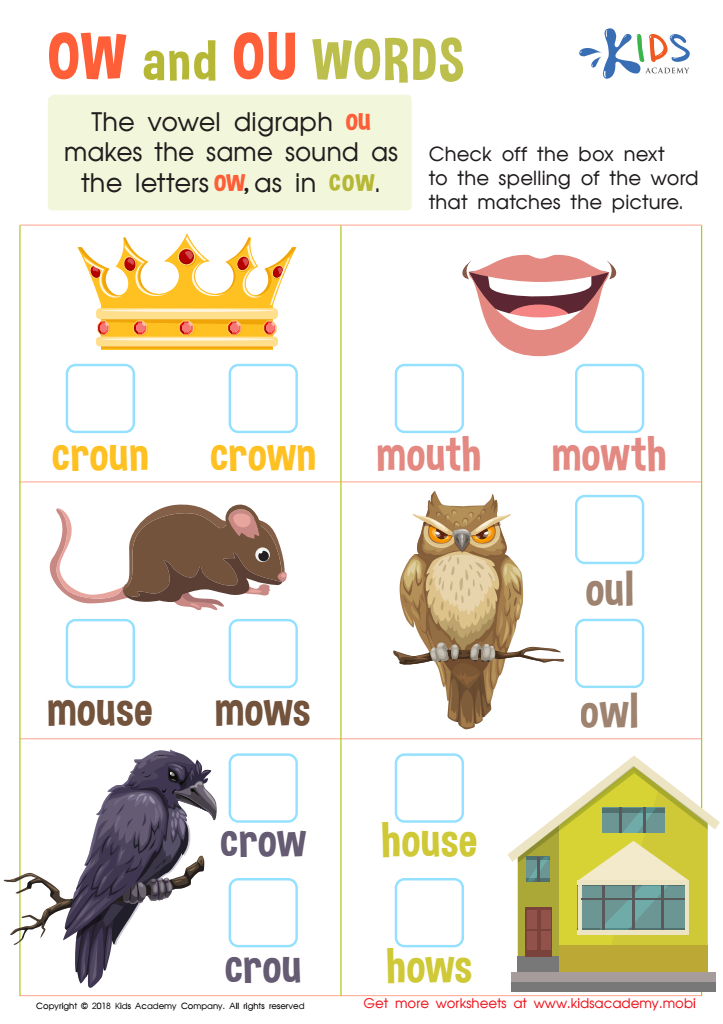
Reading: OW and OU Words Worksheet
Help your kids learn phonetics! Explain the different sounds and long/short variations. Emphasize that some vowel sounds are the same, e.g. ou = ow in cow. For practice, have them read aloud the words in the worksheet and check the box next to the spelling that matches the picture.
Reading: OW and OU Words Worksheet
Worksheet
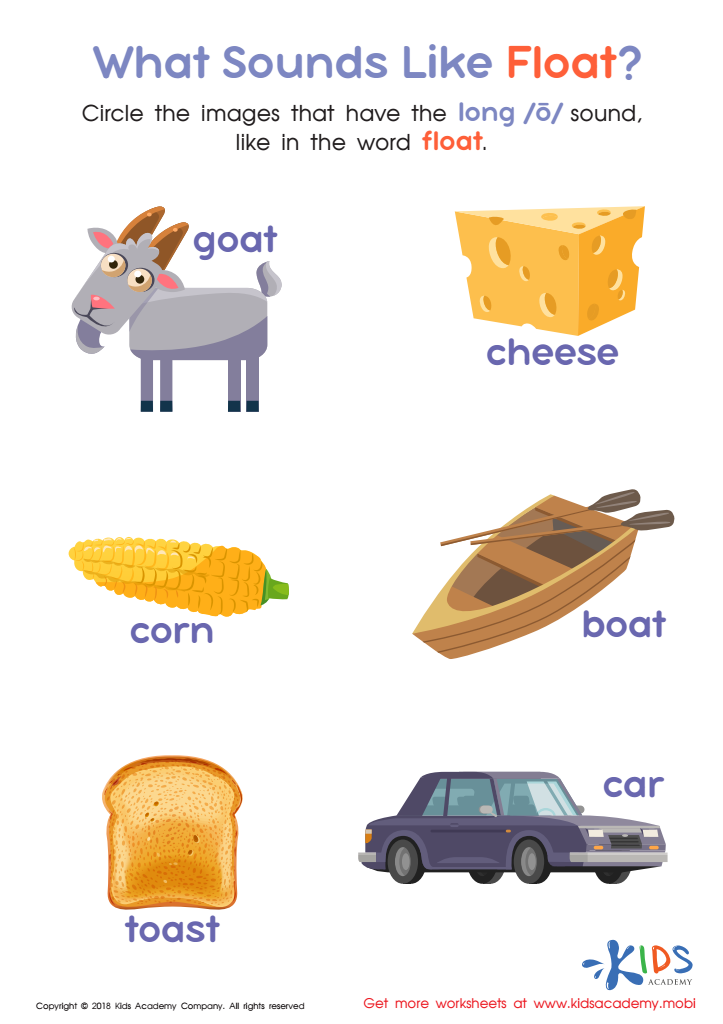
What Sounds Like Float? Worksheet
Help your kids practice the long /o/ sound with words such as 'boat', 'goat' and 'float'. Ask them to identify and circle the images in the worksheet that have the same sound. Award bonus points if they come up with more words with 'oa' spelling!
What Sounds Like Float? Worksheet
Worksheet
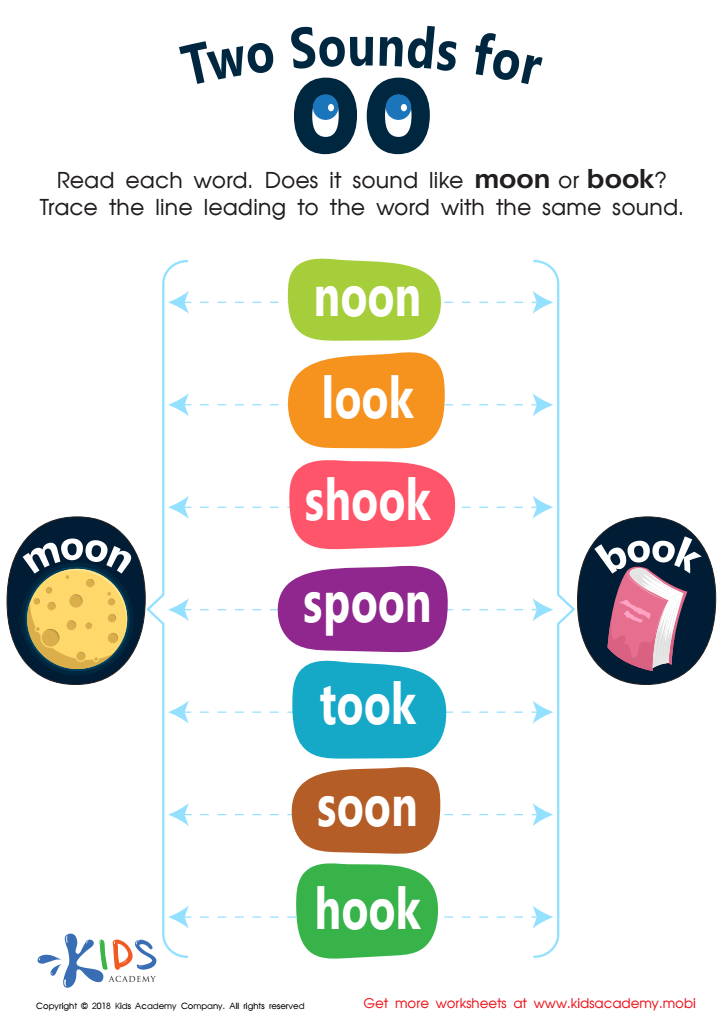
Two Sounds for OO Worksheet
This worksheet helps kids learn the different sounds of the -oo digraph. They match words based on whether they sound like moon or book, plus practice fine motor skills tracing lines. Fun and educational!
Two Sounds for OO Worksheet
Worksheet
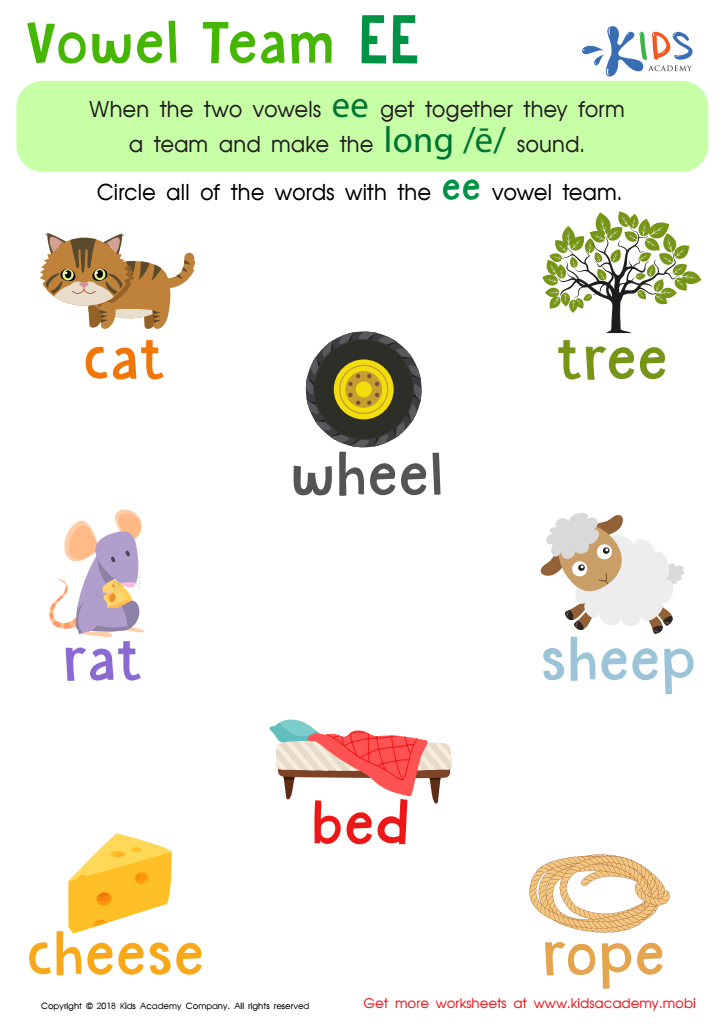
Reading: Vowel Team EE Worksheet
This worksheet is perfect for helping young learners master the /ee/ vowel team. It shows the first vowel with a long sound and the second vowel silent. It also provides pictures for unfamiliar words for readers of all levels. It's an ideal resource for teaching phonics skills.
Reading: Vowel Team EE Worksheet
Worksheet
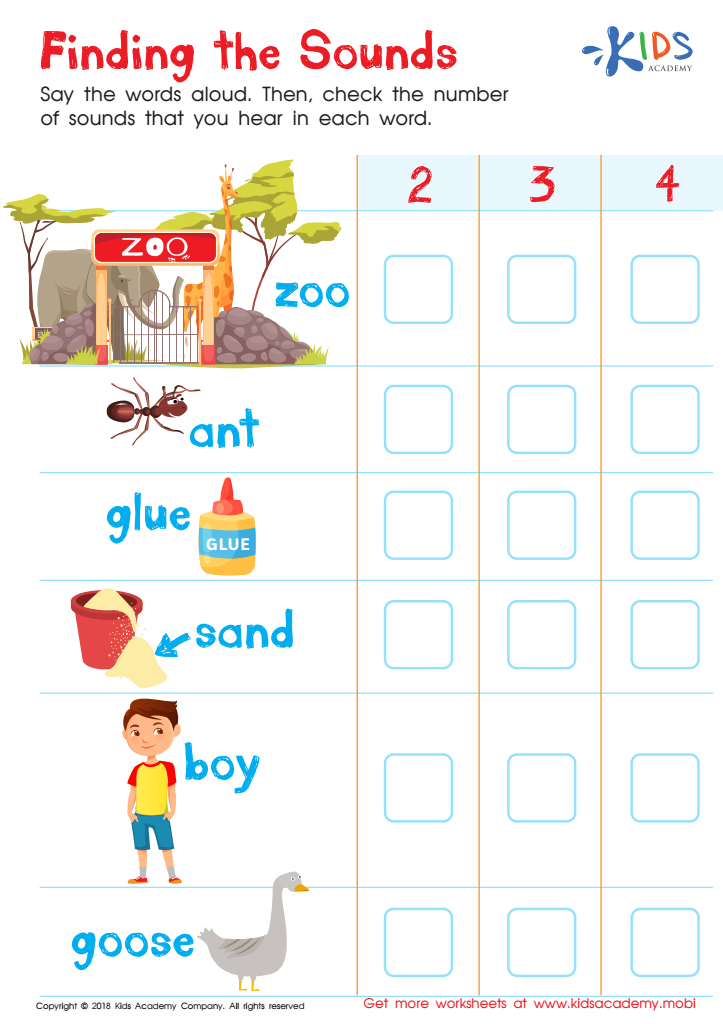
Finding the Sounds Worksheet
This free colorful worksheet assists children in learning words and breaking them down into sounds. It boosts auditory discrimination, phonological awareness and fine motor skills. Picture clues help them read confidently, and they can check the appropriate boxes to practice their reading skills.
Finding the Sounds Worksheet
Worksheet
Join Kids Academy for Free
Who is primarily going to use this learning content?








Reading fluency is a crucial skill for children aged 6-8, and both parents and teachers should prioritize its development. At this stage, kids are transitioning from learning to read to reading to learn. Fluency allows them to read smoothly and with expression, enabling better comprehension of the material. When children can read fluently, they have more cognitive resources available to understand and engage with the text, leading to improved academic performance across subjects.
Additionally, fostering reading fluency builds a child's confidence and motivation. Fluent readers are less likely to struggle with pronunciation and decoding, which decreases frustration and encourages a love for reading. Parents can support this by reading with their children, offering varied texts, and celebrating their reading successes.
Teachers can implement strategies such as guided repeated reading and shared reading experiences to promote fluency in classrooms. Integrating fun and engaging practices like reading games and group activities can help students enjoy the learning process.
Ultimately, investing time and resources into developing reading fluency during these formative years sets a strong foundation for a child's educational journey, equipping them with essential skills for lifelong learning and literacy.







