Sound differentiation Normal Alphabet Worksheets for Ages 6-8
3 filtered results
-
From - To
Enhance your child's reading skills with our Sound Differentiation Normal Alphabet Worksheets for Ages 6-8. Perfectly designed to enable young learners to recognize and distinguish between different sounds, these worksheets offer engaging activities that build foundational phonemic awareness. Through a variety of exercises including matching, coloring, and sorting, kids will enhance their ability to differentiate letter sounds effectively. Ideal for classroom use or at-home practice, these worksheets support early literacy, paving the way for improved reading and writing proficiency. Foster your child's learning journey with our expertly crafted, fun-filled phonics worksheets!
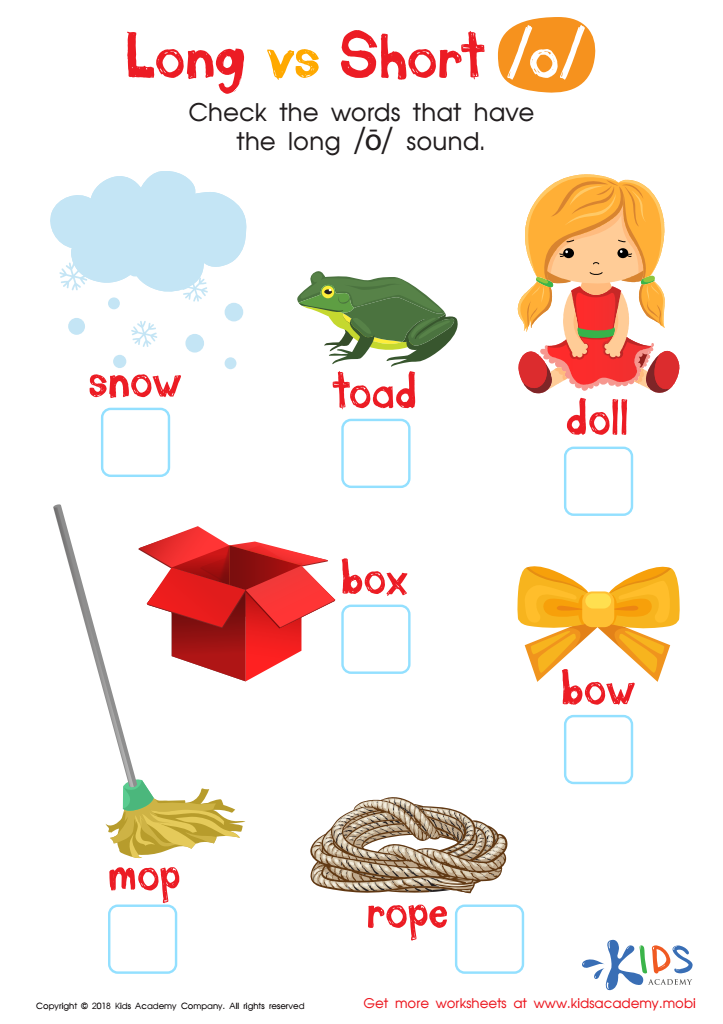
Long vs Short O Reading Worksheet
 Assign to My Students
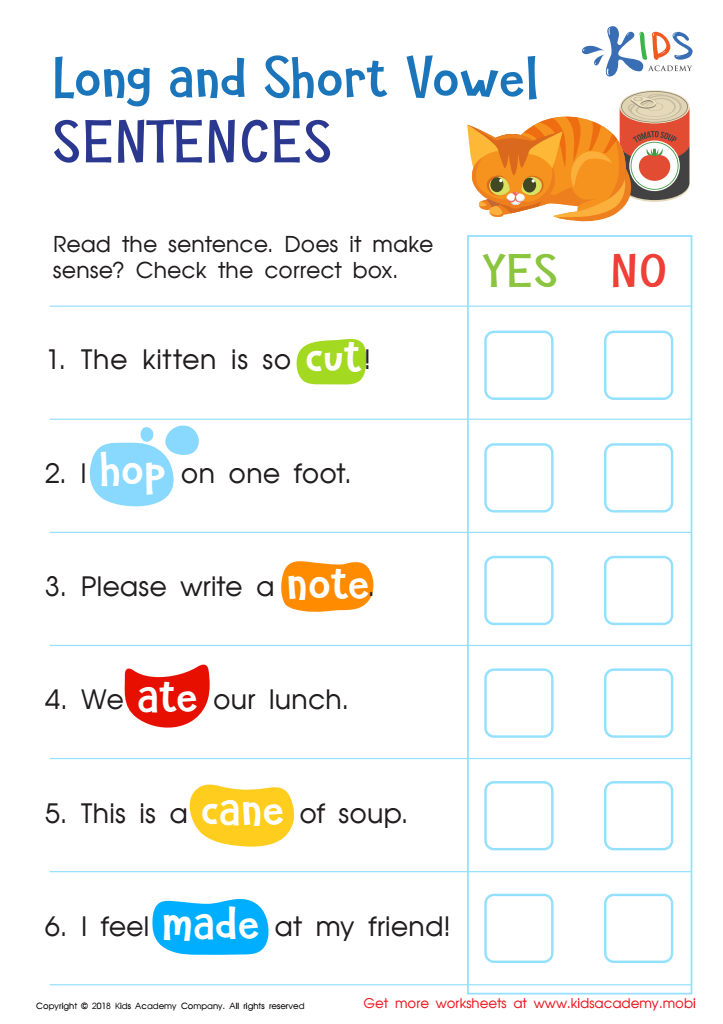
Long and Short Vowel Sentences: Assessment Worksheet
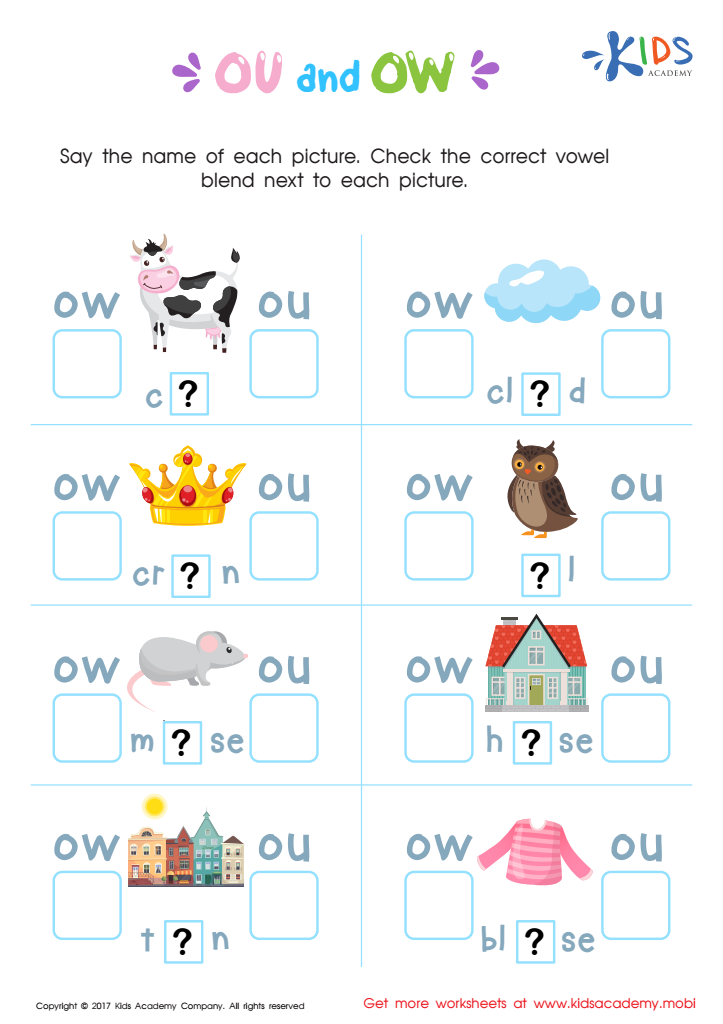
OU and OW Words Worksheet








Understanding sound differentiation in the normal alphabet is crucial for children aged 6-8, a key period for language acquisition and literacy development. During these formative years, a child's brain is highly receptive to learning nuances in phonetics, which forms the backbone of reading and writing. When parents and teachers focus on sound differentiation, they help children recognize and appreciate the distinct sounds that different letters and combinations of letters produce. This skill is foundational to phonemic awareness, an essential component of reading proficiency.
For example, distinguishing between similar sounds like "b" and "d" or "p" and "q" minimizes confusion, facilitating smoother reading experiences. Children who struggle with sound differentiation may take longer to decode words, which can lead to frustration and a lack of confidence.
Furthermore, strong phonemic awareness contribute significantly to spelling and writing skills. By understanding how letters combine to form various sounds, children can spell more accurately and develop better reading comprehension. Teachers and parents who emphasize these skills help build a strong, literate foundation for further education. In short, attention to sound differentiation prepares children for more complex linguistic tasks, aiding in overall academic success and love of learning.







