
Spelling improvement Normal Alphabet Worksheets for Ages 6-8
6 filtered results
Difficulty Level
Grade
Age
-
From - To
Subject
Activity
Standards
Boost your child's spelling skills with our Spelling Improvement Normal Alphabet Worksheets, designed specifically for ages 6-8. These worksheets provide engaging, age-appropriate activities to reinforce spelling proficiency using the standard alphabet. Each printable helps kids master common spelling rules, build vocabulary, and improve overall reading comprehension. With visually appealing graphics and concise instructions, our worksheets make learning both fun and effective. Ideal for use at home or in the classroom, they offer a structured approach to help young learners excel in spelling. Visit our website to explore a variety of educational resources dedicated to enhancing your child's academic success.
Favorites
With answer key
Interactive
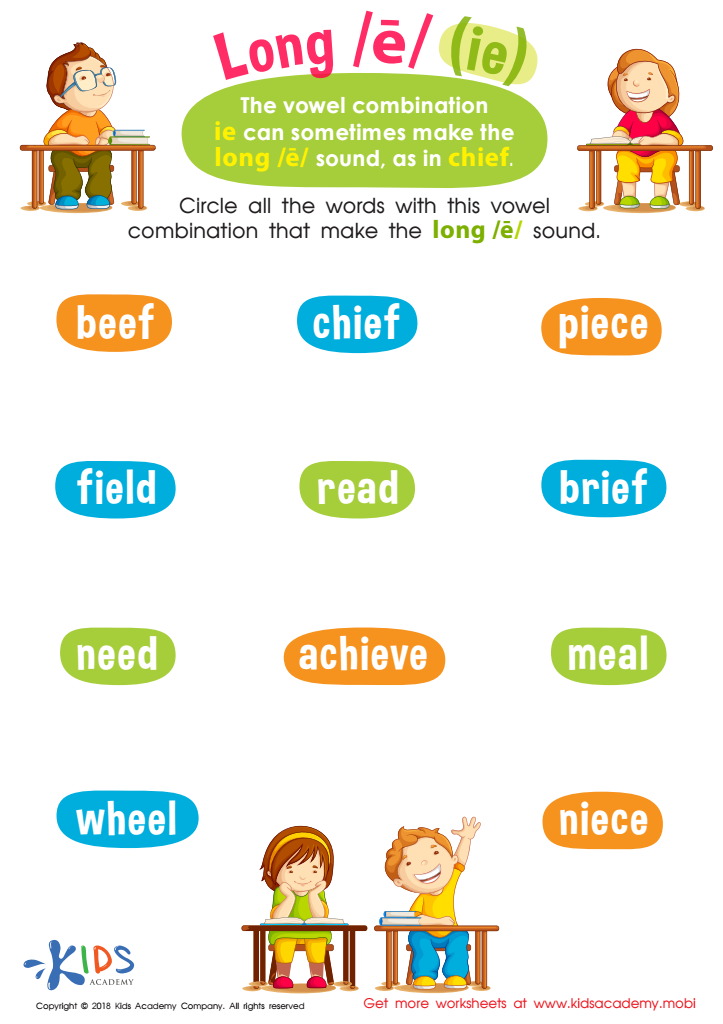
Reading: Long E and IE Worksheet
Ask your child to name some words with the long /e/ sound they hear every day. Then, read aloud all the words in the worksheet with them. Ask them to circle the words containing ie that make this sound.
Reading: Long E and IE Worksheet
Worksheet
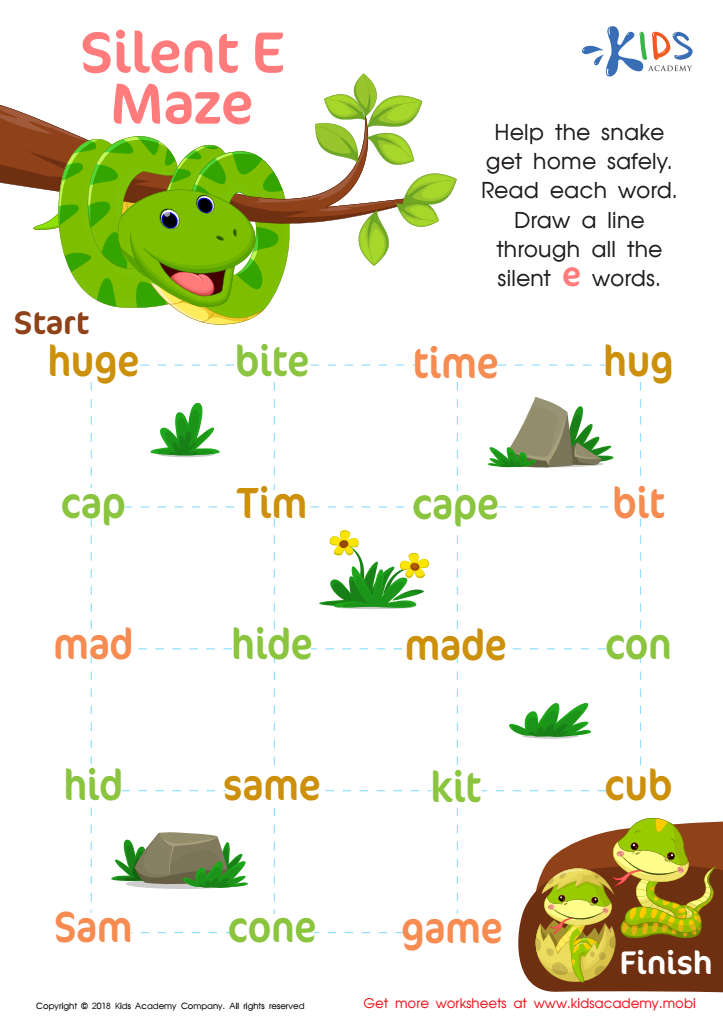
Silent E Maze Worksheet
Kids love mazes! This fun printable worksheet lets them help a mama snake get home to her babies, using Silent E words. They'll practice fine motor skills, while they draw lines through words that have Silent E and words with closed syllables that don't. It's a great way to help them recognize Silent E words!
Silent E Maze Worksheet
Worksheet
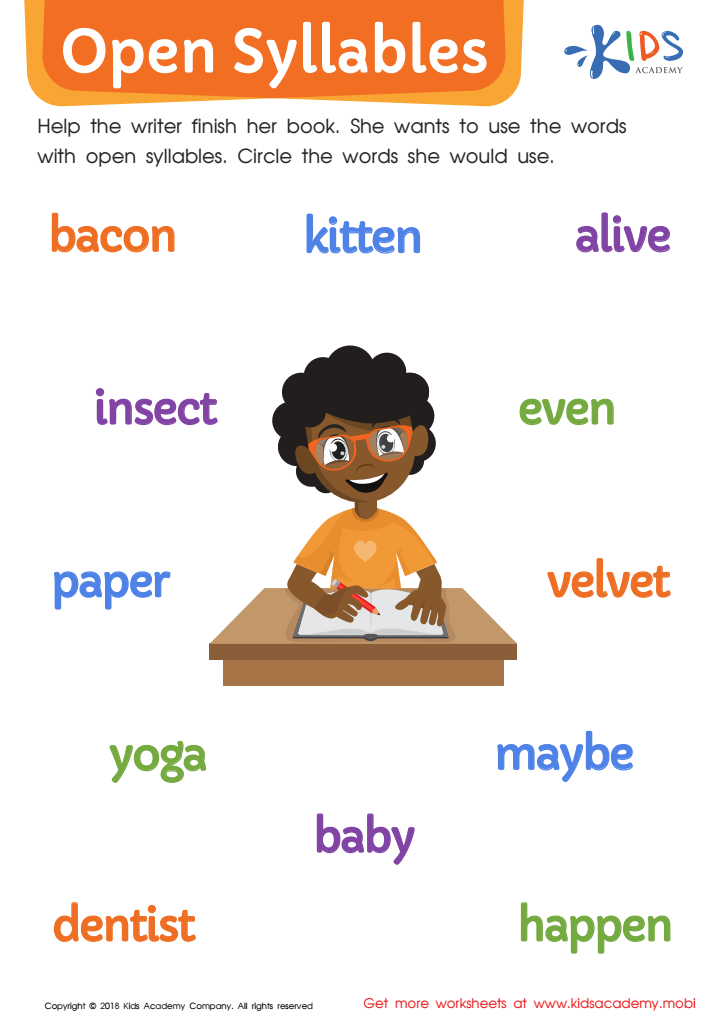
Open Syllables Worksheet
Before beginning this worksheet, make sure your child knows what open syllables are. If not, take time to teach them with examples. Then, help the writer finish her book by circling words with open syllables. She needs your child's help!
Open Syllables Worksheet
Worksheet
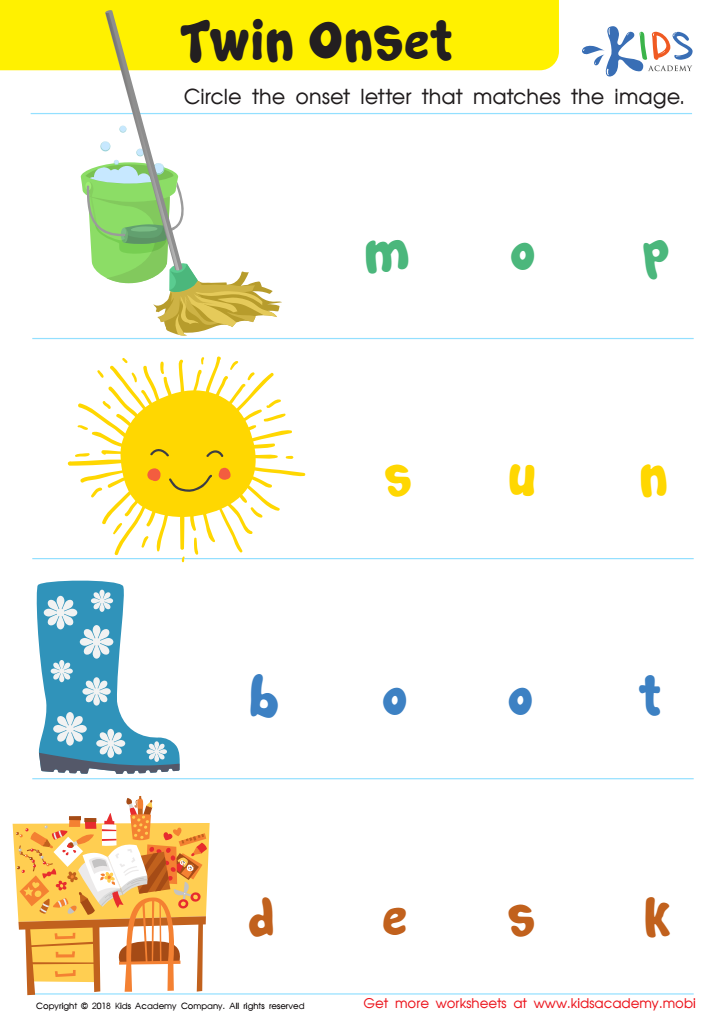
Twin Onset Worksheet
Children's phonological skills and reading/spelling strategies are strengthened by isolating initial consonants. This fun PDF worksheet encourages kids to trace the correct onset letter and hone fine motor skills. It's a great way to introduce early reading and spelling.
Twin Onset Worksheet
Worksheet
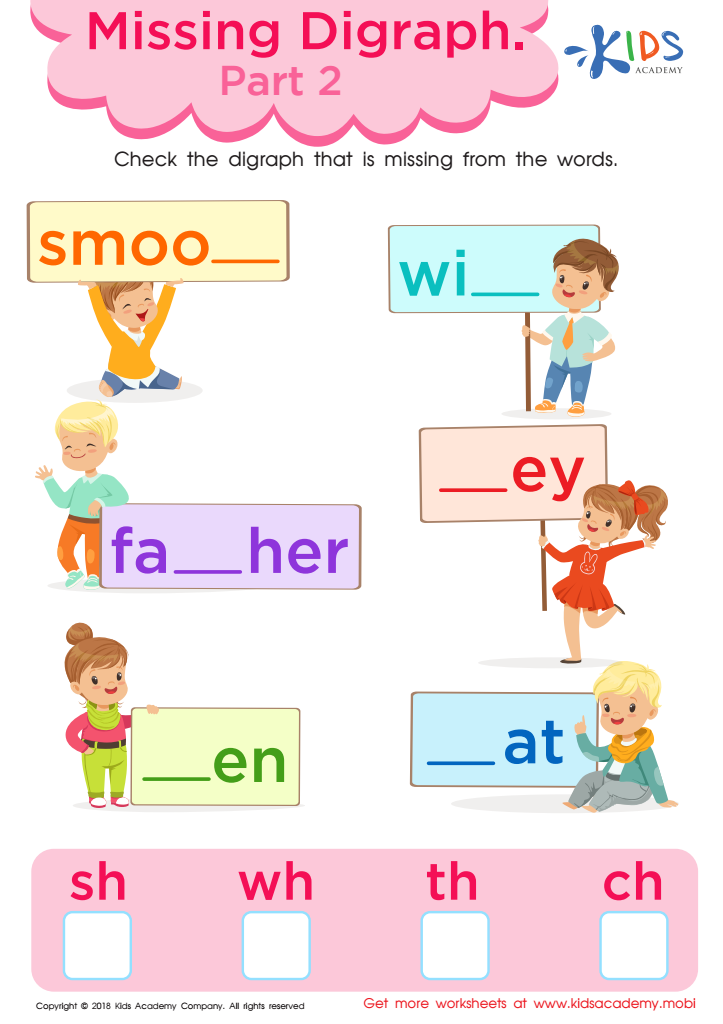
Missing Digraph: Part 2 Worksheet
Practice the "th" digraph with this fun worksheet from Kids Academy! See how it appears at the beginning, middle, or end of words and help learners fill in the blanks. Check if they got it right by finding the th digraph at the bottom!
Missing Digraph: Part 2 Worksheet
Worksheet
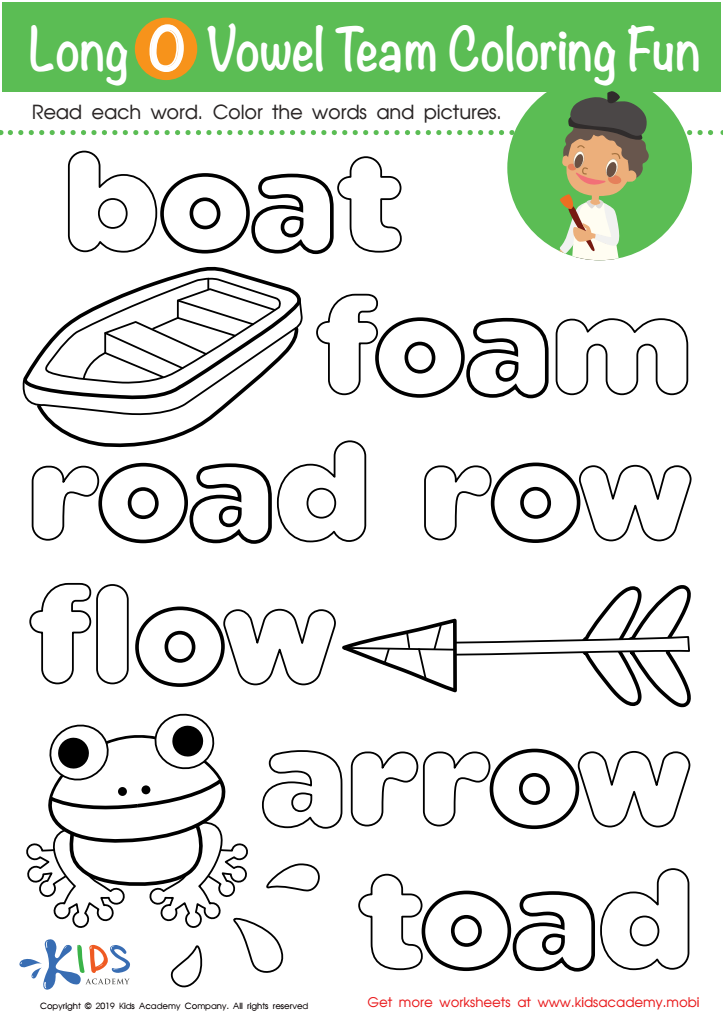
Long O Vowel Team Coloring Worksheet
Divide your class into teams and have them work together to identify and pronounce the long O sound in words like "boat" and "flow". As they read aloud, have the rest of the class listen attentively. Then let teams color in the words and matching pictures, reinforcing the lesson. This simple printout is perfect for phonics lessons and a fun way to energize your class.
Download (PDF)
 Assign to My Students
Assign to My Students
Long O Vowel Team Coloring Worksheet
Worksheet
Join Kids Academy for Free
Who is primarily going to use this learning content?







Spelling improvement at ages 6-8 is critical for several foundational reasons. First, mastering spelling enhances a child's reading skills. Understandable and accurate spelling allows children to recognize and process words more quickly and effectively, crucial for reading fluency and comprehension. Second, it supports writing development. Young writers need to spell words correctly to communicate clearly and focus on higher-order writing skills like storytelling and persuasion without getting bogged down by basic errors.
Furthermore, spelling instruction enriches vocabulary. When children learn how to spell a new word, they're simultaneously expanding their knowledge and understanding of that word’s meaning and context. This lexicon growth is vital for academic success and effective communication. Spelling also adheres to many language rules and patterns, introducing children early to the structural elements of English, which benefits future language learning and usage.
Socially and emotionally, improvement in spelling fosters confidence. Struggling with spelling can lead to frustration and decreased self-esteem, whereas progress encourages a positive attitude toward learning and schoolwork. Lastly, consistent spelling practice develops attention to detail and memory skills, both essential for academic achievement across subjects. Thus, both teachers and parents should prioritize and nurture spelling skills during these formative years.







