Visual discrimination skills Normal Alphabet Worksheets for Ages 6-8
5 filtered results
-
From - To
Enhance your child's visual discrimination skills with our engaging Normal Alphabet Worksheets, designed specifically for ages 6-8. These worksheets provide fun and interactive activities that help young learners identify differences and similarities in letters and words, essential for early literacy development. Each worksheet features colorful designs and age-appropriate exercises that foster both learning and creativity. Perfect for home or classroom use, our resources support children in recognizing patterns, improving focus, and building a strong foundation for reading and writing. Dive into the world of letters with these captivating worksheets and watch your child flourish in their learning journey!
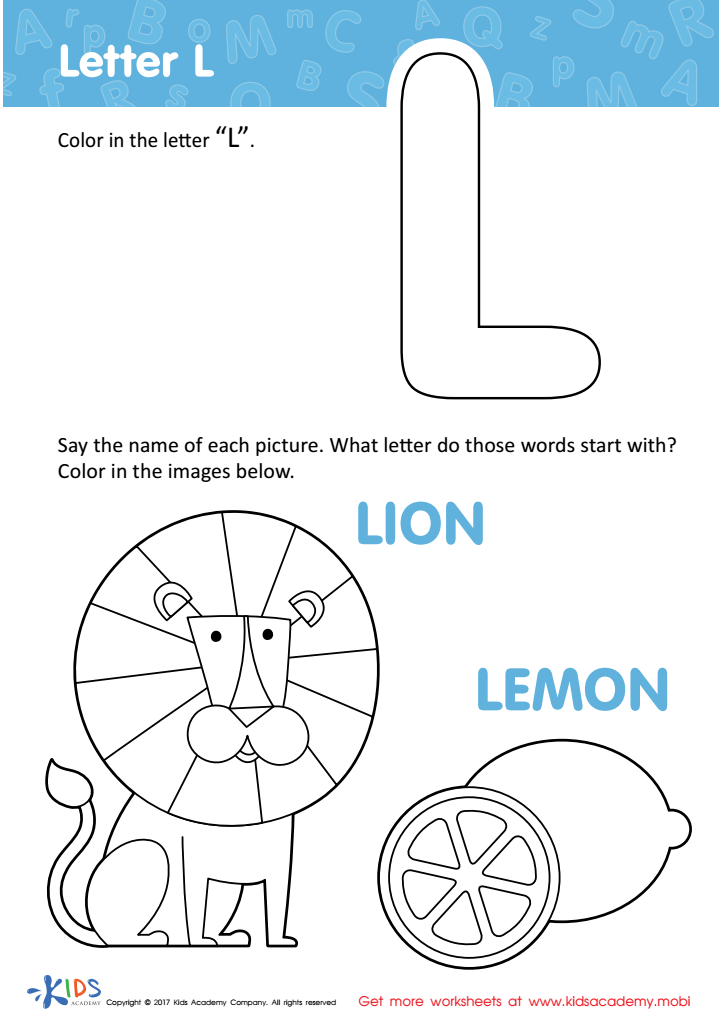
Letter L Coloring Sheet
 Assign to My Students
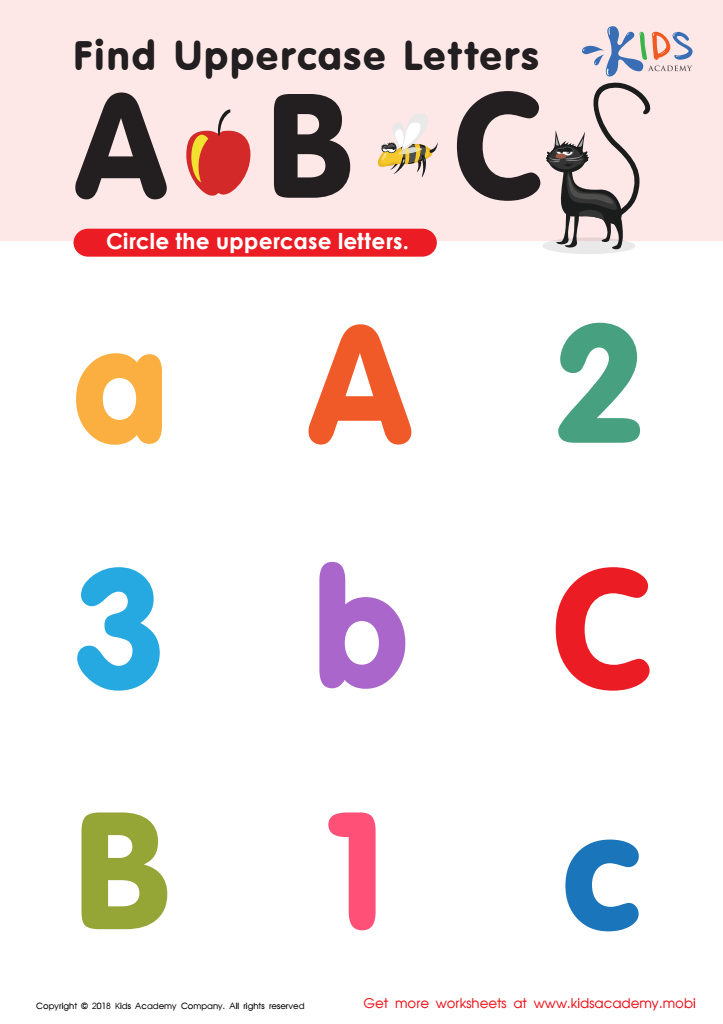
Find Uppercase Letters A, B, and C Worksheet
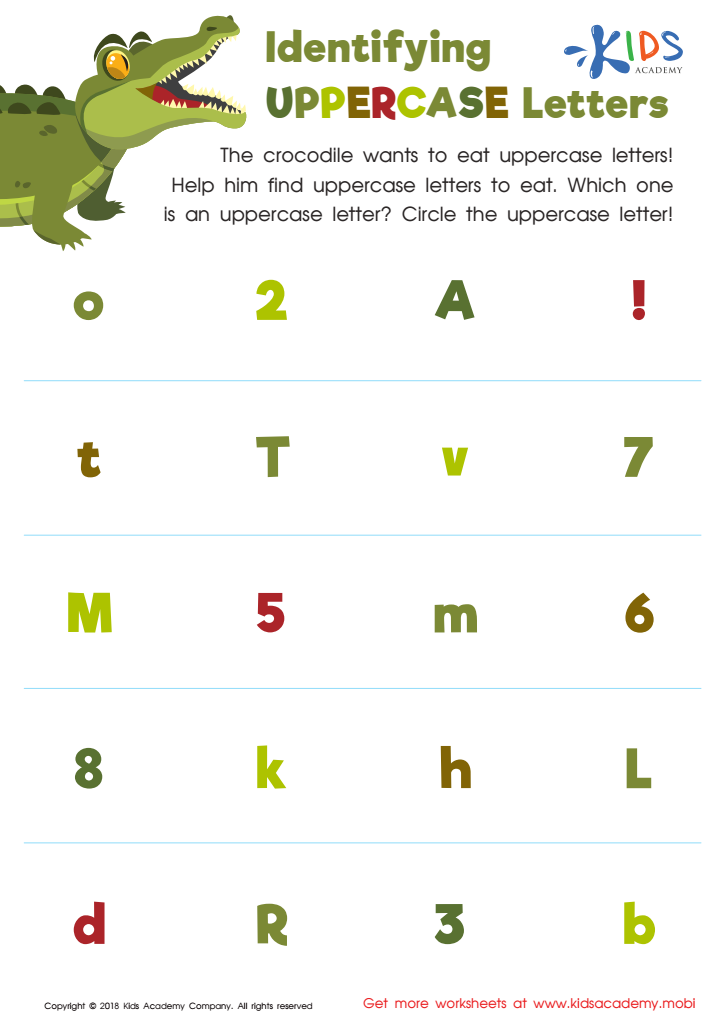
Identifying Uppercase Letters Worksheet
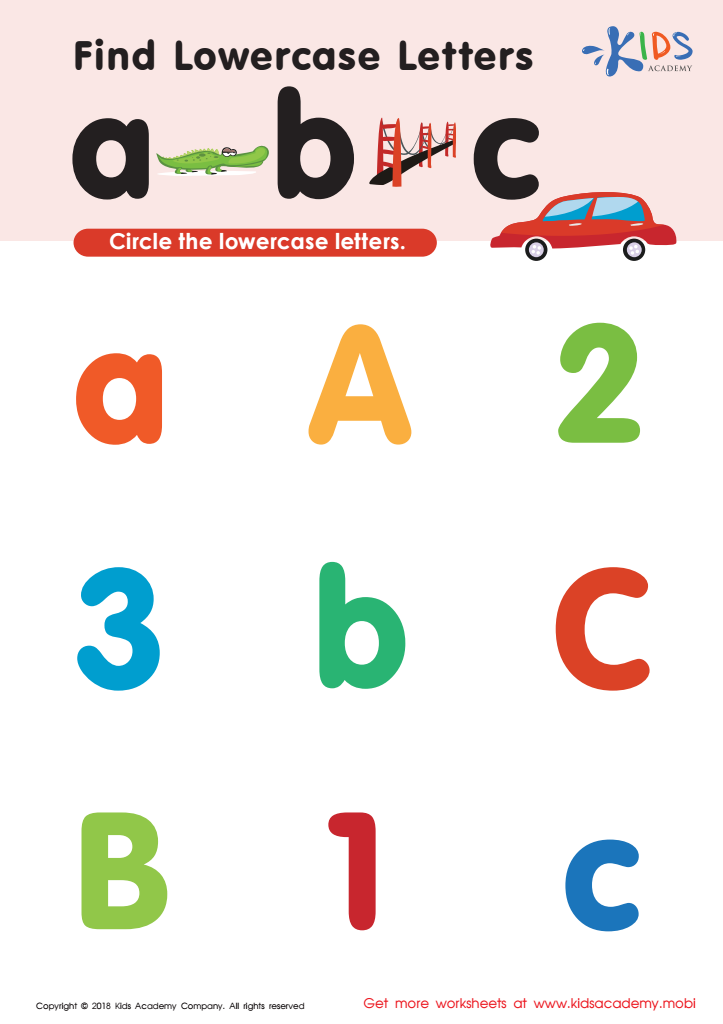
Find lowercase letters a b c Worksheet
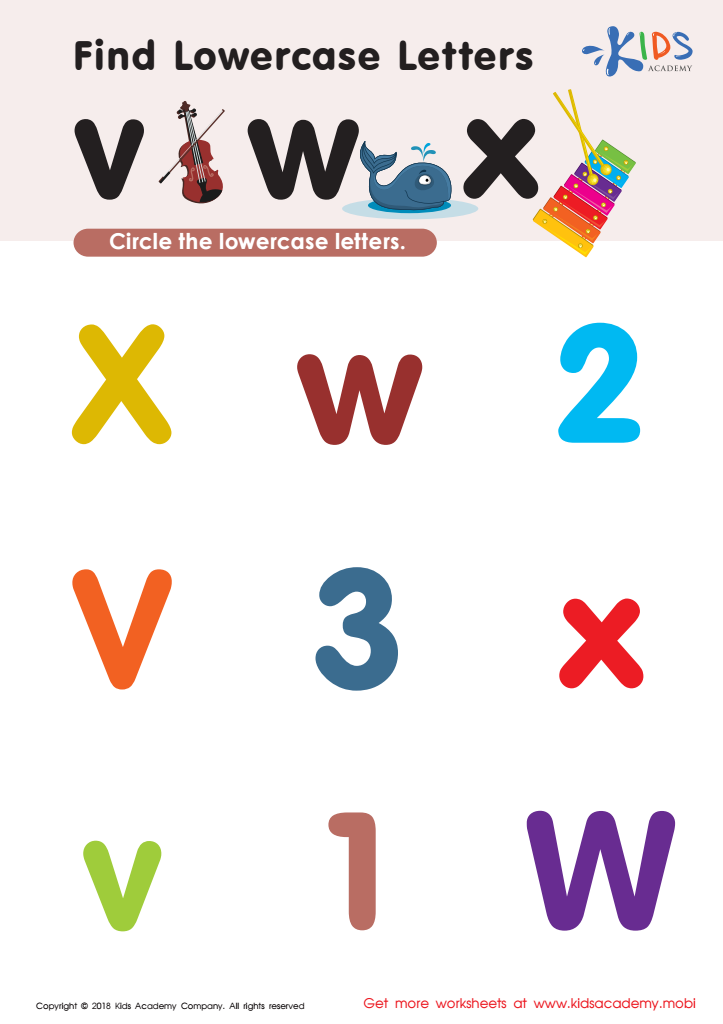
Find Lowercase Letters v w x Worksheet






Visual discrimination skills are crucial for children aged 6-8 as they significantly influence early literacy development, academic success, and everyday problem-solving abilities. At this age, kids are bridging the gap between foundational skills and more complex learning. Strong visual discrimination helps them identify differences and similarities between letters, numbers, and shapes, which is essential for reading, writing, and math.
Parents and teachers should prioritize these skills because they form the basis for critical tasks, such as distinguishing between letters that look similar, like 'b' and 'd,' or understanding variations in symbols and figures in math. Enhanced visual discrimination contributes to a child's ability to recognize sight words, improve spelling, and lay the groundwork for more advanced educational concepts.
Furthermore, visual discrimination skills aid in fostering confidence and independence in young learners. As children become more proficient in identifying and manipulating visual information, they will find it easier to engage with classroom materials and participate in activities, boosting their overall motivation and enjoyment in learning.
In summary, nurturing visual discrimination in early education equips children with essential skills for their academic journey and lifelong learning, making it imperative for both parents and teachers to focus on developing these abilities.







