
Reading skills improvement Normal Phonics Worksheets for Ages 6-8
8 filtered results
Difficulty Level
Grade
Age
-
From - To
Subject
Activity
Standards
Enhance your child's reading skills with our "Normal Phonics Worksheets for Ages 6-8." Specifically designed for early readers, these engaging worksheets focus on building fundamental phonics abilities. They help children recognize letter sounds, blend phonemes, and master word formations, paving the way for confident reading. Colorful exercises and age-appropriate challenges make learning an enjoyable and effective experience. With consistent practice, kids will improve their decoding skills, pronunciation, and reading fluency. Suitable for both classroom and home use, these worksheets are a valuable resource in cultivating a solid reading foundation. Start fostering lifelong literacy skills today!
Favorites
With answer key
Interactive
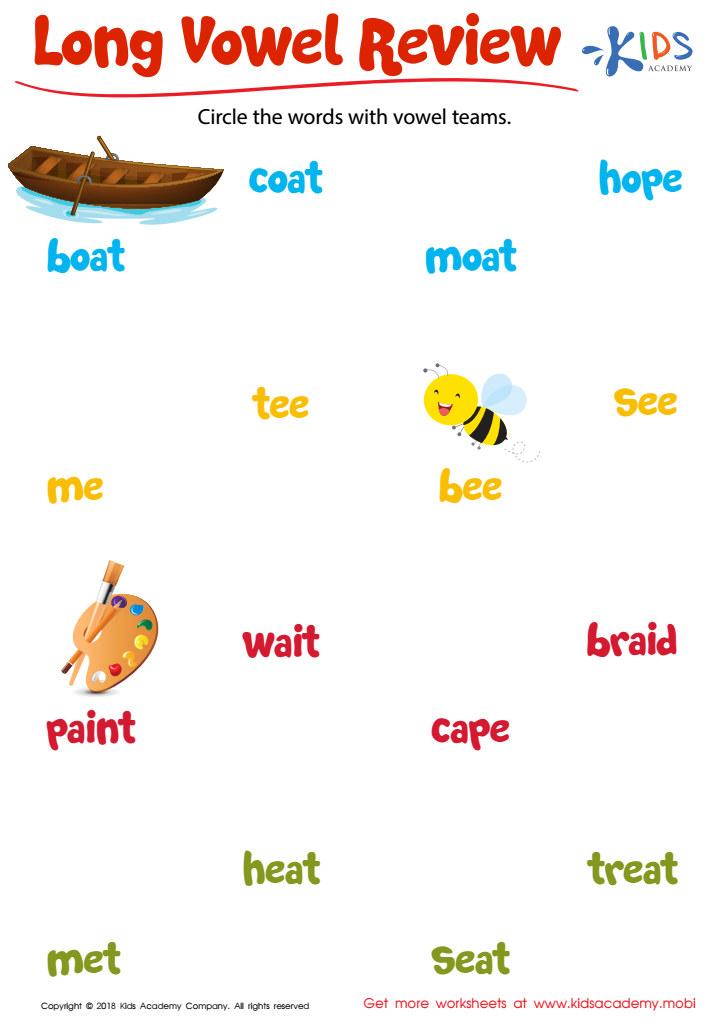
Long Vowel Review Worksheet
Vowel teams like "ea" and "ai" help us make words, and understanding these patterns aids emerging readers in becoming more fluent. This review worksheet has students finding words with vowel teams that make the long vowel sound, and helps them recognize high-frequency words.
 Assign to My Students
Long Vowel Review Worksheet
Worksheet
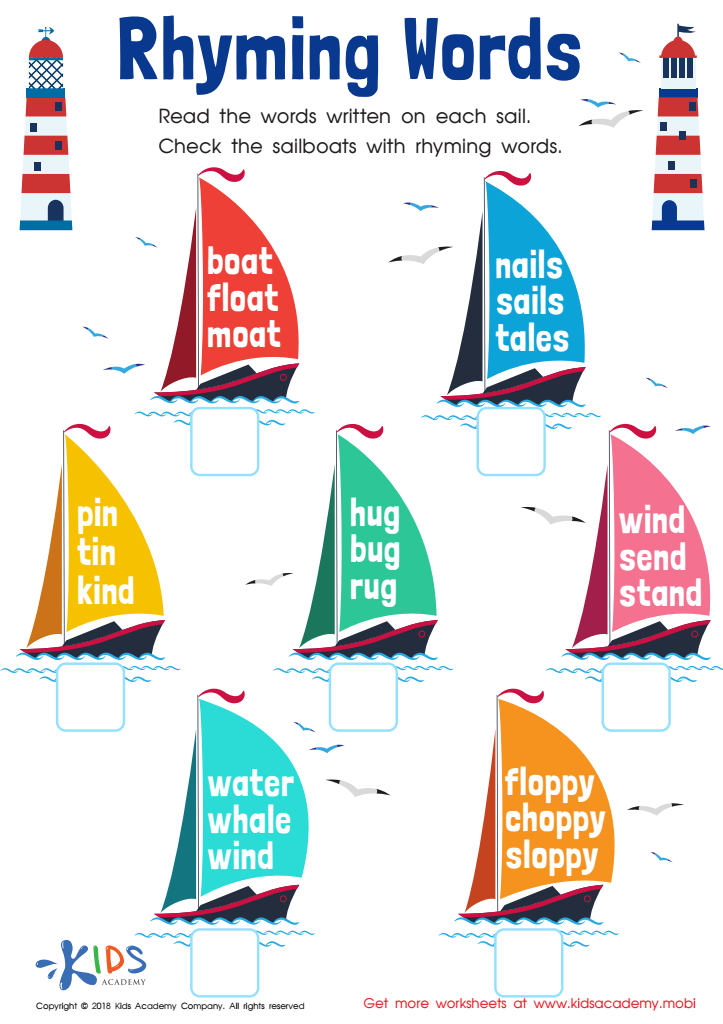
Rhyming Words Worksheet
Does your child know about rhyming words? Get them interested in poetry and explain that these words have similar sounds when pronounced. Read the words on each sailboat to your child and ask them to identify the rhyming pairs. Guide them to check the sailboats.
Rhyming Words Worksheet
Worksheet
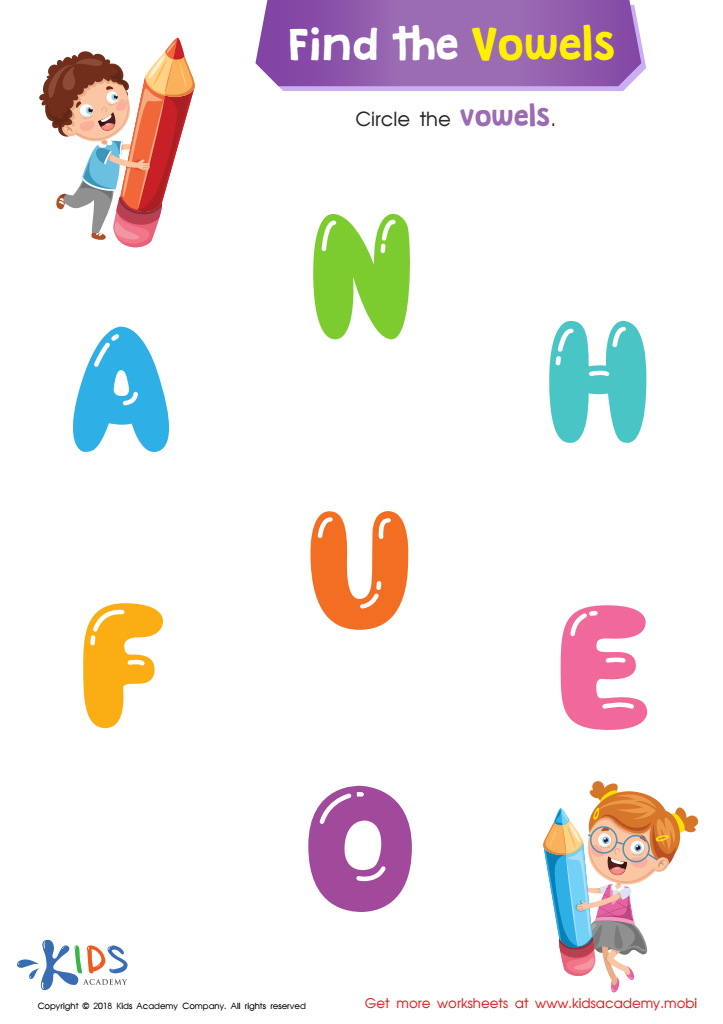
Find the Vowels Reading Worksheet
This worksheet helps kids identify vowels with bright colors and engaging activities to strengthen their visual discrimination and fine motor skills. Young learners will find it easy to succeed and be excited to keep reading!
Find the Vowels Reading Worksheet
Worksheet
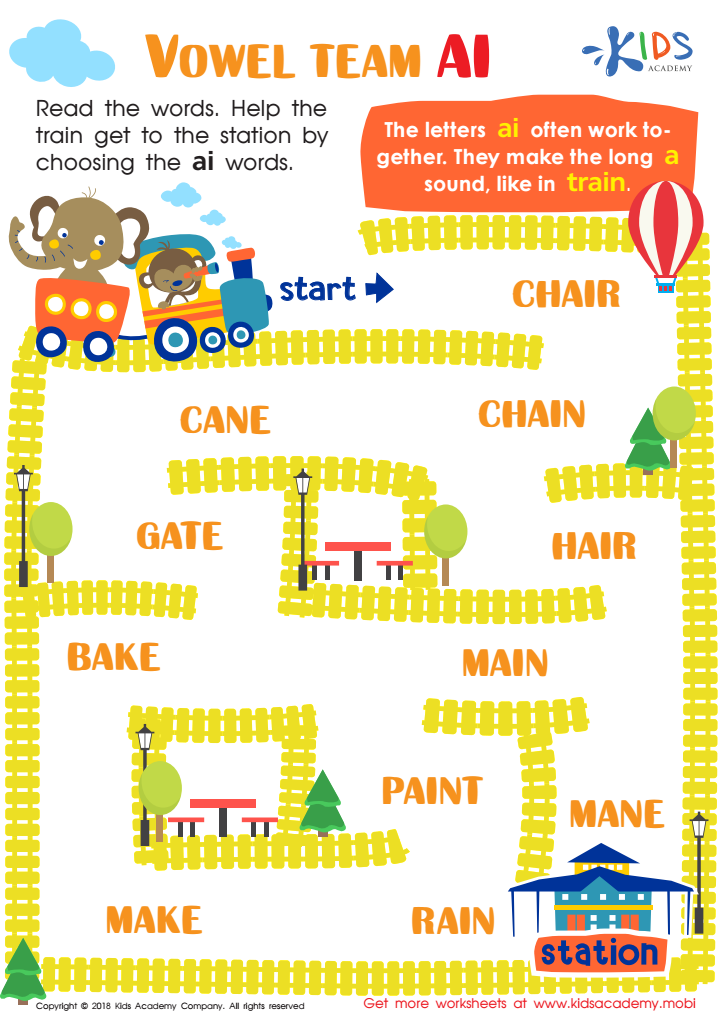
Vowel team ai Worksheet
Kids will have a blast learning about the -ai digraph with this fun worksheet. They'll read words with it and practice their motor skills as they help the animal duo get back to the train station. With success, they'll smile and enjoy the activity!
Vowel team ai Worksheet
Worksheet
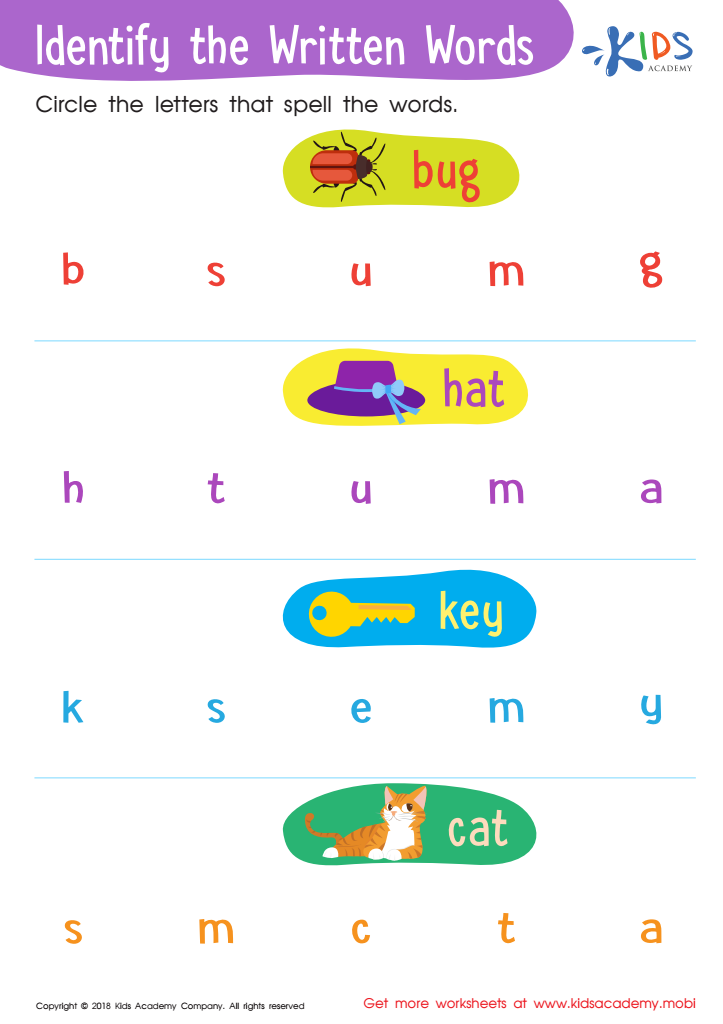
Identify the Written Words Worksheet
Have your students identify the objects on the printout, then spell the words. If they already know how to spell, this exercise should be easy. Help them circle the correct letters from the set to spell out the words. This is a great way to reinforce reading and spelling skills. Max 80 words.
Identify the Written Words Worksheet
Worksheet
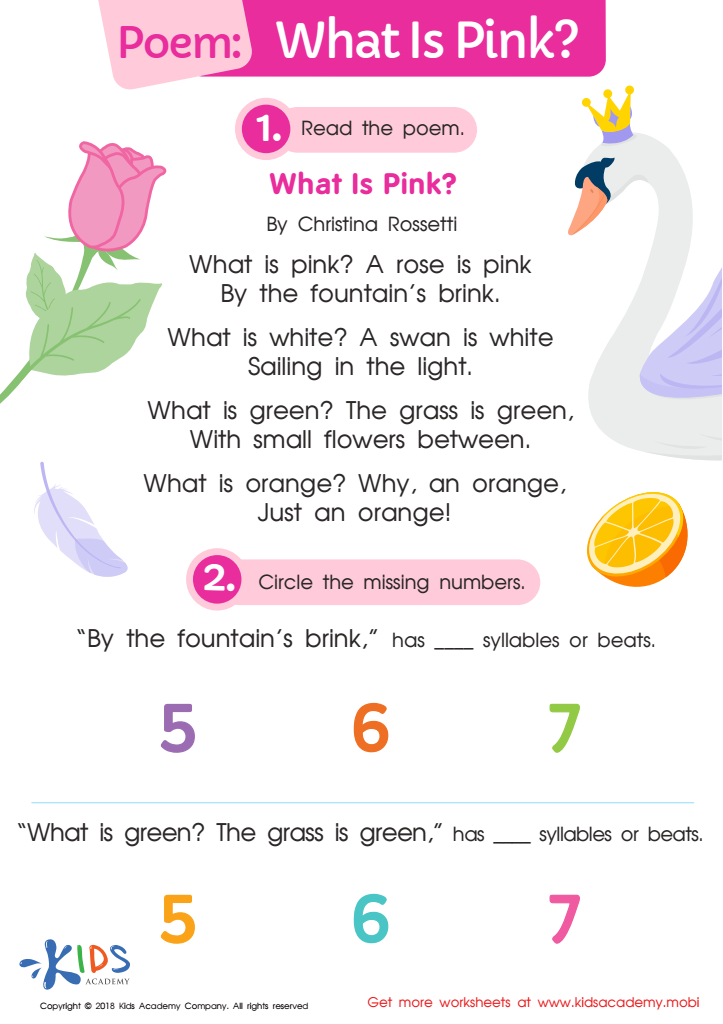
Poem: What Is Pink? Worksheet
Help your kids learn with short, fun, interesting poems! Read it aloud to them and point out the rhyme patterns. Have them circle the missing numbers to answer two questions. Show examples of objects with the colors in the poem. This will help them learn to read, and also understand colors better.
Poem: What Is Pink? Worksheet
Worksheet
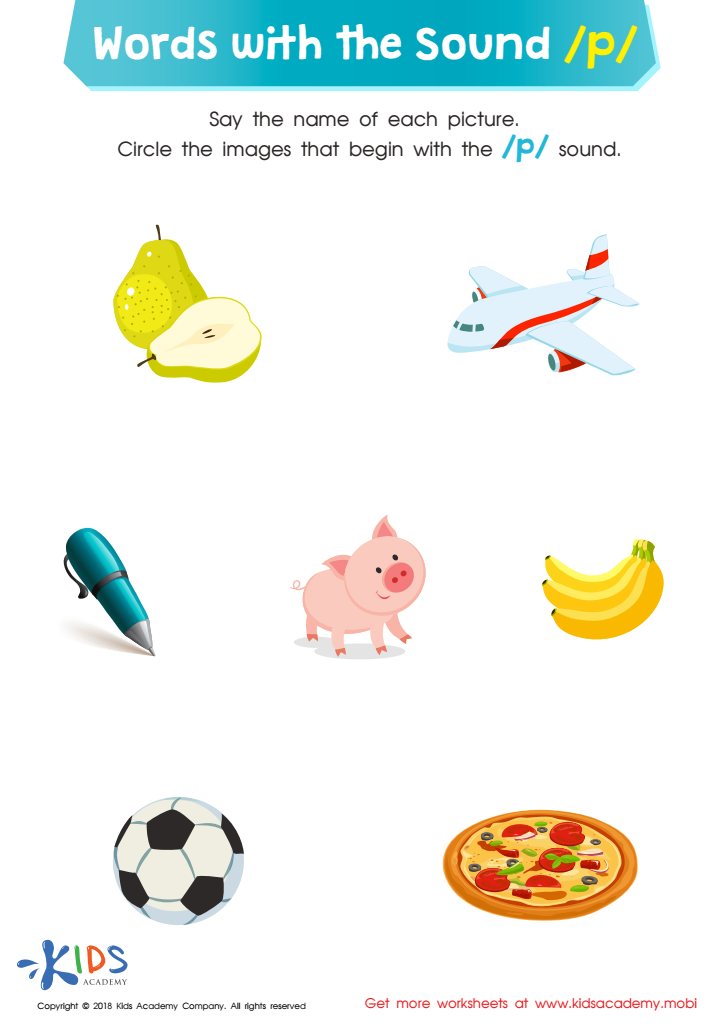
Words with sound p Reading Worksheet
Working on this fun worksheet? Name each picture aloud and listen carefully before circling those that start with the letter «p»! Pizza, pig, plane, or banana - practice phonics to help your child recognize the letter «p» sound for successful early reading and decoding!
Words with sound p Reading Worksheet
Worksheet
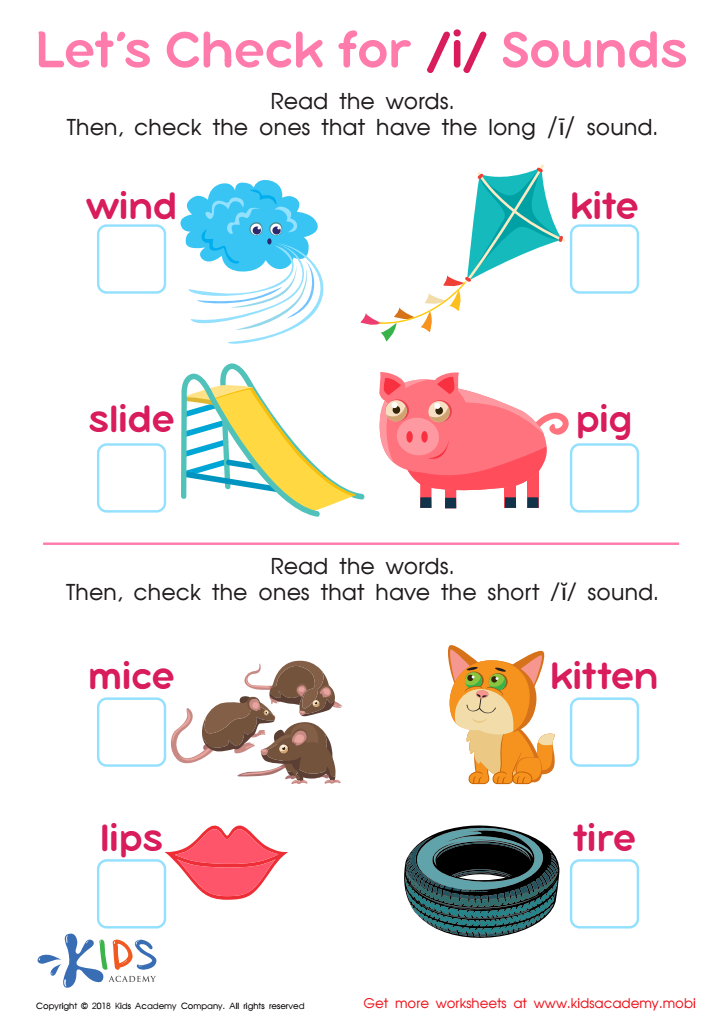
Let's Check for «i» Sounds Worksheet
This fun worksheet with pictures boosts phonics skills - differentiating between long «ī» and short «i» sounds in 1- and 2-syllable words. Kids use picture clues to read words, then check off the correct ones. It's a great way for new readers to practice early reading skills and find success on their own.
Let's Check for «i» Sounds Worksheet
Worksheet
Join Kids Academy for Free
Who is primarily going to use this learning content?








Investing in reading skills improvement through normal phonics for children ages 6-8 is crucial for several reasons. Firstly, it lays the foundational blocks for literacy, which is essential for all future academic subjects. Good phonics skills help children decode words more efficiently, promoting fluent reading and better comprehension.
At this age, children are at a developmental stage where their brains are particularly receptive to language acquisition. Phonics instruction links sounds to letters and syllables, enabling young readers to tackle unfamiliar words with confidence, enhancing their vocabulary and boosting their overall language proficiency.
Additionally, strong reading skills foster a child's critical thinking and imagination. When children read with ease and understanding, they become more engaged with the material, leading to greater enjoyment and a lifelong love for reading. This engagement can spur curiosity and encourage independent learning, contributing to overall intellectual growth.
From a social perspective, reading proficiency contributes to effective communication skills. As children improve their phonics and reading skills, they are better equipped to express themselves and understand others, which is crucial for social interaction.
Parent and teacher involvement in developing these skills ensures that children receive the support and encouragement they need to succeed. This collaborative effort is vital for identifying and addressing potential reading difficulties early, preventing future academic struggles. In summary, prioritizing reading and phonics skills for ages 6-8 sets the stage for a lifetime of educational success and personal growth.







