Filters

7 filtered results

Clear all filters
Favorites
With answer key
Interactive

7 filtered results

Difficulty Level

Grade


Unlock your child's reading potential with our Phonics Skills Normal Short Vowels Worksheets designed specifically for ages 6-8. These expertly crafted worksheets provide systematic practice to master short vowel sounds, an essential foundation for reading fluency. Each engaging activity helps young learners identify, pronounce, and spell short vowel words, boosting their confidence and phonics skills. Ideal for classroom use or at-home practice, our worksheets offer a fun, interactive way to reinforce important literacy concepts. Give your child the tools they need to excel in reading with our comprehensive phonics worksheets!

Check out this FREE Trial Lesson on Short Vowels for age 6-8!

Distinguish Between Words with Long O and Short O

Favorites
With answer key
Interactive
  • 6-8
  • Phonics Skills
  • Short Vowels
  • Normal
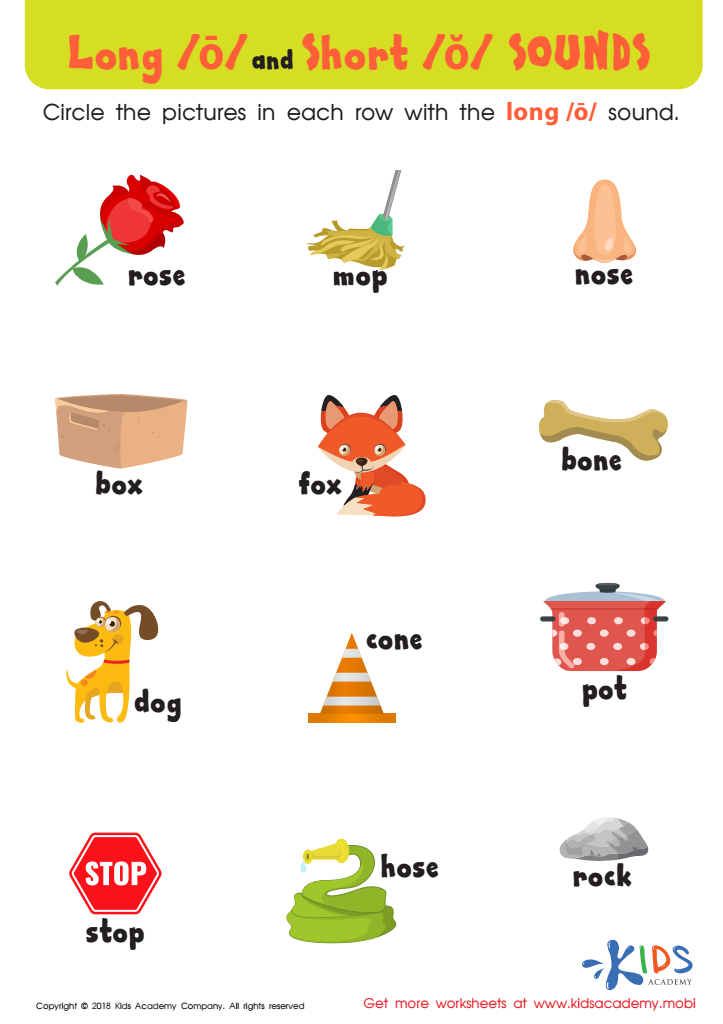
Reading: Long O and Short O Sounds Worksheet

Reading: Long O and Short O Sounds Worksheet

Students practice distinguishing between short and long O sounds with this reading worksheet. They sound out each word, then circle the pictures with the long O sound. Perfect for individual practice or to work with peers! Improves understanding of this skill and helps avoid confusion.
Reading: Long O and Short O Sounds Worksheet
Worksheet
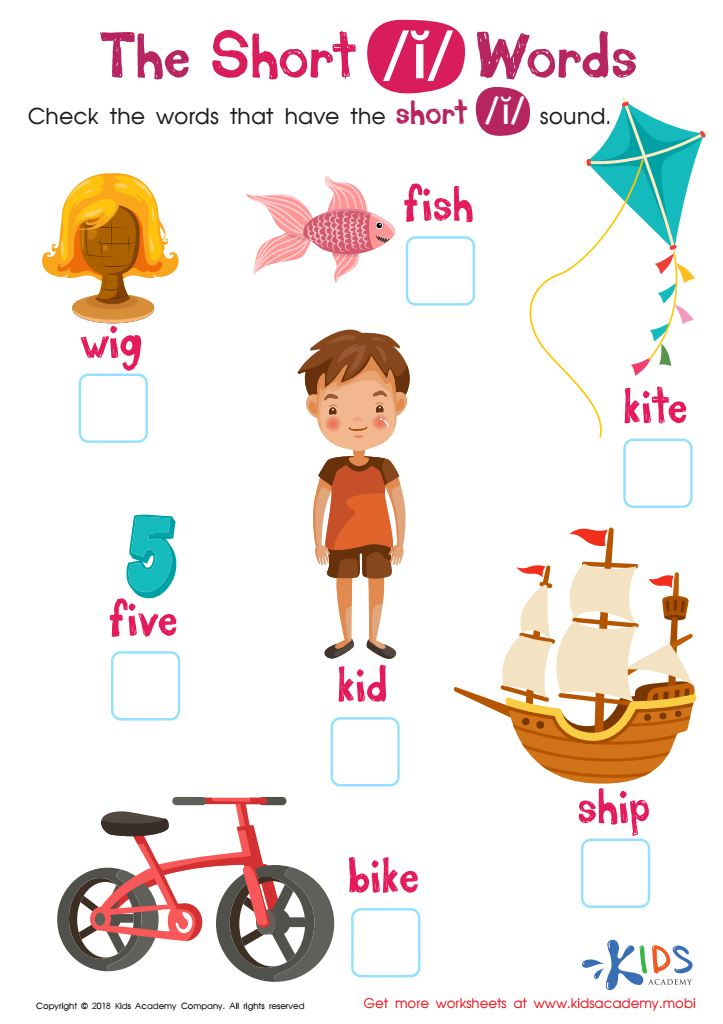
The Short I Words Reading Worksheet

The Short I Words Reading Worksheet

Teach your kindergartner phonics with this printout worksheet! It introduces the short «i» sound and helps them differentiate and articulate sounds and letters of the alphabet. With practice, your child will soon find it easy to classify sounds into long and short vowels.
The Short I Words Reading Worksheet
Worksheet
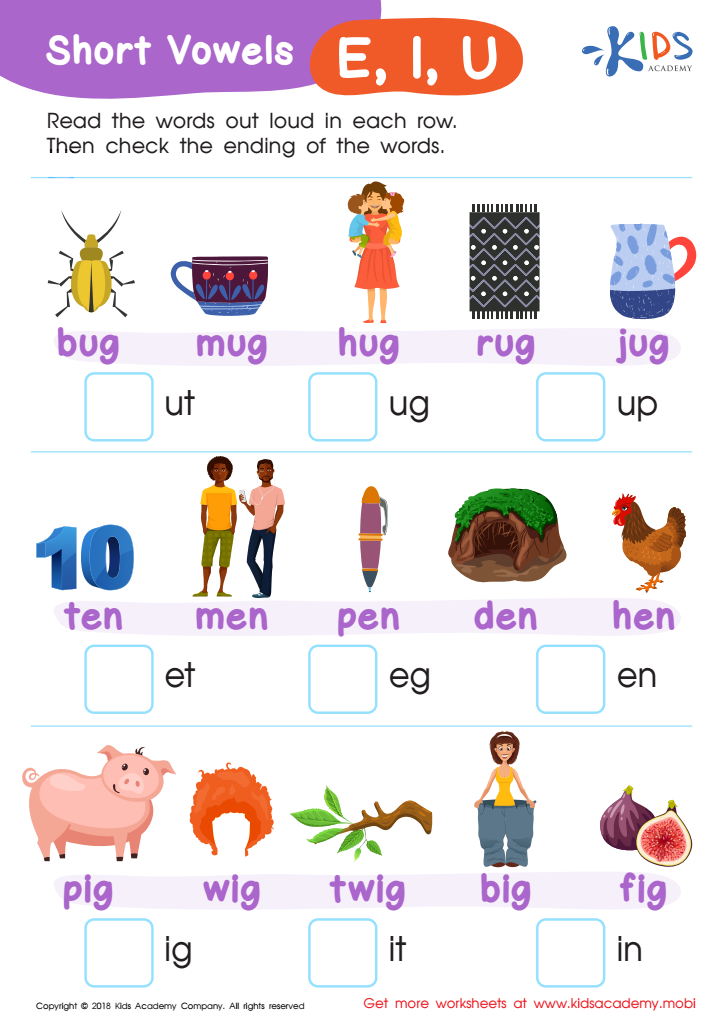
Short Vowels /e/, /i/, and /u/ Worksheet

Short Vowels /e/, /i/, and /u/ Worksheet

Your emergent reader can have fun while practicing their short vowel sounds with this free, brightly colored worksheet. They'll identify one-syllable words by their pictures, then match the correct ending for each. They'll gain an understanding of how short vowel sounds vary in closed syllables with different endings, without even realizing it!
Short Vowels /e/, /i/, and /u/ Worksheet
Worksheet
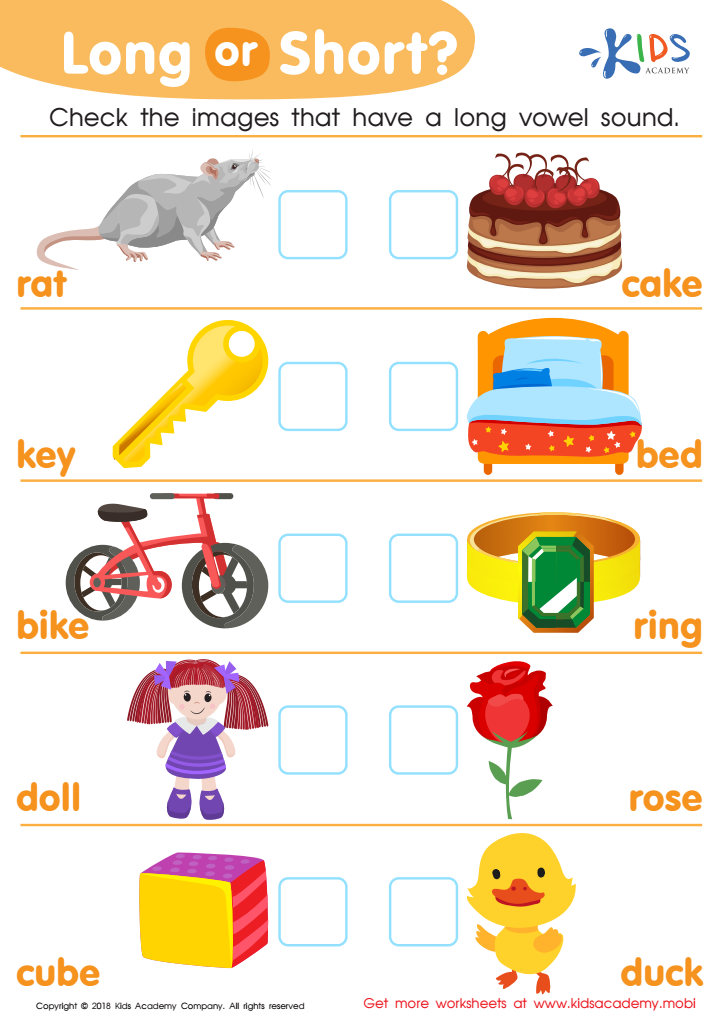
Long or Short Reading Worksheet

Long or Short Reading Worksheet

Every new reader needs to learn to recognize long and short vowel sounds. This phonics worksheet uses pictures of high-frequency words to help. Kids read the words and then check off images with long vowel sounds. It helps them learn to decode words and improves fine motor skills.
Long or Short Reading Worksheet
Worksheet
Two Sounds for OO Worksheet

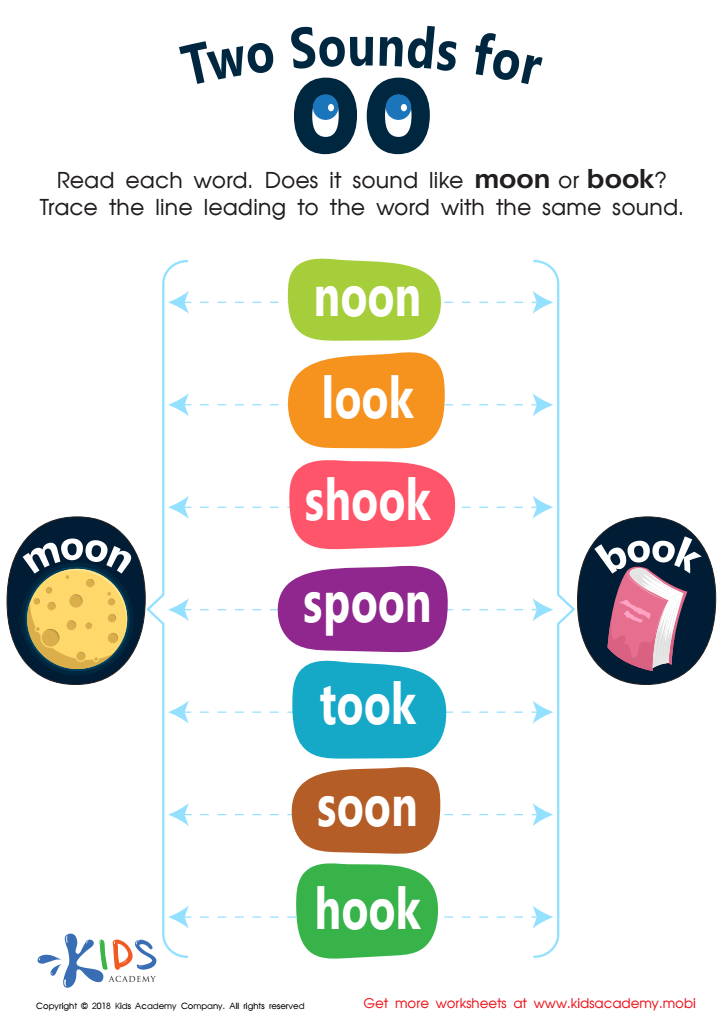
Two Sounds for OO Worksheet

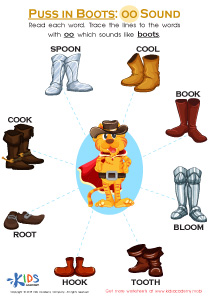
This worksheet helps kids learn the different sounds of the -oo digraph. They match words based on whether they sound like moon or book, plus practice fine motor skills tracing lines. Fun and educational!
Two Sounds for OO Worksheet
Worksheet
Long and Short Vowel Sentences: Assessment Worksheet

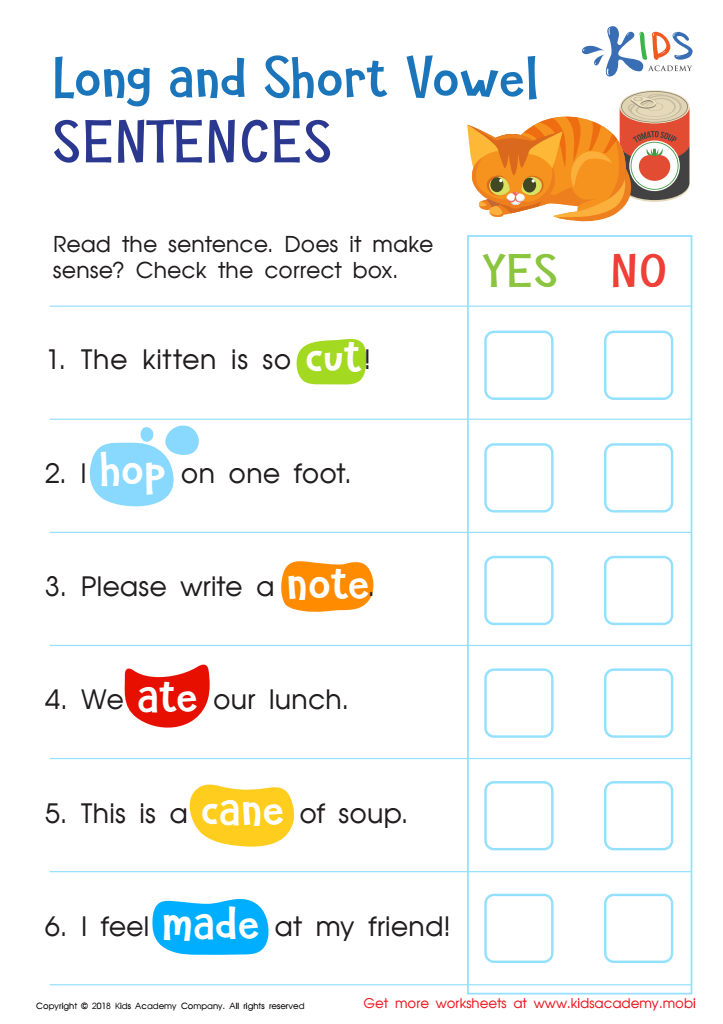
Long and Short Vowel Sentences: Assessment Worksheet

This printable worksheet helps kids practice differentiating between short and long vowel sounds. They'll use context clues to figure out which words make sense in simple sentences. A great way to build reading and writing skills!
Long and Short Vowel Sentences: Assessment Worksheet
Worksheet
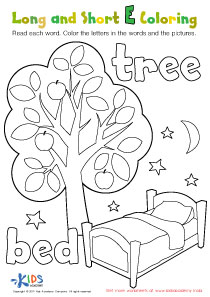
Long and Short E Worksheet

Long and Short E Worksheet

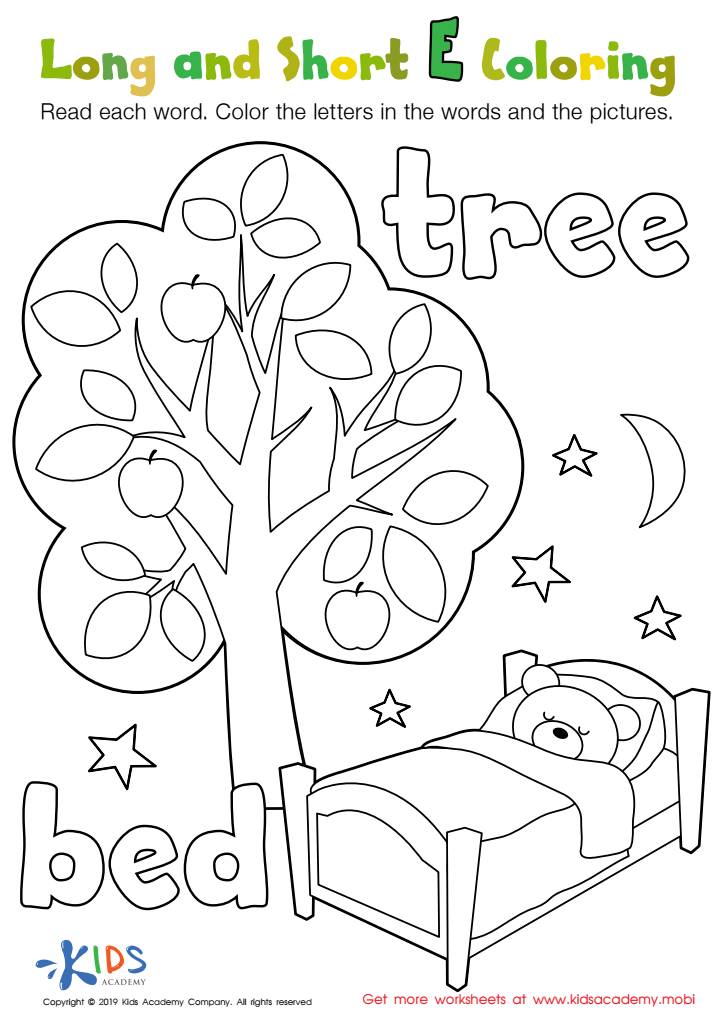
This fun printout makes learning phonics enjoyable for Grade 3 students. Get them to read the words “tree” and “bed” to recognize the different sounds of the letter “E”. After hearing the words they can color the words and the pictures to understand differences between long and short vowels.
Download (PDF)
Assign to My Students
Long and Short E Worksheet
Worksheet


Phonics skills focusing on short vowels are crucial for children ages 6-8 as they form the foundation for fluent reading and proficient spelling. During these formative years, children transition from recognizing individual letters and sounds to blending them into words, a critical step for literacy. Short vowels are particularly important because they appear frequently in simple, common words. Mastering these sounds enables children to decode new words more easily, enhancing both reading speed and comprehension.

When children develop strong phonics skills, they build confidence and become more motivated to read. This has long-term benefits, positively affecting their overall academic performance. Effective reading skills also lead to better writing, as children who understand phonics are typically better at spelling and constructing coherent sentences.

Teachers and parents should prioritize phonics practice, including engaging activities like games, flashcards, and reading exercises, to reinforce these skills. Addressing phonics at an early age can also help identify children who might struggle with reading, allowing for timely interventions and tailored educational support. In summary, focusing on phonics skills and short vowels ensures foundational literacy, fostering an enduring love for reading and learning.