
Letter formation Normal Tracing Letters Worksheets for Ages 6-8
3 filtered results
Difficulty Level
Grade
Age
-
From - To
Subject
Activity
Standards
Enhance your child's writing skills with our "Letter Formation Normal Tracing Letters Worksheets" designed for ages 6-8. These educational resources make learning to write fun and engaging, providing clear guidelines for tracing both uppercase and lowercase letters. Each worksheet is tailored to improve fine motor skills, hand-eye coordination, and letter recognition, all essential components of early literacy. Kids can practice their writing at their own pace, fostering confidence and independence. Whether at home or in the classroom, our worksheets are perfect for reinforcing proper letter formation and preparing young learners for further writing success. Download yours today and watch your child's skills flourish!
Favorites
With answer key
Interactive
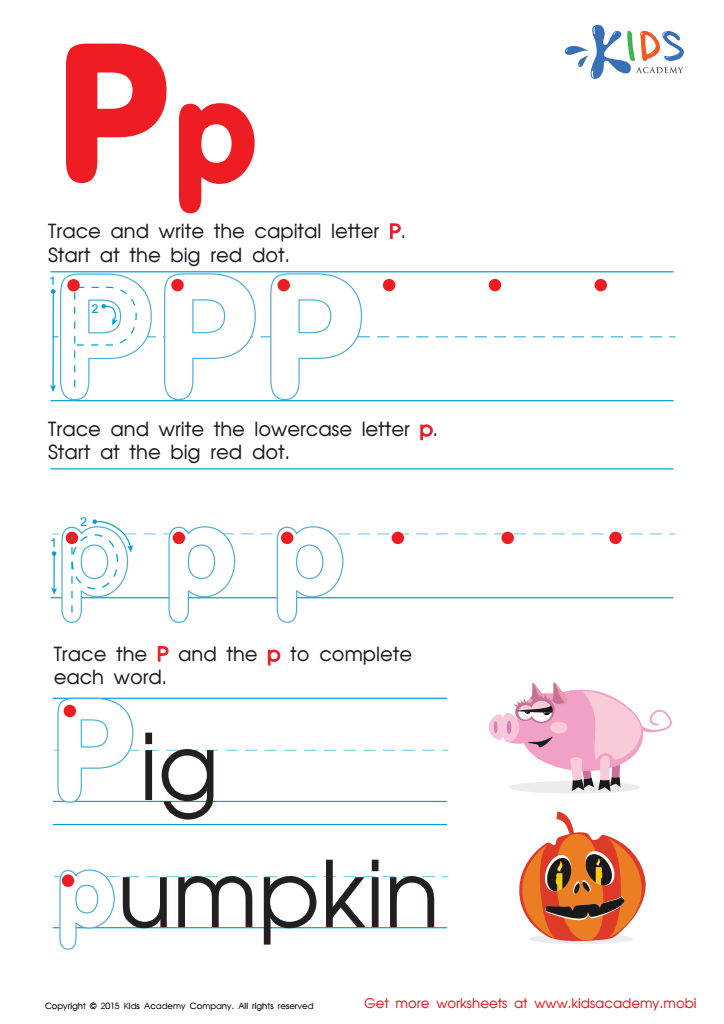
Letter P Tracing Page
Trace the lines from the red dot to learn to write "P"! Then practice this letter with the fun activities: complete the word "Pig" and "Pumpkin". Check out Kids Academy to get more free ABC worksheets.
 Assign to My Students
Letter P Tracing Page
Worksheet
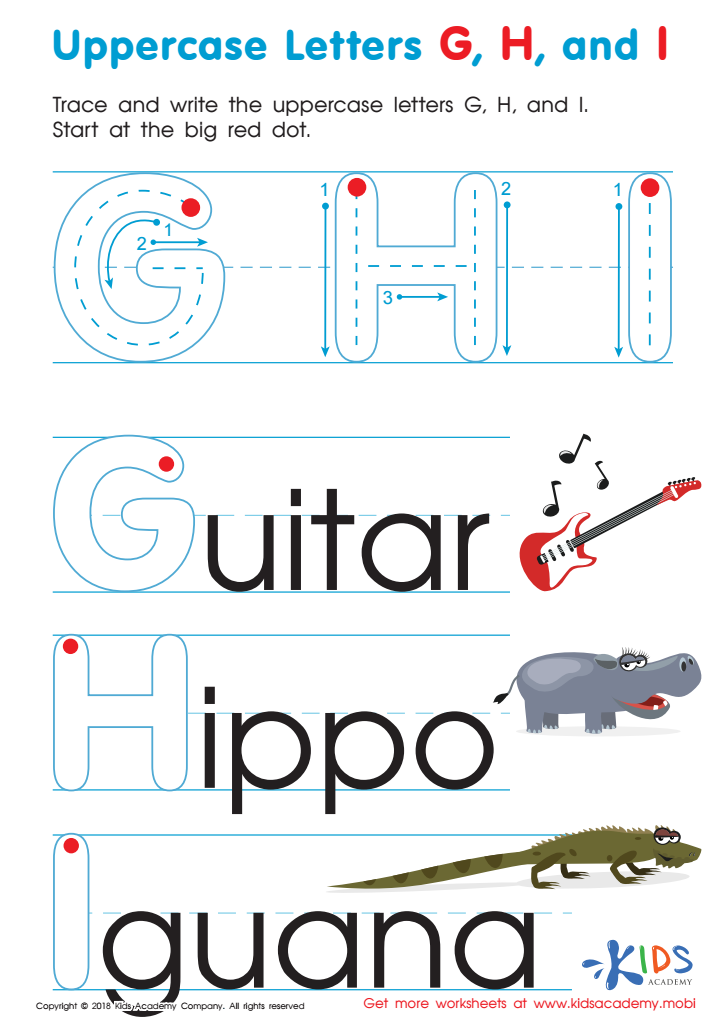
Uppercase Letters G, H, and I Worksheet
Trace each letter with the big red dot, connecting them to sounds as you go. Then write G to I. Congrats on a job well done! Rock on with a cute hippo and iguana while working on this delightful kindergarten worksheet!
Uppercase Letters G, H, and I Worksheet
Worksheet
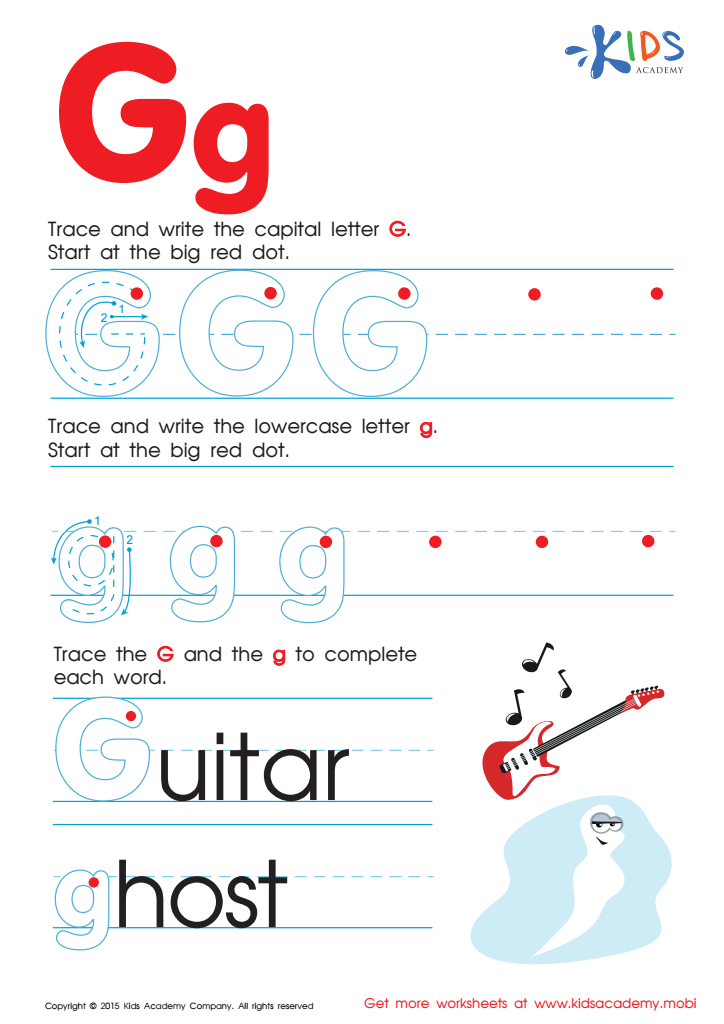
Letter G Tracing Page
Get ready to trace the letter "G" – with a big red spot as the starting point, trace the lines and watch the letter appear. Uppercase and lowercase letters are both easy and fun to write. Give it a go and finish the word "go". Play the guitar and say "hello" to a funny ghost!
Letter G Tracing Page
Worksheet
Join Kids Academy for Free
Who is primarily going to use this learning content?







Letter formation skills are fundamental for children aged 6-8 as they set the foundation for effective writing. For both parents and teachers, understanding the importance of tracing letters is crucial for a child's developmental growth. Proper letter formation aids in the development of fine motor skills, which are essential for tasks beyond writing, such as using scissors or buttoning clothes.
Tracing letters helps children internalize proper shapes, sizes, and formations of letters. This practice not only builds their confidence in writing but also decreases frustration as they learn to express their thoughts on paper more effectively. Moreover, consistent practice aids memory retention, allowing children to recall letters effortlessly as they progress to more complex writing tasks.
Furthermore, focusing on letter formation ensures that children develop legible handwriting. This not only enhances communication but can impact their overall academic performance as neatness influences assessments. By caring about and supporting tracing practices, parents and teachers can foster an environment where children feel empowered to explore language and communication, setting them on a path toward proficient literacy skills that will serve them throughout their educational journey and beyond.








