Lowercase identification Normal Upper & Lowercase Letters Worksheets for Ages 6-8
4 filtered results
-
From - To
Introducing our engaging worksheets designed for ages 6-8, focusing on lowercase letter identification! These fun, interactive activities help young learners recognize and differentiate between uppercase and lowercase letters. Each worksheet features colorful illustrations and creative exercises that stimulate learning while keeping children entertained. By practicing through various formats, such as tracing, matching, and coloring, kids gain confidence in their letter recognition skills. Perfect for classroom use or at-home learning, our worksheets support early literacy development and inspire a love for reading and writing. Explore our collection today and give your child the foundational skills they need for success in school!
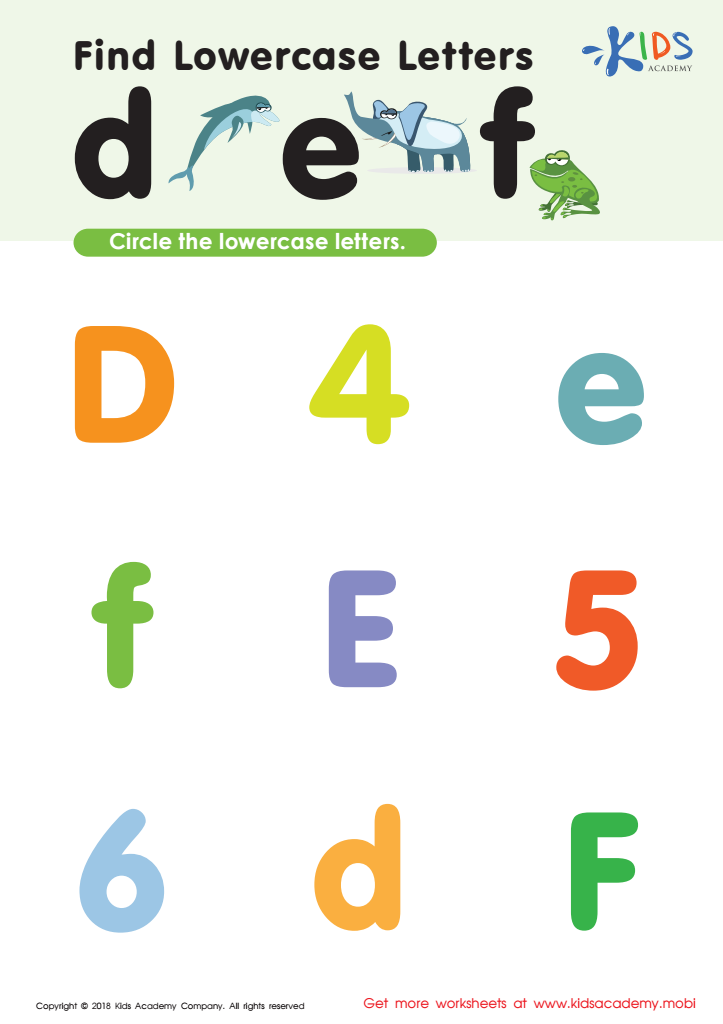
Find Lowercase Letters d e f Worksheet
 Assign to My Students


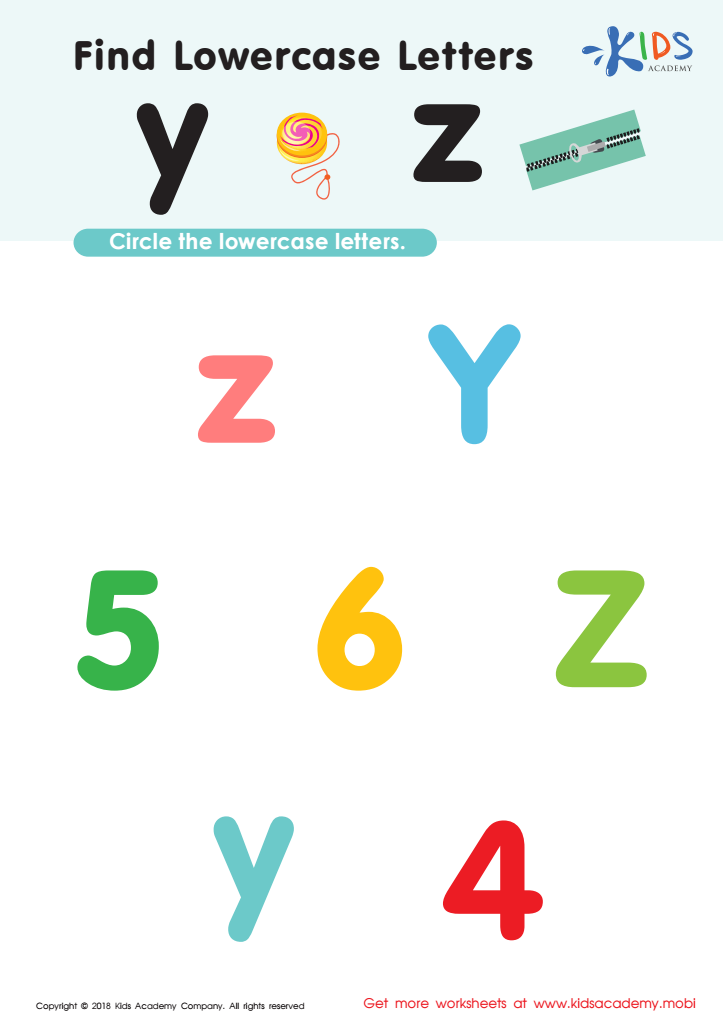
Find Lowercase Letters y z Worksheet
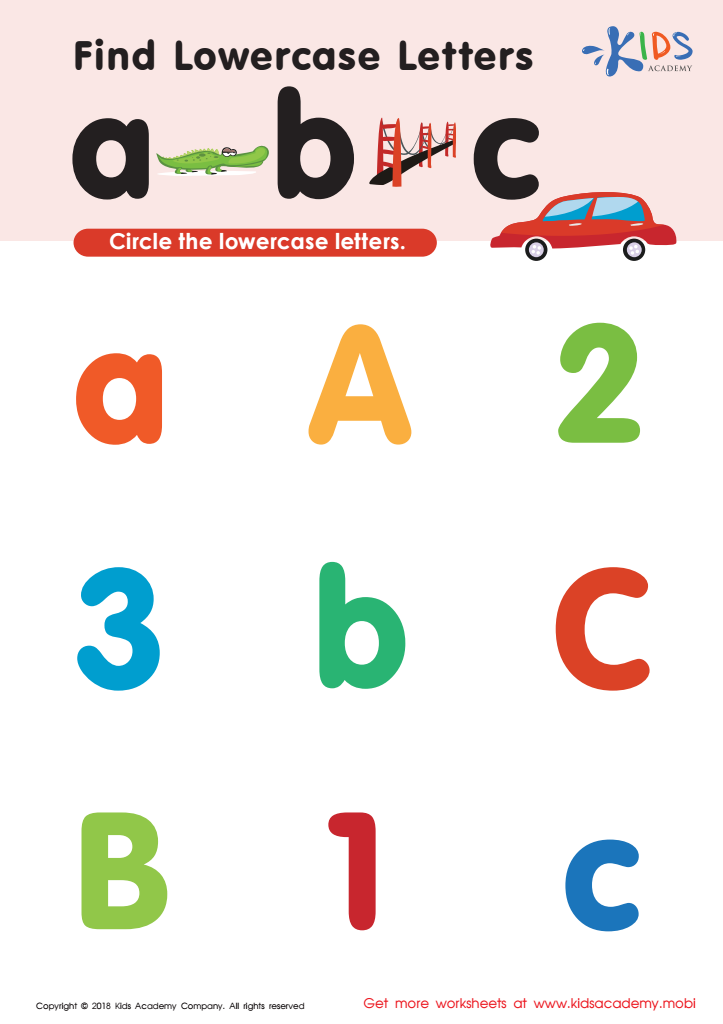
Find lowercase letters a b c Worksheet
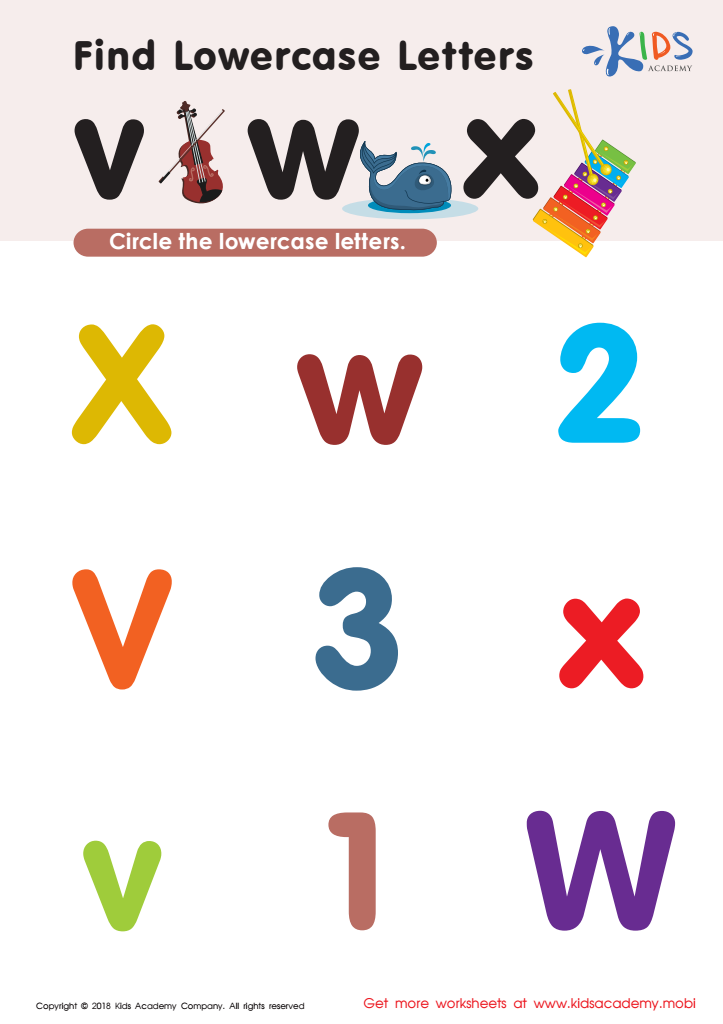
Find Lowercase Letters v w x Worksheet






Lowercase identification and the correct differentiation between normal upper and lowercase letters are fundamental skills for children aged 6-8. Mastery of these skills supports overall literacy development, crucial at this stage when children transition from learning to read to reading to learn.
Recognizing lowercase letters is essential for fluency, as most text comprises lowercase writing. This familiarity aids in decoding words, allowing children to quickly recognize and articulate them, which enhances their reading confidence and comprehension.
Moreover, understanding the differences between upper and lowercase letters is vital for proper grammar and writing. This knowledge helps children grasp the basic rules of sentence structure, punctuation, and capitalization, which are significant for effective communication.
Furthermore, activities involving recognition and practice of these letters can improve fine motor skills through writing exercises, strengthening their hand-eye coordination, and handwriting clarity.
Encouraging mastery of lower and uppercase letters fosters a solid foundation for future learning, impacting areas such as spelling, vocabulary, and overall academic success. As such, it is imperative for parents and teachers to prioritize these skills in educational activities and home lessons, creating engaging and supportive learning environments.







