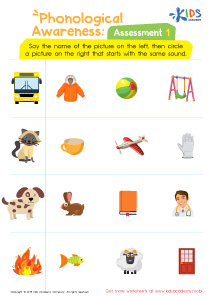
Sound differentiation Normal Vowels Worksheets for Ages 6-8
3 filtered results
-
From - To
Enhance your child’s phonics skills with our Sound Differentiation Normal Vowels Worksheets for ages 6-8. These engaging worksheets are designed to help young learners distinguish between different vowel sounds, fostering better reading and spelling abilities. Perfect for both classroom and at-home practice, each activity is crafted to develop auditory discrimination skills through fun, interactive exercises. Tailored to align with educational standards, these worksheets make learning vowels an enjoyable adventure, ensuring that children build a strong foundation for future literacy success. Download today to support your child's language development journey!
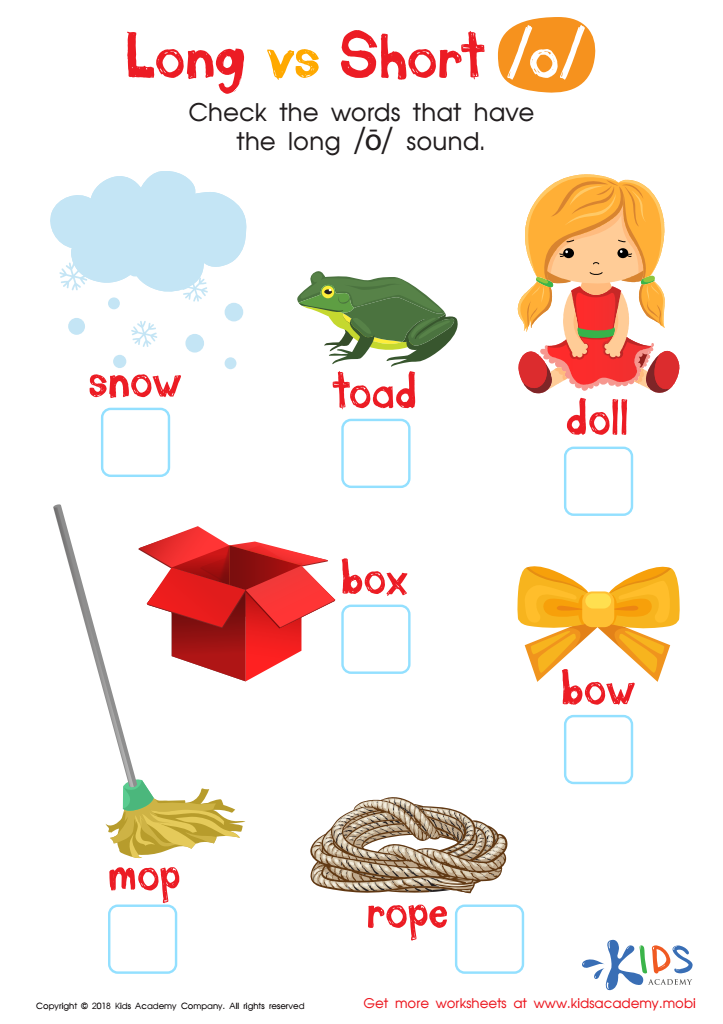
Long vs Short O Reading Worksheet
 Assign to My Students
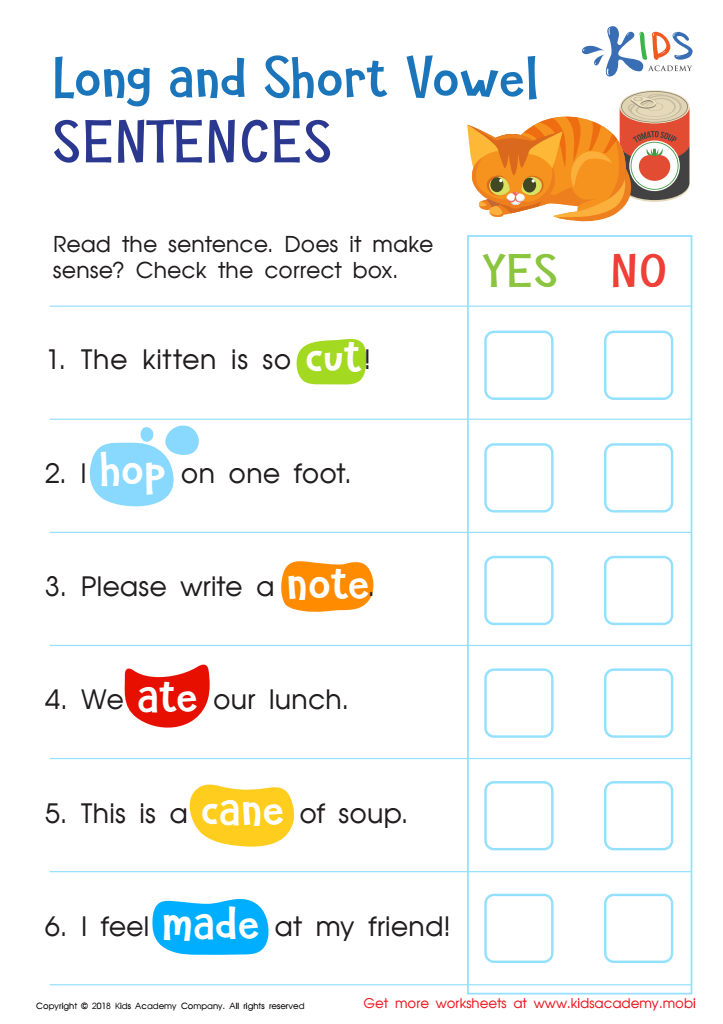
Long and Short Vowel Sentences: Assessment Worksheet
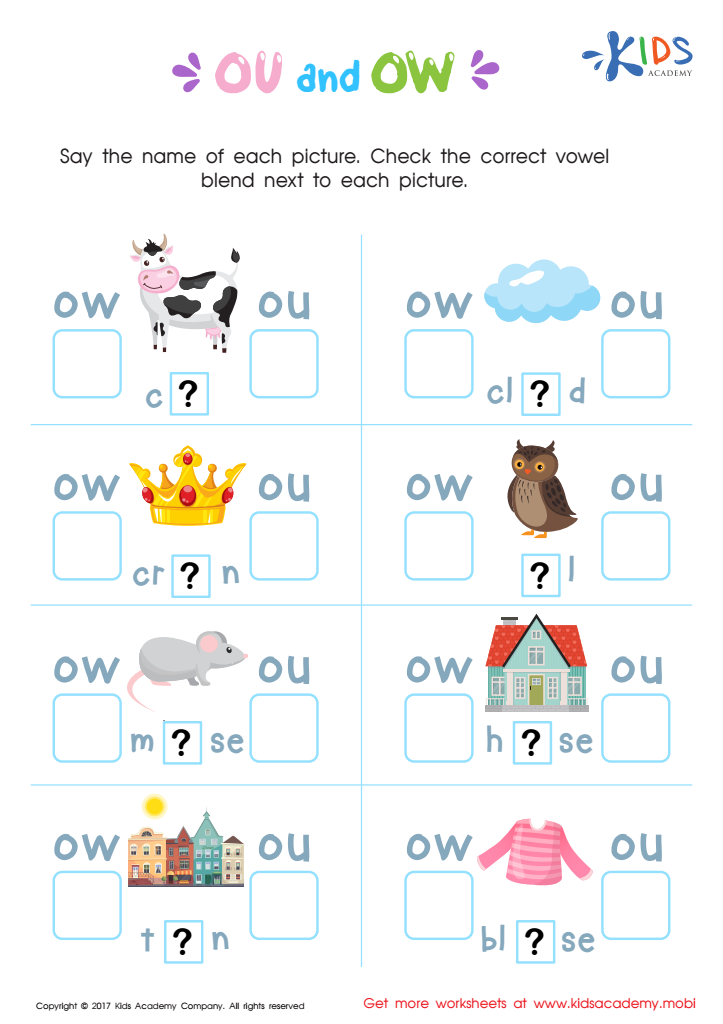
OU and OW Words Worksheet





Sound differentiation within normal vowels is a crucial aspect of early childhood education, particularly for children aged 6-8. This ability serves as the foundation for effective reading and speaking skills.
At this developmental stage, children are beginning to transition from recognizing letters and sounds to decoding words and constructing sentences. Understanding vowel sounds is essential because vowels form the core of syllables and the basis of word construction, affecting pronunciation and meaning. When children differentiate vowel sounds accurately, they become better readers, enhancing their ability to understand and enjoy texts.
Moreover, adeptness in distinguishing vowel sounds helps in honing phonological awareness—a key predictor of reading success. It contributes to spelling skills, as children learn to connect sounds to their corresponding letters and patterns. Consequently, these skills bolster overall literacy, allowing children to communicate more effectively and confidently, both in spoken and written forms.
For parents and teachers, emphasizing sound differentiation helps identify and support children who might struggle with these foundational skills, preventing future reading difficulties. Tailored activities and phonics instruction that focus on this area ensure children not only progress at an appropriate pace but also develop a strong, lifelong interest in reading and learning. Prioritizing sound differentiation in early education thus lays a vital groundwork for future academic and personal success.