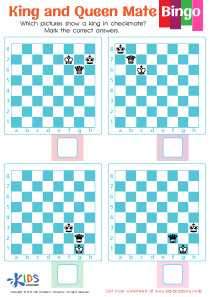
Number Recognition Normal Chess Worksheets for Ages 6-8
3 filtered results
-
From - To
Introduce your child to the exciting world of chess with our Number Recognition Chess Worksheets designed for ages 6-8! These engaging printables combine the strategic elements of chess with fundamental number recognition practice. Perfect for young learners, our worksheets are crafted to strengthen counting and number identification skills while easing them into the basics of chess. Boost your child's cognitive development and foster a love of learning through fun, educational activities. Start exploring today and watch as your child enjoys hours of purposeful play that hones both their numeric and critical thinking abilities! Visit Kids Academy for your printables.
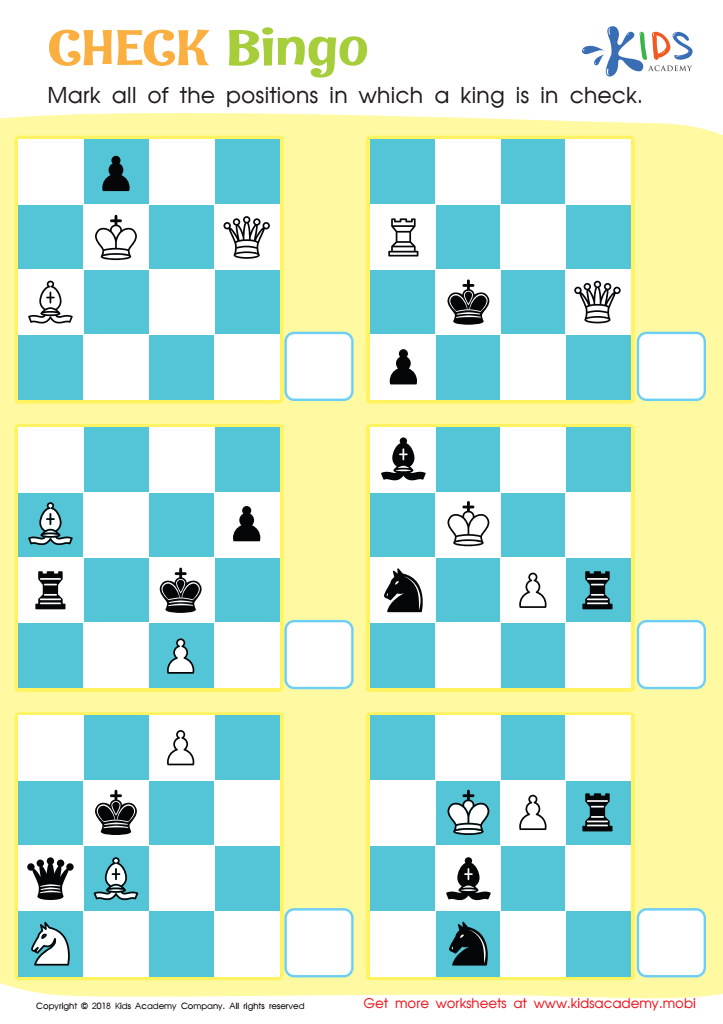
Check Bingo Worksheet
 Assign to My Students
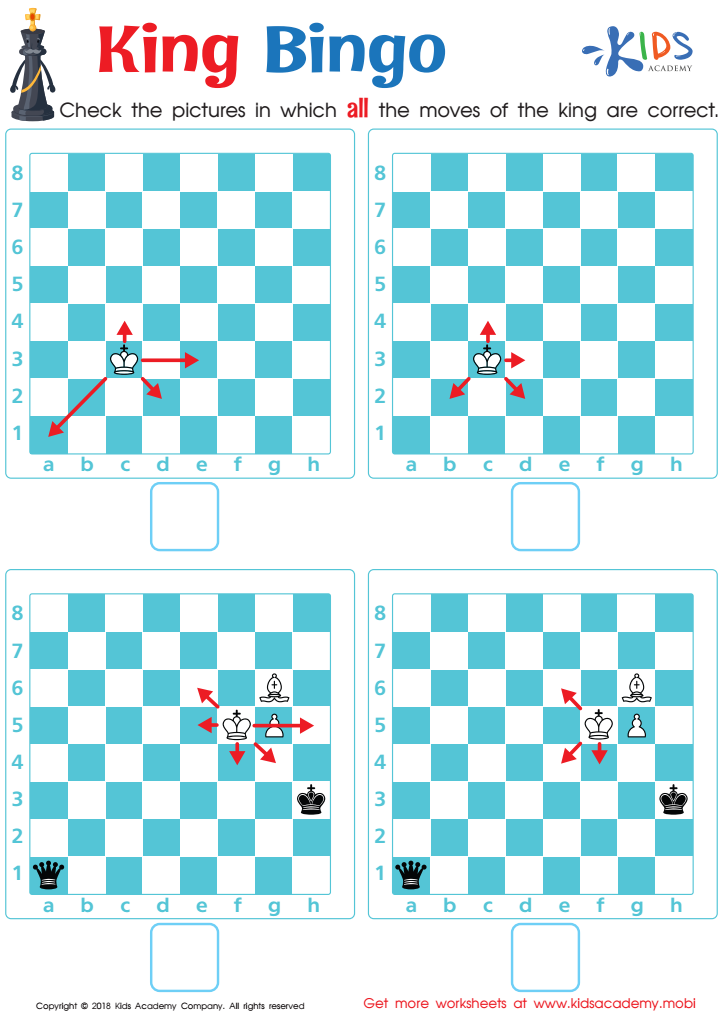
King Bingo Worksheet
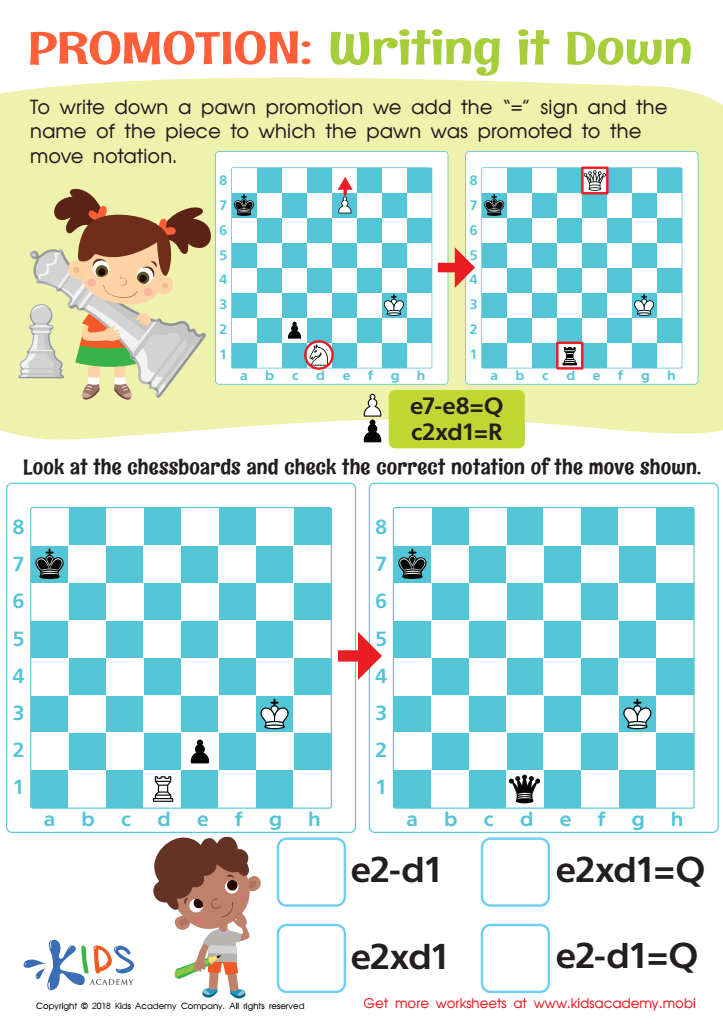
Writing it Down Worksheet






Number Recognition Normal Chess for ages 6-8 is a fantastic tool for cognitive development, making it an excellent resource for parents and teachers to embrace. At this developmental stage, children are rapidly sharpening their skills in pattern recognition, logical thinking, and problem-solving. Number recognition in a chess context introduces them to numbers in an engaging, playful manner that differs significantly from rote memorization or traditional numerical exercises.
Integrating numbers with chess pieces can make the concept of numbers tangible and can stimulate an interest in mathematics while nurturing foundational skills in strategy and critical thinking. Number Recognition Normal Chess blends numerical fluency with strategic game play, resulting in a multi-sensory learning experience. This type of amalgamation can help young learners to develop a deeper understanding and faster recall of numbers, as they continuously see and apply numbers within the game structure.
Moreover, chess is known to enhance cognitive abilities like memory, concentration, and creativity. Aligning these benefits with number recognition can help children excel not only academically but also socially, as they learn to follow rules, anticipate outcomes, and think ahead. This holistic approach makes Number Recognition Normal Chess an invaluable addition to both classroom and home learning environments, fostering a love for numbers and strategic thinking simultaneously.