Comparing objects Normal Worksheets for Ages 6-8
3 filtered results
-
From - To
Discover our engaging "Comparing Objects Normal Worksheets" designed for children ages 6-8. These thoughtfully crafted worksheets aim to enhance critical thinking and observational skills as young learners explore the concept of comparison. Through a variety of fun activities, kids will practice identifying similarities and differences in size, shape, and quantity. Our worksheets promote hands-on learning and encourage kids to deepen their understanding of the world around them. Perfect for homeschooling or classroom use, these resources provide a simple yet effective way to build foundational skills that support future learning. Encourage exploration and discovery with these exciting comparison worksheets!
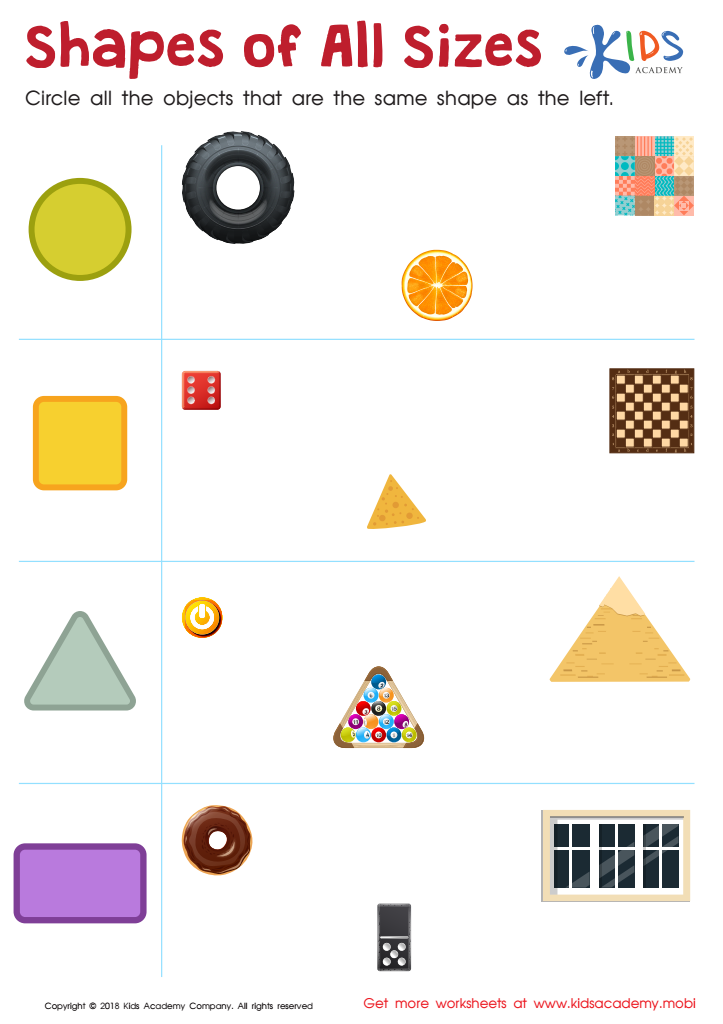
Shapes of All Sizes Worksheet
 Assign to My Students
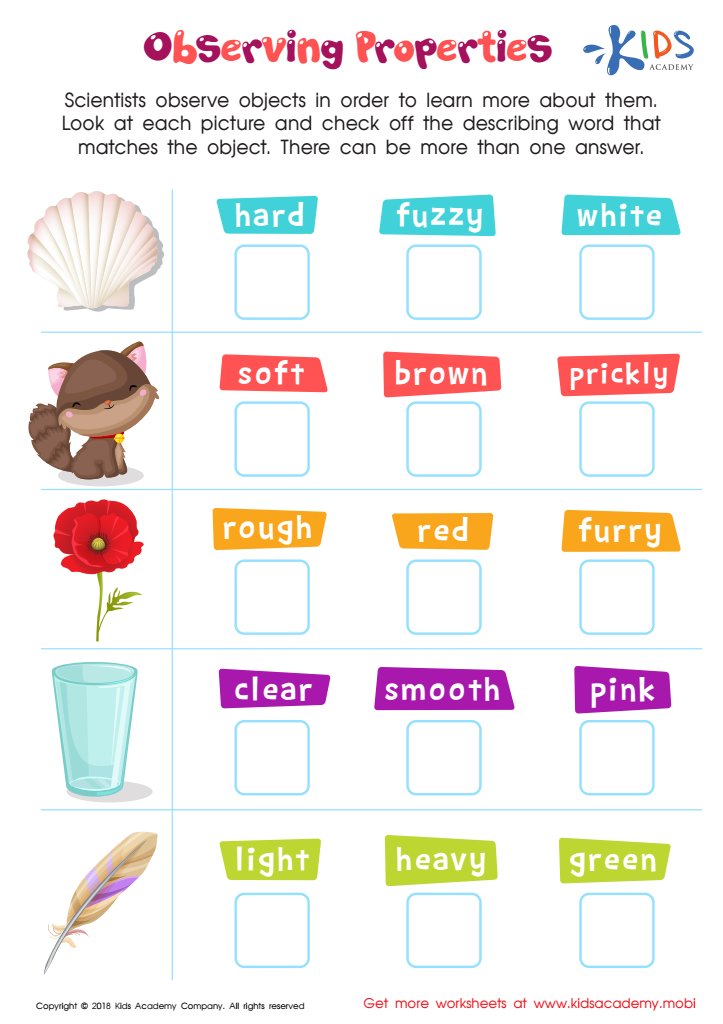
Observing Properties Worksheet
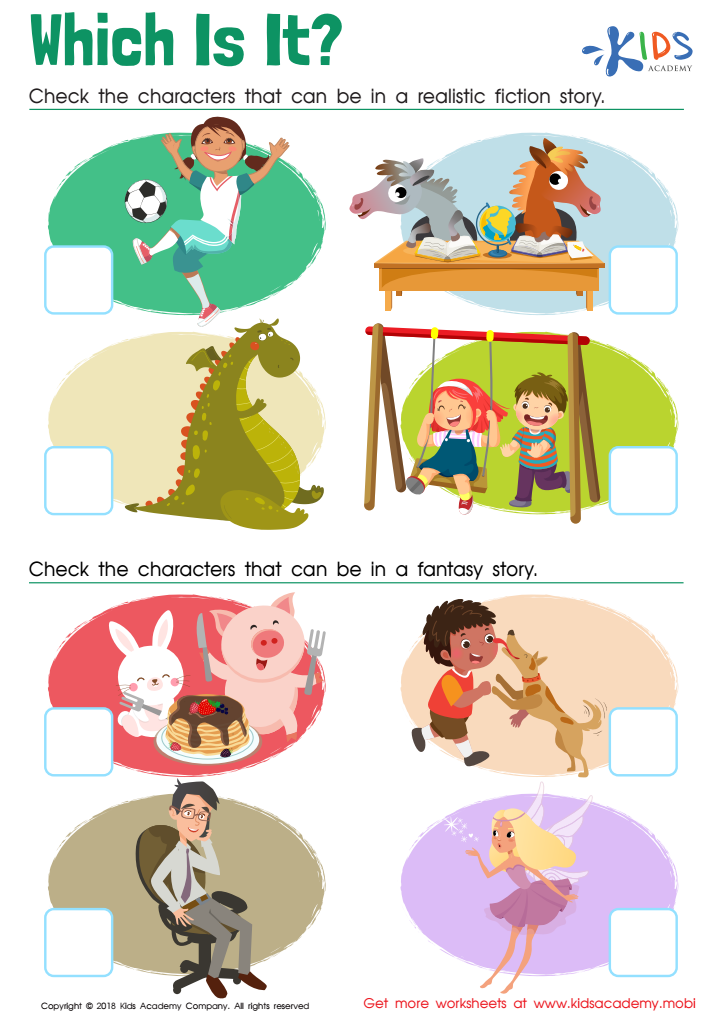
Which Is It? Worksheet





Comparing objects is a vital skill for children aged 6-8, as it lays the foundation for essential cognitive and mathematical abilities. At this age, children are developing their observational and analytical skills, which are crucial for understanding the world around them. When parents and teachers encourage kids to compare objects based on attributes such as size, shape, weight, and color, they promote critical thinking and problem-solving skills.
This practice not only enhances mathematical understanding, aiding in the grasp of concepts like measurement and sorting, but also supports literacy development. When children describe and compare items, they expand their vocabulary and improve their communication skills. Engaging in these activities fosters curiosity and creativity, encouraging children to explore and ask questions.
Furthermore, comparing objects fosters meaningful connections between everyday experiences and academic learning. Parents and teachers can incorporate these activities into daily routines, making learning fun and relatable. By nurturing this foundational skill, adults equip children to approach more complex mathematical concepts with confidence in the future, promoting a love for learning that will benefit them in years to come. Ultimately, supporting children in comparing objects contributes to their holistic development and prepares them for academic success and everyday challenges.








