
Comparison Skills Normal Worksheets for Ages 6-8
3 filtered results
Difficulty Level
Grade
Age
-
From - To
Subject
Activity
Standards
Enhance your child's critical thinking with our Comparison Skills Normal Worksheets for ages 6-8. Designed by educational experts, these engaging activities help kids identify similarities and differences, boosting their analytical abilities. Each fun and colorful worksheet challenges children to compare objects, sizes, lengths, and more, laying a strong foundation for math and literacy skills. With our printables, young learners will develop keen observation skills and improve their cognitive development. Perfect for classroom or home use, these worksheets are a valuable resource for fostering a love of learning in early elementary students. Promote growth and enjoy learning with Kids Academy!
Favorites
With answer key
Interactive
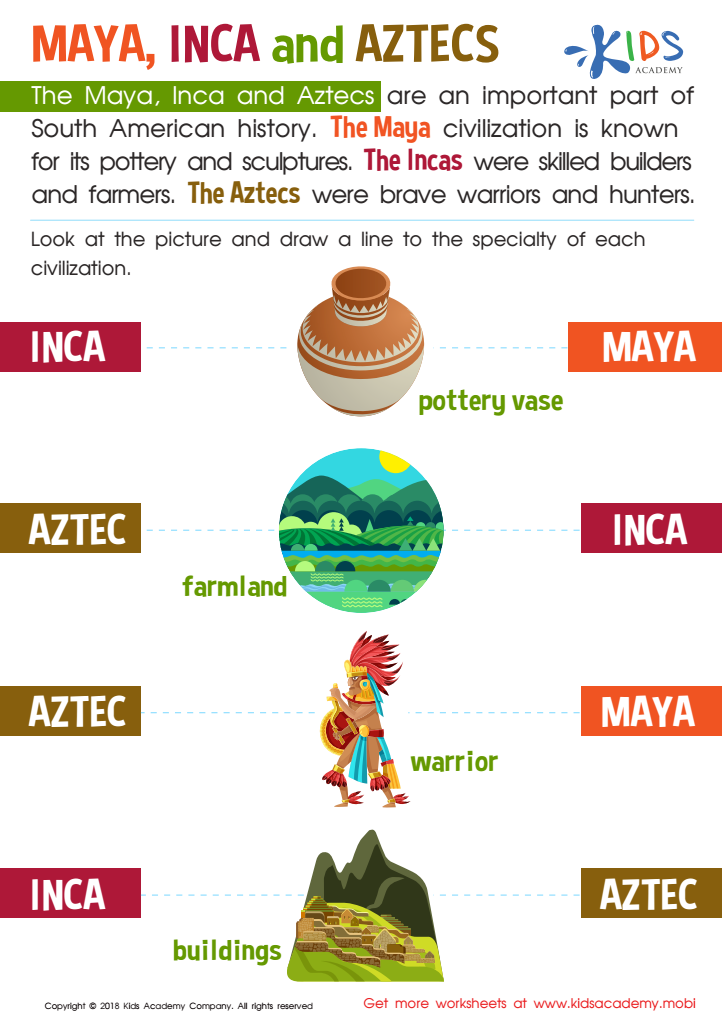
Maya, Inca and Aztecs Worksheet
This worksheet introduces your child to the thrilling histories of the Mayan, Incan and Aztec cultures, teaching them about their warriors, sculptors and farmers. With traceable lines and colorful imagery, they'll connect each culture with its correct associated picture - great for cementing concepts!
 Assign to My Students
Maya, Inca and Aztecs Worksheet
Worksheet
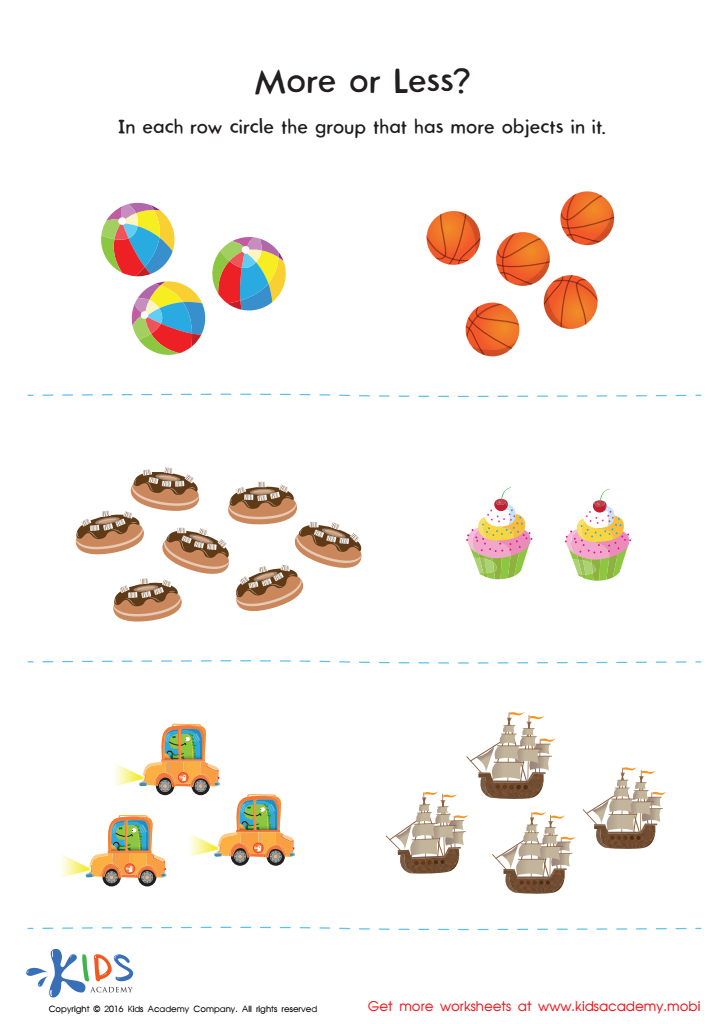
More or Less Size Worksheet
Worksheet
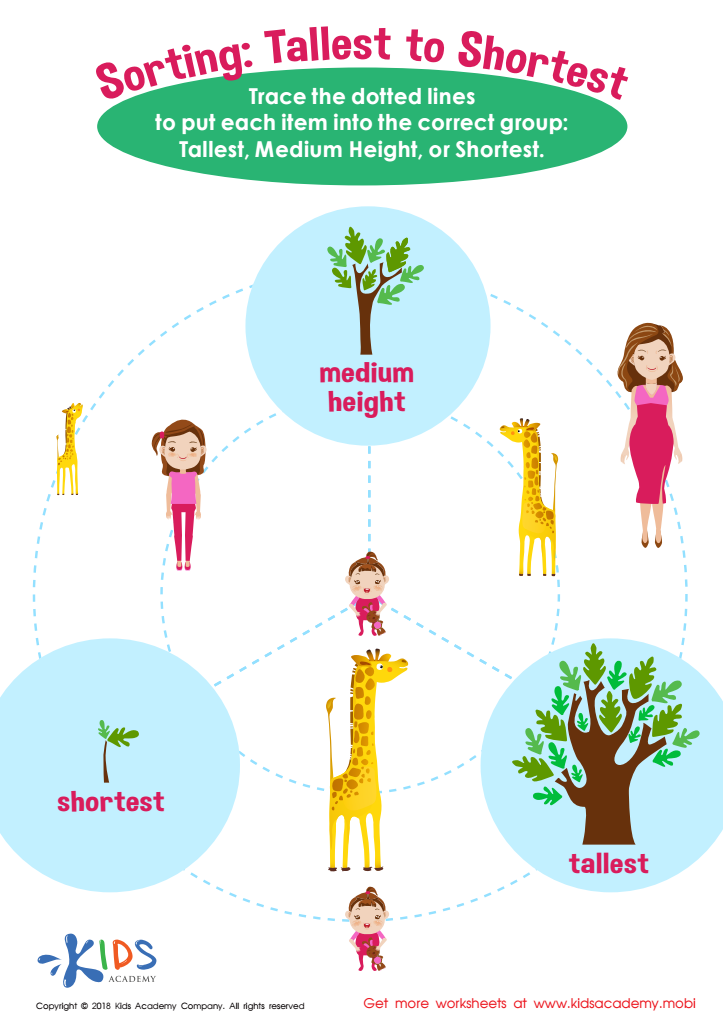
Sorting: Tallest to Shortest Worksheet
This worksheet is great for preschoolers to practice foundational measurement skills. Traceable lines help them sort pictures into Tallest, Shortest and Medium categories, giving them concrete examples to compare. Fine motor skills and understanding of relationships between sizes are also developed - perfect for preparing them for larger measurement concepts.
Sorting: Tallest to Shortest Worksheet
Worksheet
Join Kids Academy for Free
Who is primarily going to use this learning content?






Comparison skills are foundational for cognitive development in children aged 6-8 and lay the groundwork for more advanced thinking later in life. At this stage, children start to engage more deeply with the world around them, and being able to identify similarities and differences among objects, ideas, and experiences is crucial.
Firstly, comparison skills enhance critical thinking. When children compare, they are not just noting superficial traits but are encouraged to analyze, make judgments, and sort information. This ability is important in subjects such as math, where comparing quantities and shapes is fundamental, and in reading comprehension, where distinguishing between characters' actions and motives enriches understanding.
Secondly, developing robust comparison skills can improve problem-solving capabilities. It helps children recognize patterns and relationships, facilitating better decision-making. For instance, in daily life, they might compare weather conditions to decide what to wear, or assess the pros and cons of food items at lunch to make healthier choices.
Parents and teachers play a pivotal role by providing opportunities for kids to practice these skills. Simple activities like sorting laundry, matching games, or discussing the differences and similarities between two stories can be invaluable. By nurturing these skills early, we help children become more observant, discerning, and able to navigate complex situations as they grow.








