Differentiating shapes Normal Worksheets for Ages 6-8
3 filtered results
-
From - To
Explore our engaging Differentiating Shapes worksheets designed for children ages 6-8! These activities provide a fun and interactive way for young learners to recognize, compare, and distinguish various geometric shapes. Tailored to enhance visual and critical thinking skills, our worksheets incorporate a variety of exercises, including shape identification, sorting, and matching, making learning both effective and enjoyable. Ideal for classroom or home use, these resources cater to different learning styles and can be adapted for diverse abilities. Download your worksheets today and help your child build a strong foundation in shape recognition and spatial awareness!
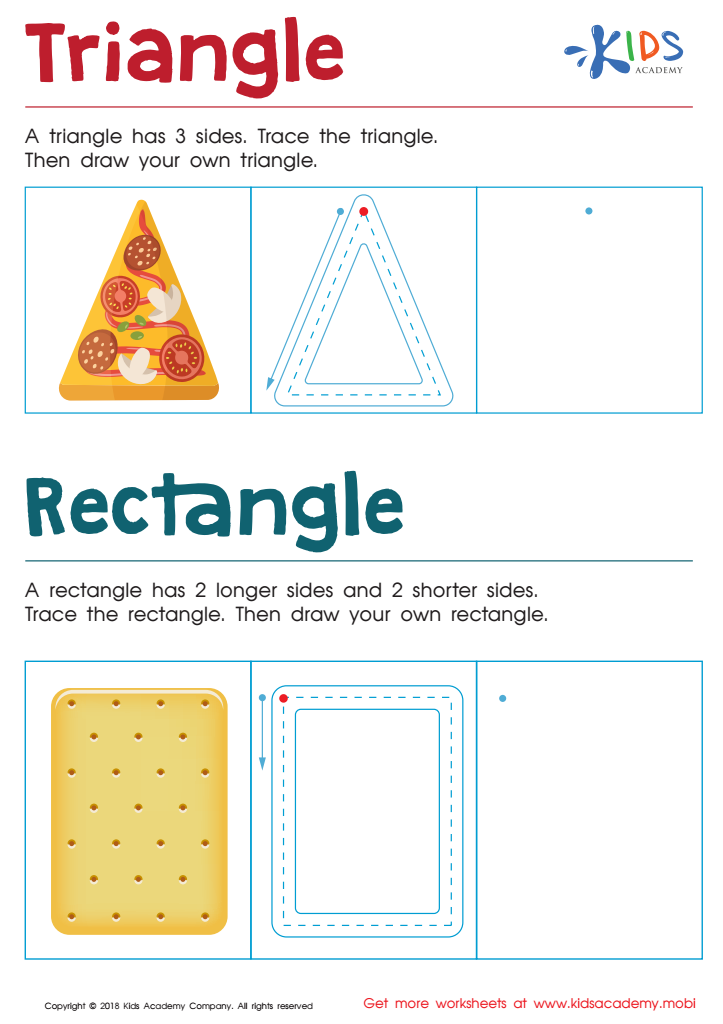
Triangle Rectangle Worksheet
 Assign to My Students
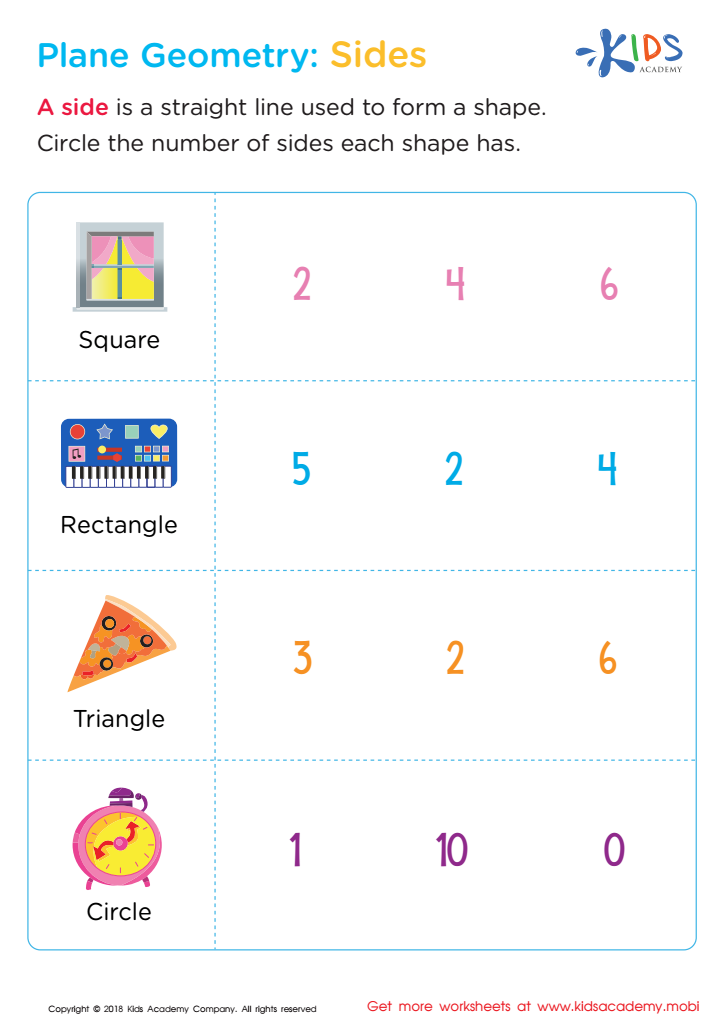
Plane Geometry: Sides Worksheet
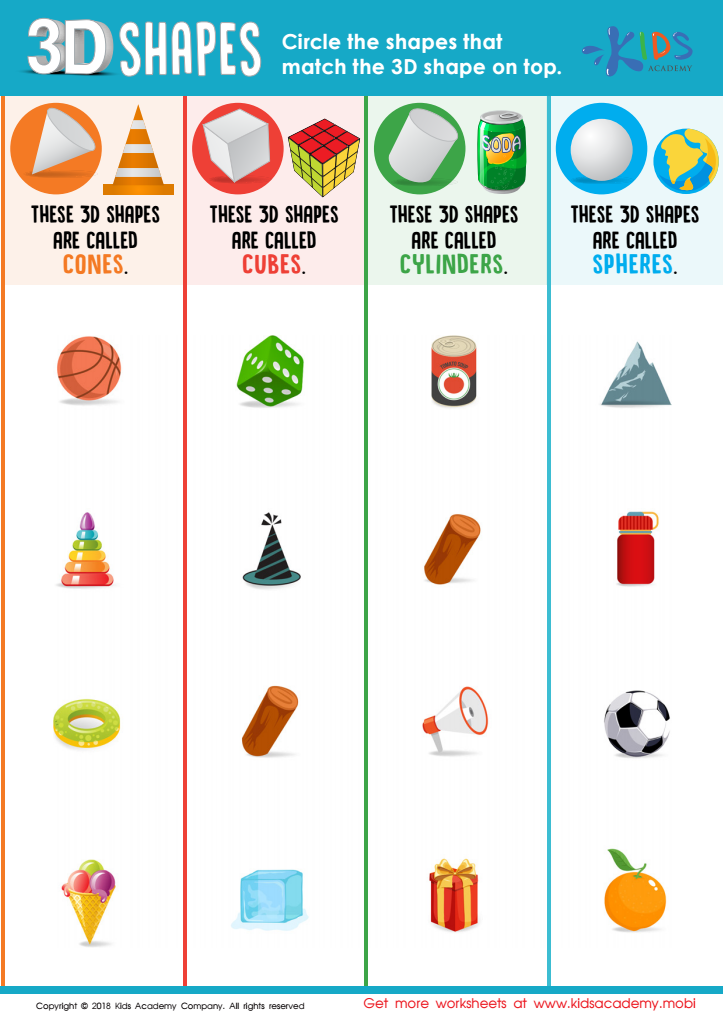
3D Shapes Worksheet


.jpg)





Differentiating shapes for children aged 6-8 is crucial for their cognitive and spatial development. At this stage, children are beginning to grasp fundamental geometric concepts, which serve as the building blocks for more advanced mathematical learning later on. When parents and teachers prioritize teaching about different shapes, they not only enhance children’s recognition skills but also foster critical thinking and problem-solving abilities.
Understanding various shapes helps kids identify and classify objects in their environment, promoting observational skills. Additionally, it supports language development as children learn to verbally describe shapes and their properties, enriching their vocabulary. This differentiation also caters to diverse learning needs; some children may thrive with hands-on activities, while others might benefit from visual or auditory methods. Tailoring educational approaches ensures that all students grasp these essential concepts.
Moreover, learning about shapes can be integrated into play, art, and everyday activities, making the process enjoyable and engaging. By investing time in understanding shapes, parents and teachers create a solid groundwork for mathematical proficiency, enhance children's confidence in their learning, and encourage a lifelong appreciation for mathematics and geometry. Overall, differentiating shapes is fundamental for holistic development during this critical learning phase.








