Historical Knowledge Normal Worksheets for Ages 6-8 - Page 2
27 filtered results
-
From - To
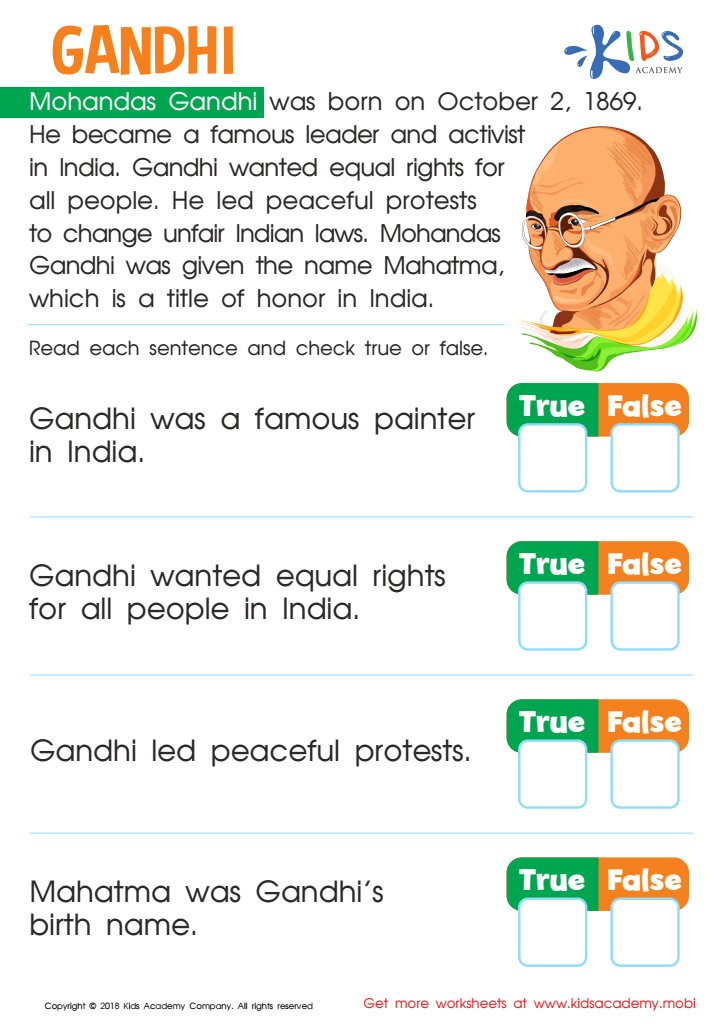
Gandhi Worksheet
 Assign to My Students
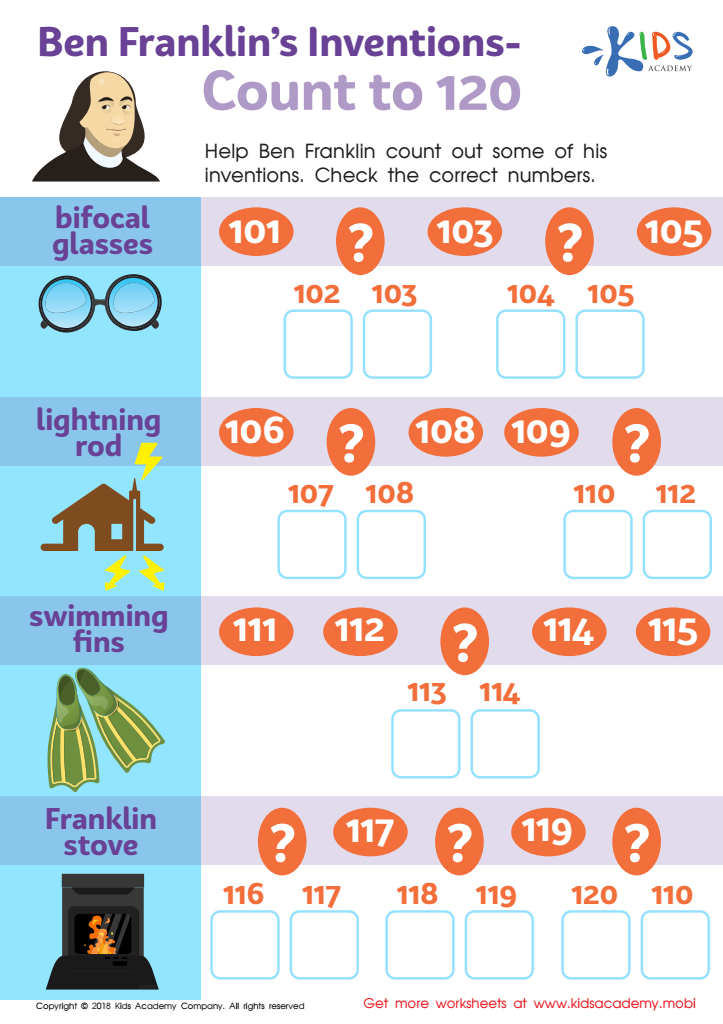
Ben Franklin’s Inventions – Count to 120 Worksheet
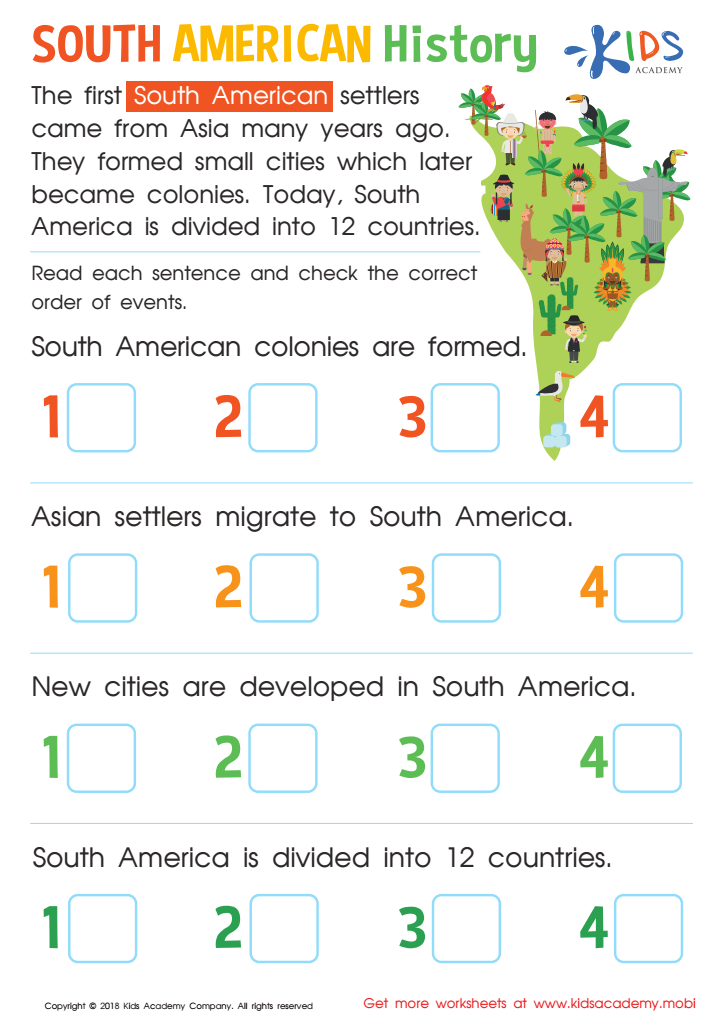
South American History Worksheet






.jpg)
Parents and teachers should prioritize historical knowledge for children aged 6-8 because it plays a critical role in their cognitive and social development. At this formative stage, children are naturally curious and start to comprehend the world around them. Introducing them to historical concepts cultivates critical thinking and helps them make connections between the past and present, fostering a deeper understanding of their cultural heritage and community.
Learning history at an early age encourages empathy, as children gain insights into different perspectives and experiences. They begin to appreciate diversity and understand the social dynamics at play throughout history, which is crucial for nurturing socially responsible citizens. Historical narratives often contain lessons on resilience, creativity, and problem-solving that can inspire young minds.
Moreover, historical knowledge aids in building literacy skills as children engage with stories, timelines, and discussions about the past. This enhances their vocabulary and comprehension.
Ultimately, instilling a sense of historical awareness early on empowers children to navigate their world confidently and to recognize that they are part of a larger story. Thus, equipping them with historical knowledge not only enriches their educational journey, but also fosters informed, compassionate future generations.








