Identifying Animals Normal Worksheets for Ages 6-8
3 filtered results
-
From - To
Explore our engaging "Identifying Animals Normal Worksheets" designed specifically for children aged 6-8. These interactive worksheets support early learning by enhancing young learners' ability to recognize and name various animals. Our colorful and fun worksheets contain a variety of activities including picture identification, matching animals to their habitats, and sorting based on characteristics. By using these resources, students will develop critical thinking skills and improve their vocabulary while enjoying the learning process. Perfect for both educators and parents, these worksheets make learning about the animal kingdom exciting and accessible. Dive into the world of animals with creativity and confidence!
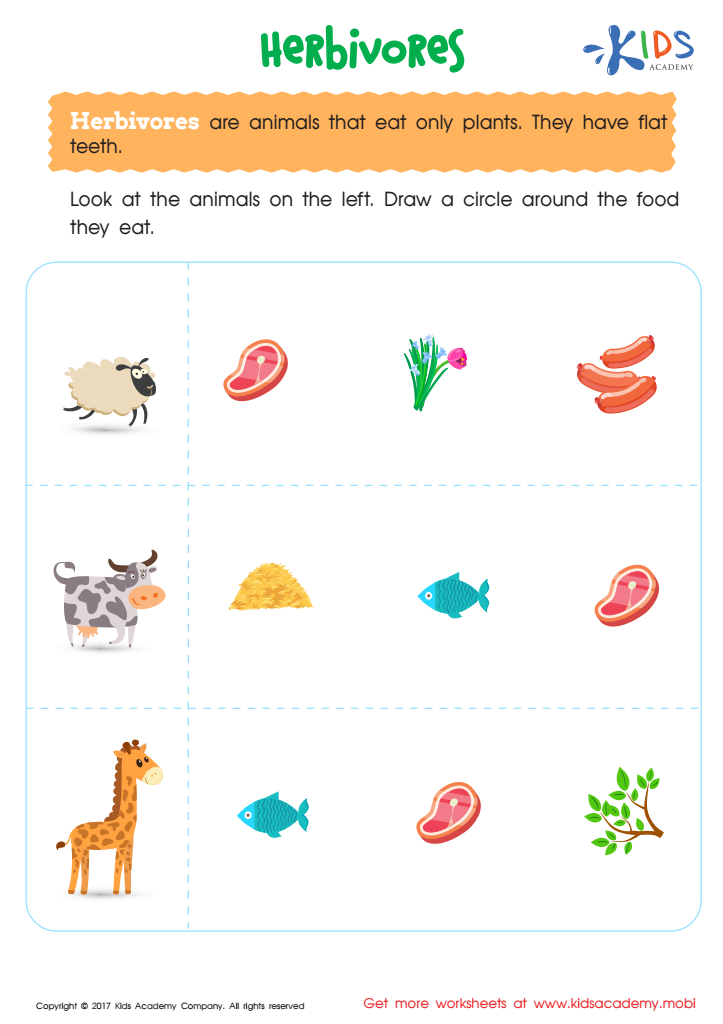
Herbivores Printable
 Assign to My Students
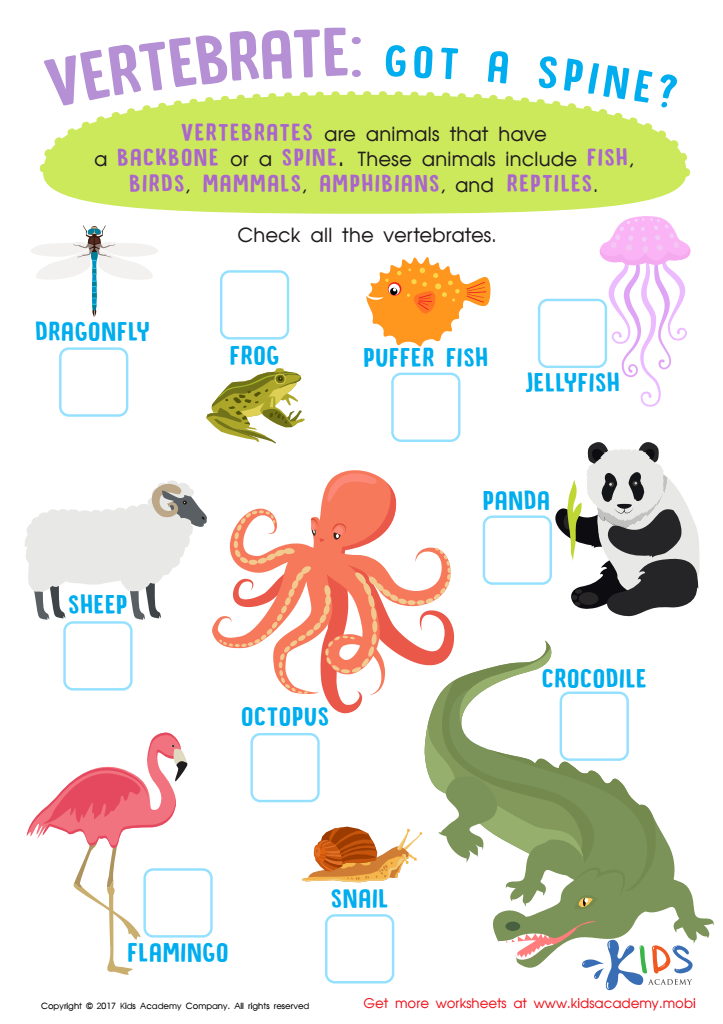
Vertebrates Animals Worksheet for 3rd Grade
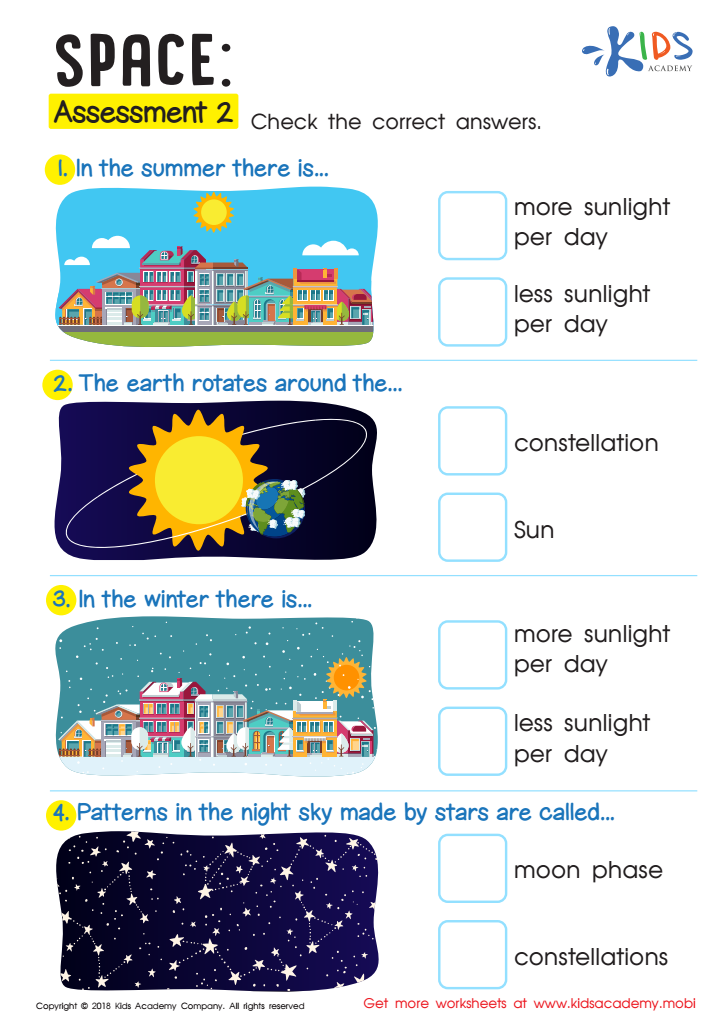
Space: Assessment 2 Worksheet








Identifying animals is an essential learning activity for children ages 6 to 8 that fosters curiosity and engagement with the natural world. Parents and teachers should prioritize this skill because it encourages critical thinking and observation. By learning to identify different animals, children enhance their ability to classify and comprehend diverse characteristics, building foundational scientific reasoning skills.
Moreover, understanding animal diversity and behavior promotes empathy towards living beings and instills an appreciation for nature. When children learn about various species, they become more aware of environmental issues and the importance of conservation, fostering a sense of responsibility for the planet.
In a social context, discussing animals can serve as a common interest, enabling children to connect with peers and engage in collaborative learning. Encouraging identification through games, storytelling, or hands-on activities can make learning fun and interactive, supporting language development and communication skills.
Overall, teaching children to identify animals not only supports their educational growth but also nurtures a lifelong connection to nature and an understanding of their role within the ecosystem. It empowers children with knowledge and enthusiasm that can inspire future environmental stewardship. By prioritizing this skill, parents and teachers contribute significantly to a child's cognitive and emotional development.








