
Improving categorization skills Normal Worksheets for Ages 6-8
3 filtered results
Difficulty Level
Grade
Age
-
From - To
Subject
Activity
Standards
Enhance your child's cognitive abilities with our "Improving Categorization Skills Worksheets" designed specifically for ages 6-8. These engaging and educational worksheets encourage young learners to categorize objects, images, and concepts, fostering critical thinking and problem-solving skills. With diverse activities tailored to various learning styles, children will develop an understanding of similarities and differences, reinforcing their ability to recognize patterns and relationships. Our worksheets are perfect for home or classroom use, making learning fun and accessible. Equip your child with essential skills that lay the foundation for future academic success while sparking their curiosity and creativity! Start exploring today!
Favorites
With answer key
Interactive
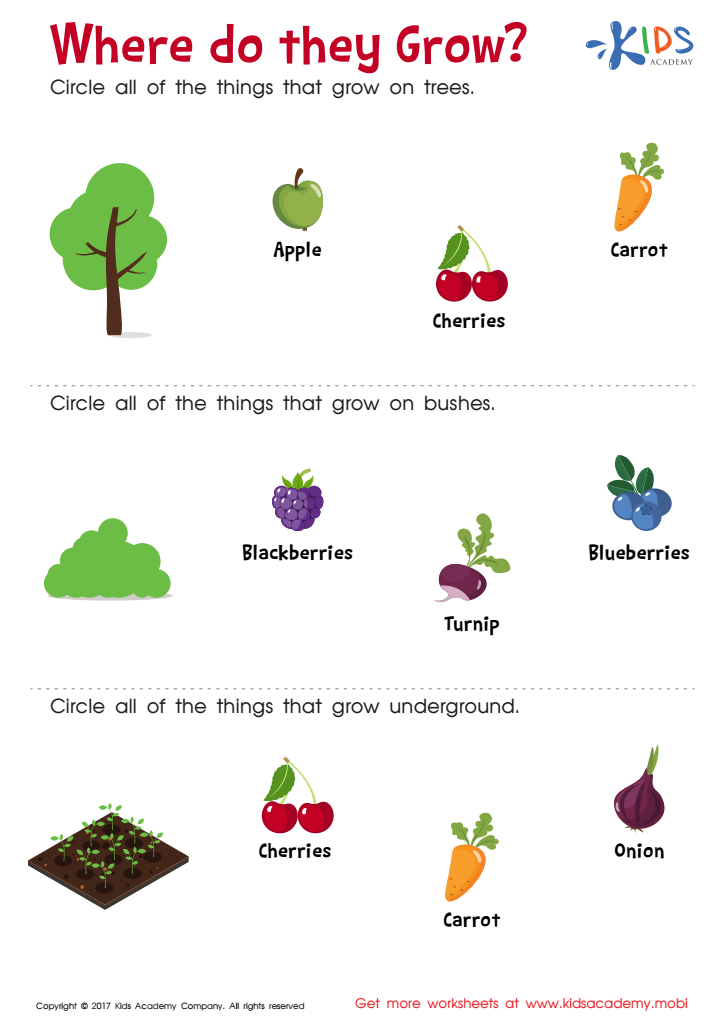
Where Do They Grow Worksheet
With this worksheet, your child can learn about apples, cherries, and blueberries and gain important science skills.
 Assign to My Students
Where Do They Grow Worksheet
Worksheet
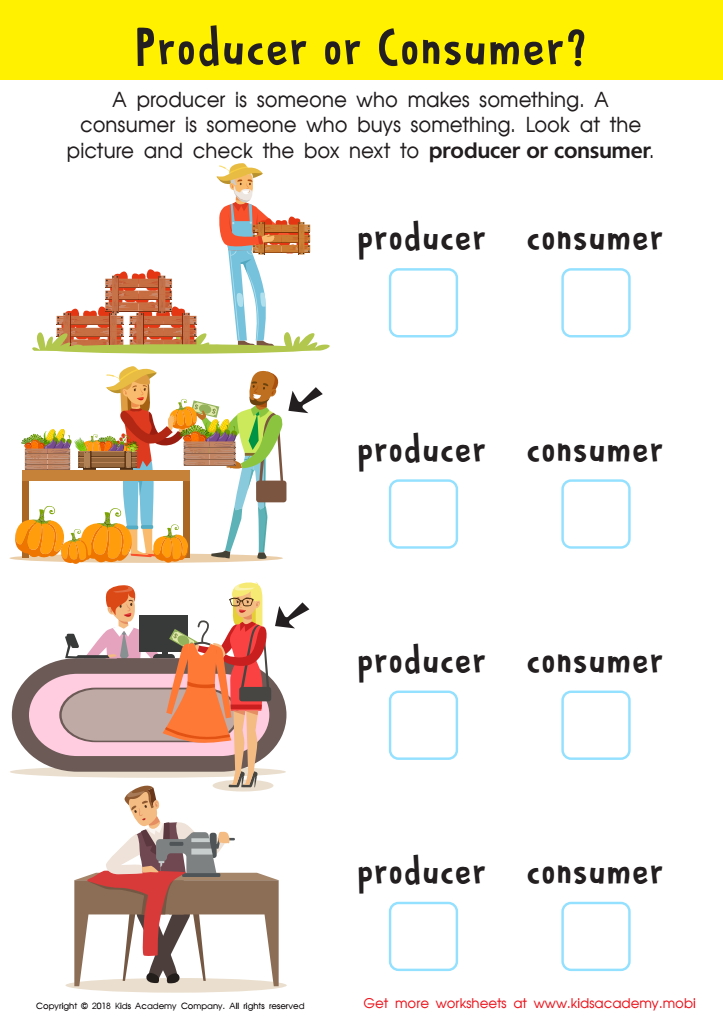
Producer or Consumer? Worksheet
Test your child's knowledge by asking who's a producer and consumer. Explain producer makes things and consumer buys them. Use a snack example. Look at the picture with your kids and help them check the box next to producer or consumer.
Producer or Consumer? Worksheet
Worksheet
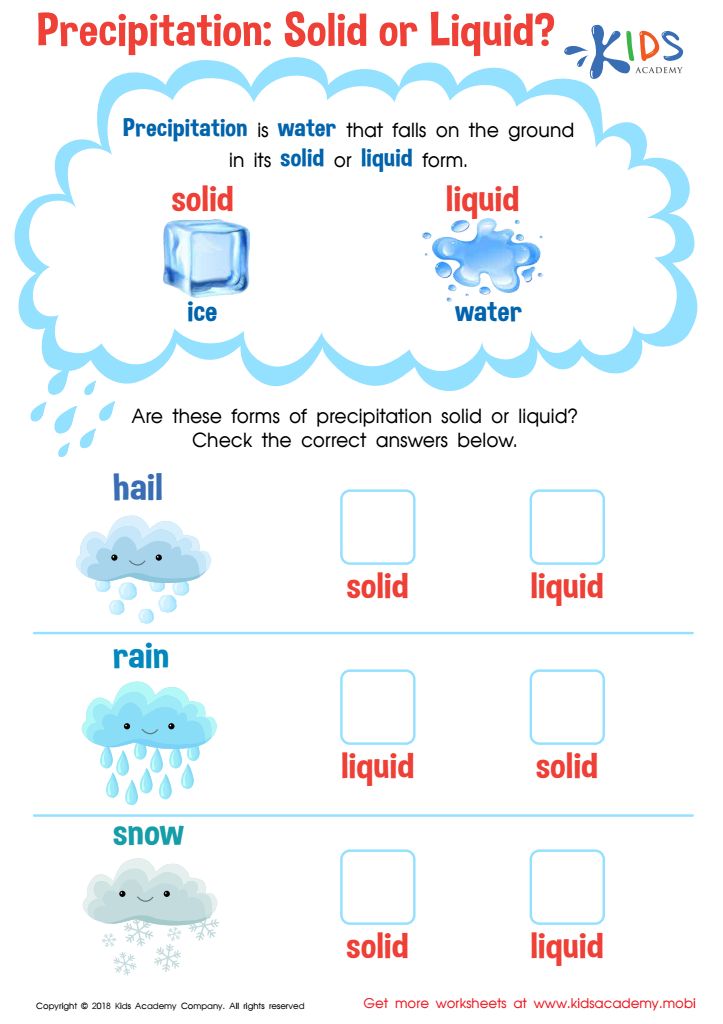
Precipitation: Solid or Liquid? Worksheet
Teach students that precipitation is water from the clouds/sky in either solid or liquid form, e.g. rain is liquid and snow is frozen. Use the worksheet with them to check if the forms of precipitation pictured are solid or liquid.
Precipitation: Solid or Liquid? Worksheet
Worksheet
Learning Skills
Join Kids Academy for Free
Who is primarily going to use this learning content?






Improving categorization skills in children aged 6-8 is essential for several reasons. First, these skills form the foundation for critical thinking and problem-solving. When children learn to categorize—grouping items based on similarities or differences—they develop the ability to analyze information effectively. This cognitive skill is crucial not only in academic settings but also in everyday life decisions.
Moreover, strong categorization skills enhance vocabulary development as children learn to differentiate between categories and subcategories, thereby enriching their language and communication abilities. They begin to understand nuances in meaning and context, fostering better comprehension.
Socially, categorization plays a role in how children perceive and interact with the world around them. Understanding different groups—whether related to species, emotions, or social dynamics—encourages empathy and a sense of belonging. As they navigate social interactions, well-developed categorization skills can promote teamwork and cooperation, crucial traits for effective collaboration.
Lastly, enhancing these skills at a young age can lead to improved self-regulation and executive functioning. Children learn to organize their thoughts and behaviors, setting them up for success both academically and socially. Therefore, investing time in fostering categorization skills is beneficial for parents and teachers alike.








