Plant identification Normal Worksheets for Ages 6-8
4 filtered results
-
From - To
Discover our engaging Plant Identification Normal Worksheets designed specifically for children aged 6-8! These worksheets bring the fascinating world of plants into the classroom, helping young learners identify various plant species while enhancing their observation and critical thinking skills. Each worksheet offers colorful illustrations and interactive activities that make learning about nature fun and exciting. Perfect for enhancing science lessons, these resources foster a love for the environment and encourage curiosity about the natural world. Download our Plant Identification worksheets today and watch your students grow their knowledge of plants while having a blast! Suitable for both home and classroom use.
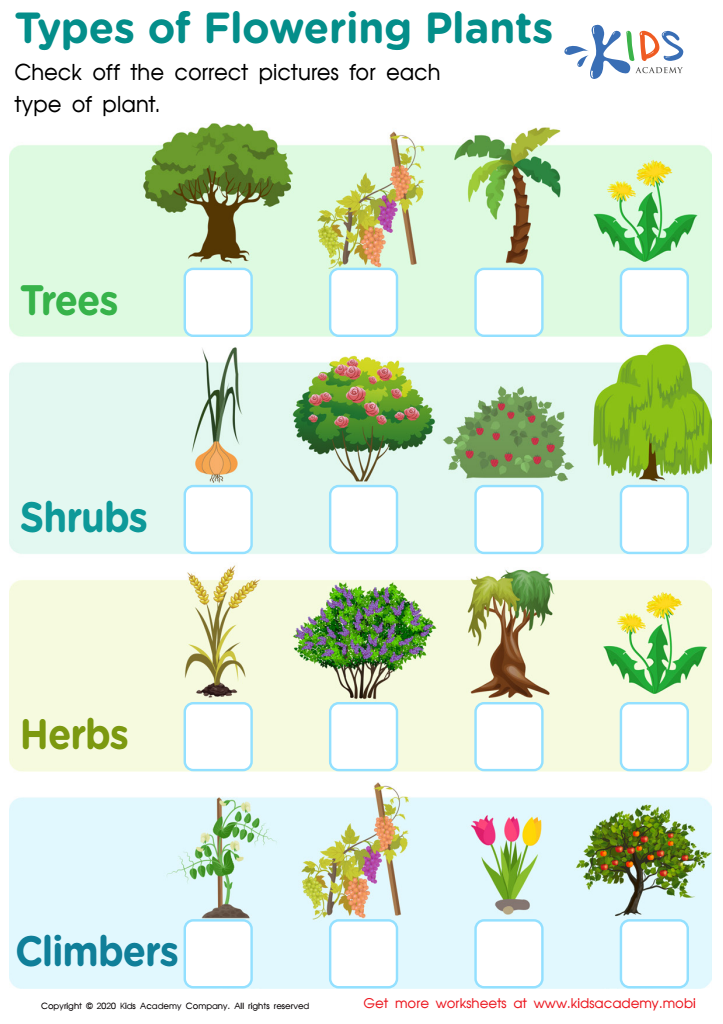
Types of Flowering Plants Worksheet
 Assign to My Students
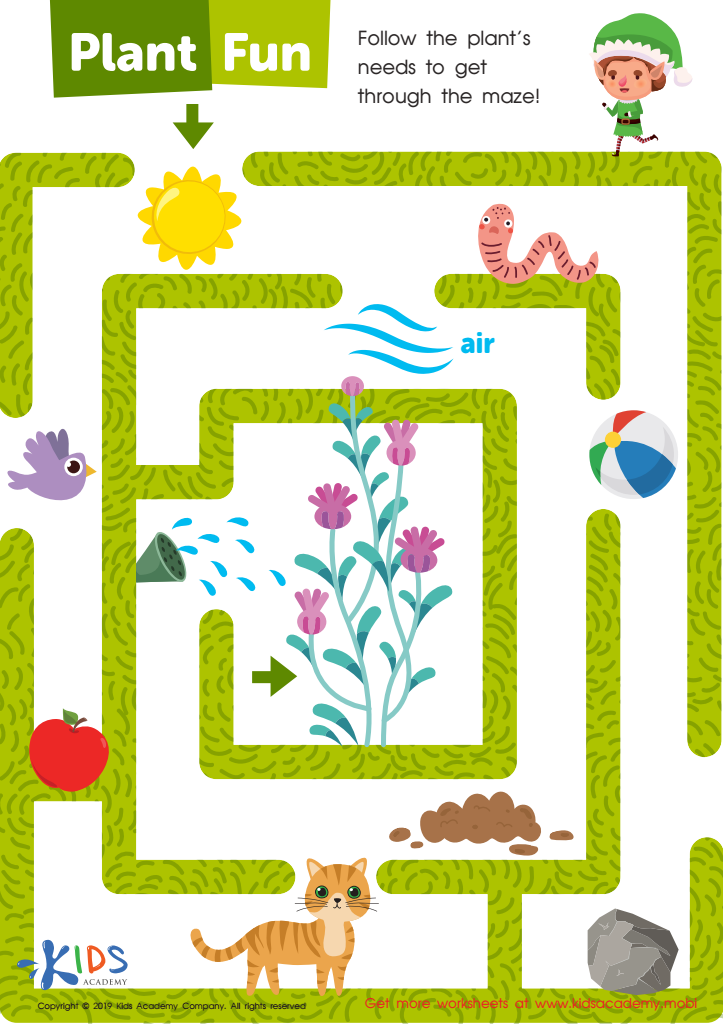
Plant Fun Worksheet
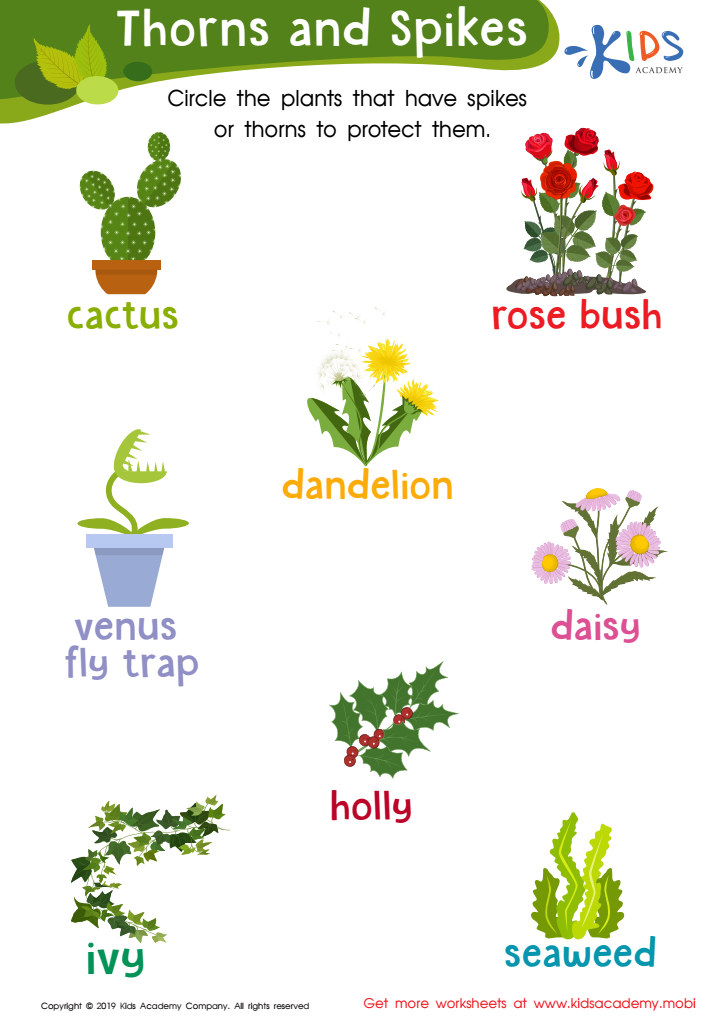
Thorns and Spikes Worksheet
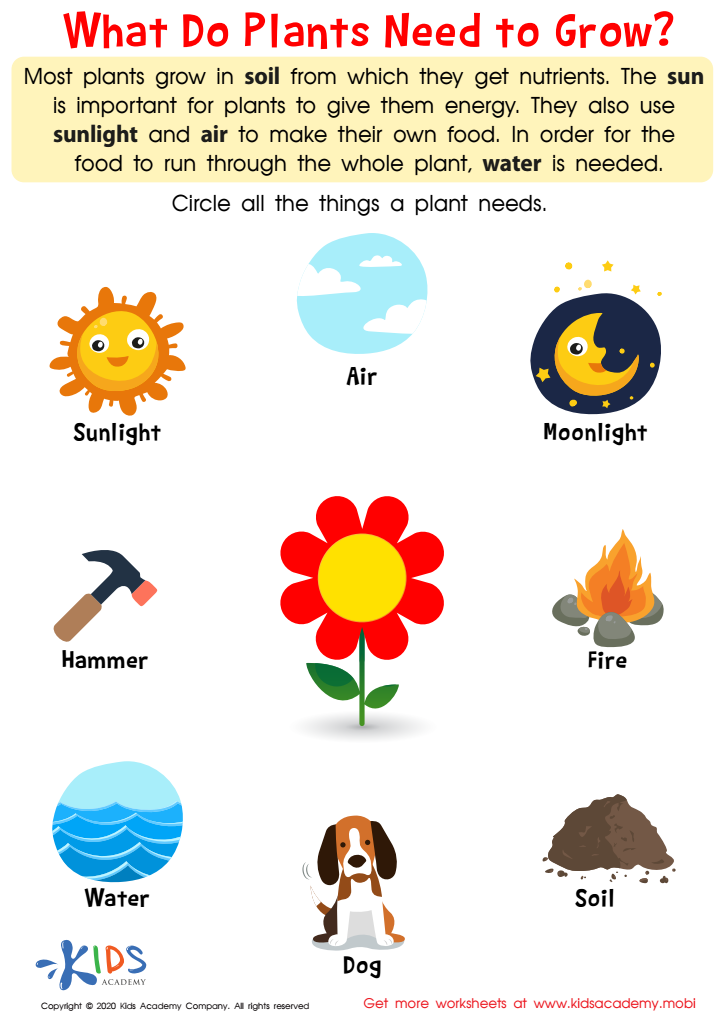
What Do Plants Need to Grow Worksheet








Plant identification is a crucial skill for children aged 6-8, as it fosters a deep connection with nature and enhances their understanding of the environment. Teaching kids to identify plants cultivates curiosity and encourages outdoor exploration, making learning engaging and hands-on. Through this activity, children develop observational skills, attention to detail, and a capacity for critical thinking as they differentiate between various species.
Additionally, recognizing plants helps children understand the importance of biodiversity and ecosystems. It instills an appreciation for nature and can spark discussions about plant biology, ecology, and environmental stewardship. Understanding local flora can also translate to practical knowledge, such as identifying edible plants or understanding which ones may be toxic.
Moreover, involving parents in plant identification activities can deepen the parent-child bond and provide plenty of opportunities for quality time spent outdoors. Teachers can incorporate plant identification into lesson plans, blending education with fun activities like scavenger hunts or nature walks. By caring about plant identification, adults nurture a generation that values and respects nature, fostering responsible future caretakers of our planet. This investment in their children's learning can lead to more environmentally conscious individuals who appreciate the natural world.








