Reading analog clocks Normal Worksheets for Ages 6-8
3 filtered results
-
From - To
Our "Reading Analog Clocks Normal Worksheets for Ages 6-8" is designed to help young learners master telling time with ease and fun. These engaging worksheets reinforce essential skills by guiding children through reading different clock faces. Perfect for ages 6-8, the activities include drawing hands on clocks, identifying hours and minutes, and practicing time-telling scenarios. Each worksheet offers colorful and interactive exercises to ensure kids remain captivated and make learning pleasurable. Help your child develop crucial time-telling skills, boost their confidence, and enhance their classroom performance with our expertly crafted analog clock worksheets. Ideal for both classroom and home use!
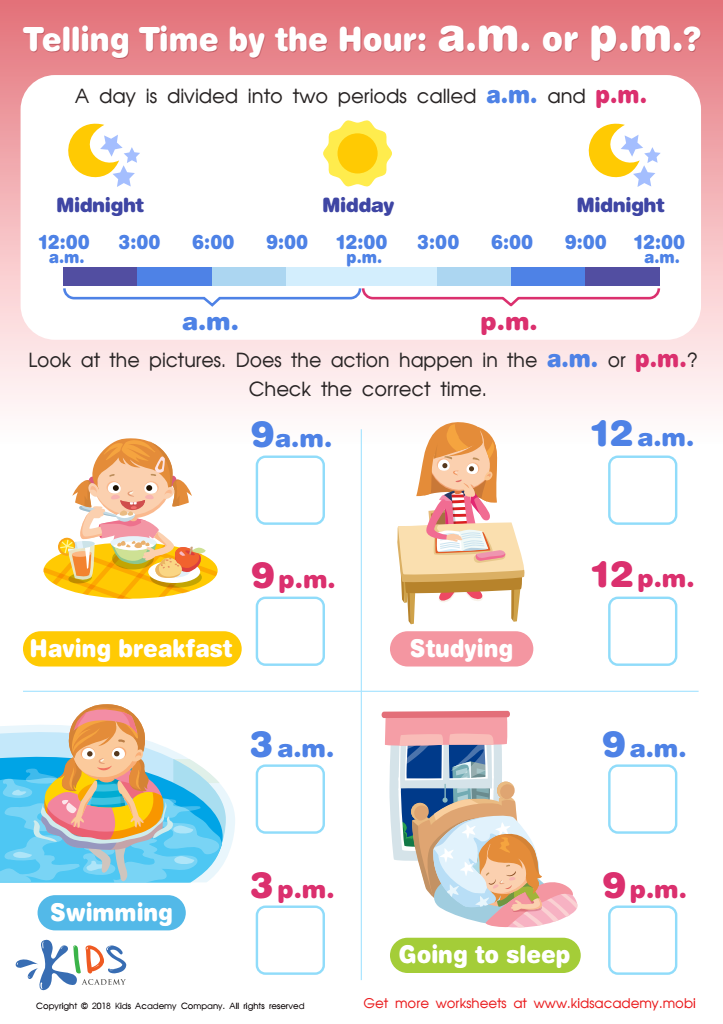
Tilling Time by the Hour: a.m. or p.m.? Worksheet
 Assign to My Students
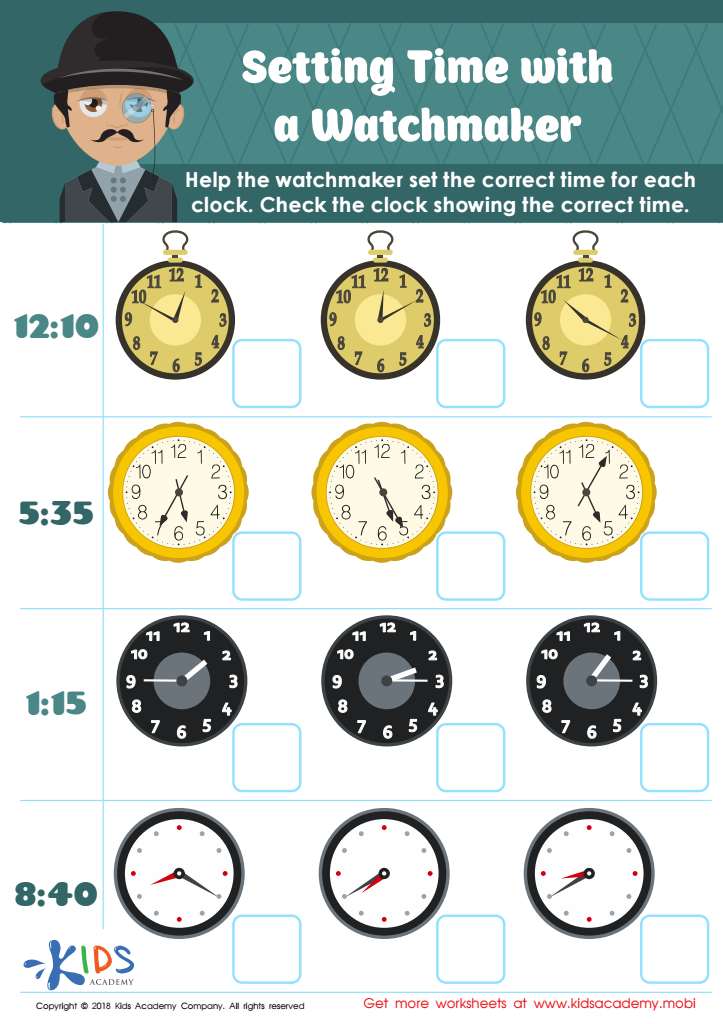
Setting Time with Watchmaker Worksheet
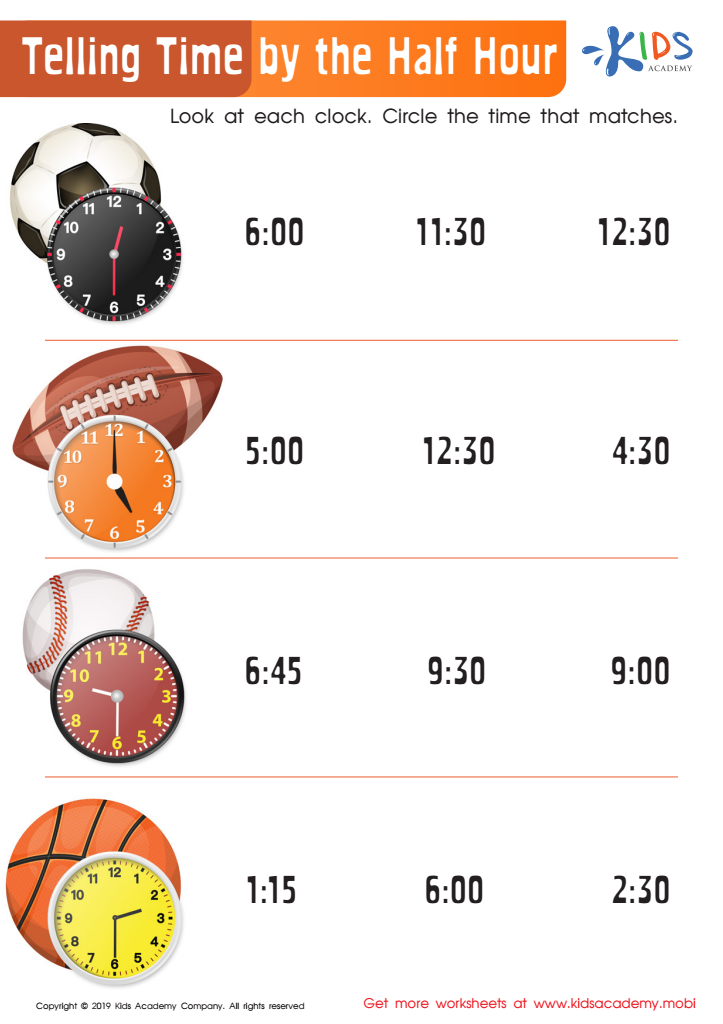
Telling Time by the Half Hour Worksheet






.jpg)
Understanding how to read analog clocks is an essential skill for children ages 6-8, contributing significantly to their cognitive development and daily life. At this stage, children are developing a foundational understanding of time management and routine. Knowing how to read an analog clock helps them comprehend the concept of elapsed time and the partitioning of hours and minutes, which is crucial for everyday activities such as scheduling and understanding duration.
Moreover, analog clocks teach children important principles of mathematics, including counting by fives and understanding fractions. As they learn to tell time, they practice addition and subtraction within the context of a real-world application, making math both relevant and practical.
Reading analog clocks also promotes a sense of independence and responsibility. When children can tell the time, they are more equipped to manage their daily schedule, thereby inculcating self-discipline and time-awareness. This skill helps in developing punctuality, an important trait for academic success and future responsibilities.
Additionally, in a digital age where many rely on digital devices, understanding traditional analog clocks ensures that children are well-rounded and can navigate varying time-keeping devices. Engaging with analog clocks encourages focus and mindfulness, requiring children to hone in on the clock’s hands and numbers—skills crucial in many learning scenarios.








