Reading clocks Normal Worksheets for Ages 6-8
3 filtered results
-
From - To
Welcome to our comprehensive collection of Reading Clocks Normal Worksheets designed specifically for children aged 6-8! Our engaging worksheets aim to enhance your child's understanding of time by providing age-appropriate activities focusing on reading both analog and digital clocks. Each worksheet features colorful illustrations and easy-to-follow instructions to keep young learners motivated. With fun exercises that build confidence, your child will learn to tell time, understand the concept of hours and minutes, and apply this knowledge in real-life situations. Perfect for home or classroom use, boost your little one's math skills while making learning enjoyable! Start exploring now!
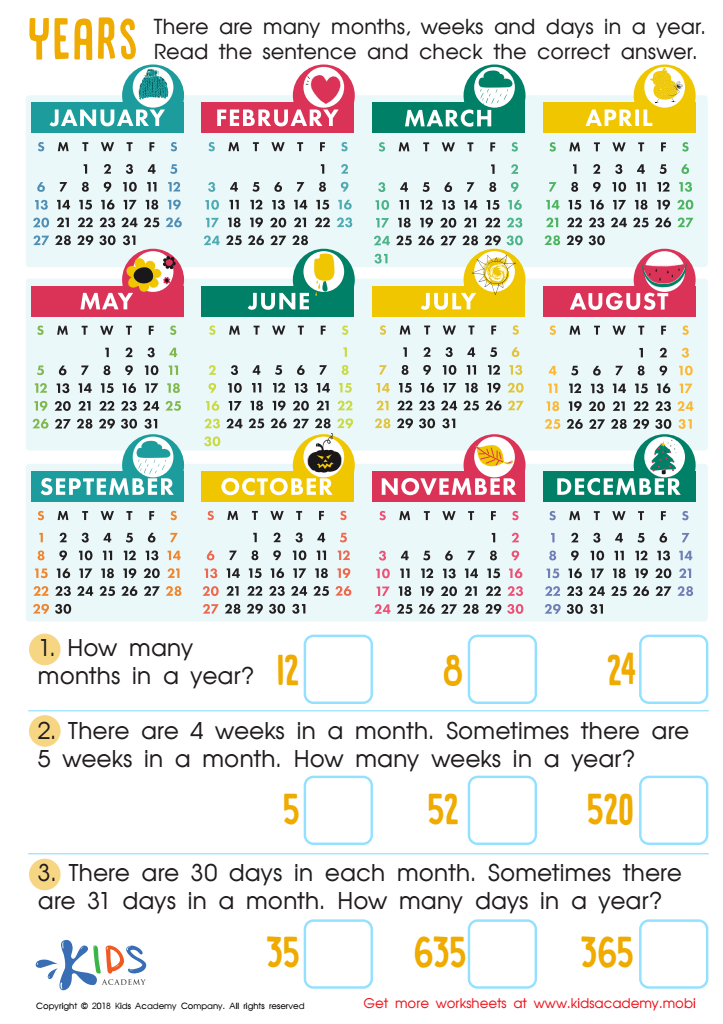
Years Worksheet
 Assign to My Students
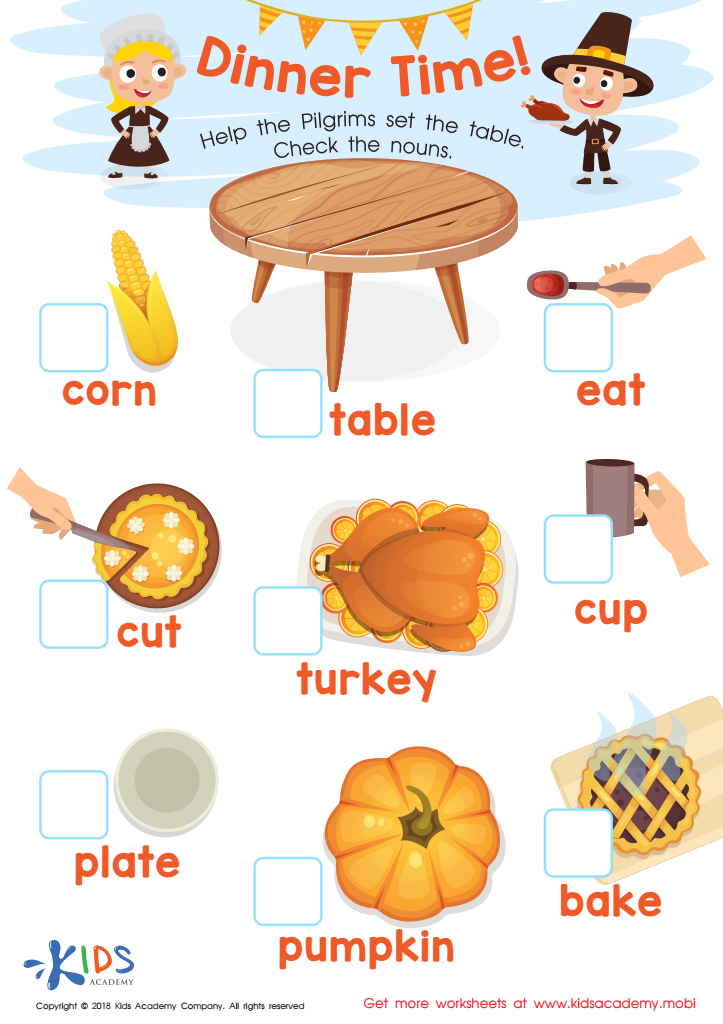
Dinner Time! Worksheet
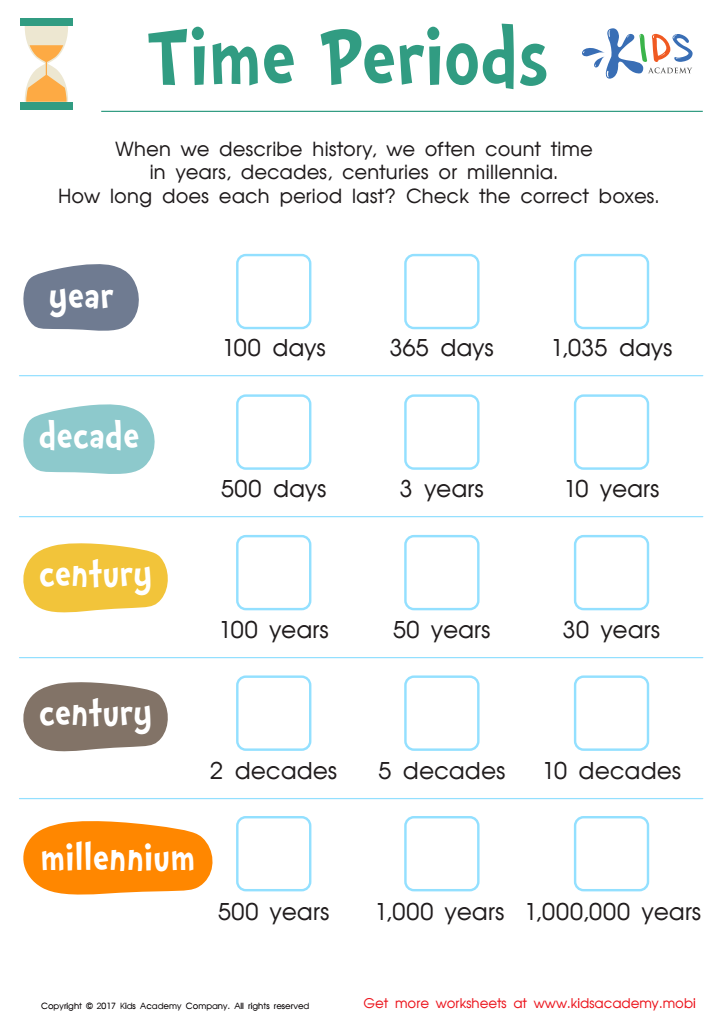
Time Periods Worksheet








Parents and teachers should prioritize teaching children how to read clocks because it equips them with essential life skills. For children aged 6-8, learning to tell time fosters independence and self-management. Understanding time helps them develop routines, recognize the importance of punctuality, and structure their daily activities effectively.
Moreover, learning to read analog clocks enhances a child's cognitive and critical thinking skills. It encourages them to process visual information, understand spatial relationships, and engage in mathematical concepts like counting by fives. This foundational knowledge lays the groundwork for future math skills while developing their ability to concentrate and focus during lessons.
Additionally, time management is an invaluable skill that benefits children both in and out of school. By mastering how to read both digital and analog clocks, they can better navigate schedules, complete tasks on time, and understand the concept of elapsed time—all of which contribute to greater academic success.
Lastly, teaching children to read clocks helps bridge the generational gap, as many traditional activities and family routines revolve around telling time. This shared experience cultivates a sense of connection and tradition, fostering deeper communication and bonding between parents, teachers, and children.








