Recognizing Patterns Normal Worksheets for Ages 6-8
6 filtered results
-
From - To
Unlock your child's potential with our "Recognizing Patterns Normal Worksheets" designed specifically for kids aged 6-8. These engaging worksheets help enhance children's critical thinking and problem-solving skills by enabling them to identify, create, and extend various patterns in a fun and interactive way. Each worksheet includes vibrant illustrations and age-appropriate exercises that captivate young learners' attention while fostering their cognitive development. From shapes to colors and number patterns, these activities provide the perfect opportunity for hands-on learning. Empower your child with essential skills in pattern recognition through our thoughtfully crafted and thoughtfully powered educational resources. Dive in and explore today!
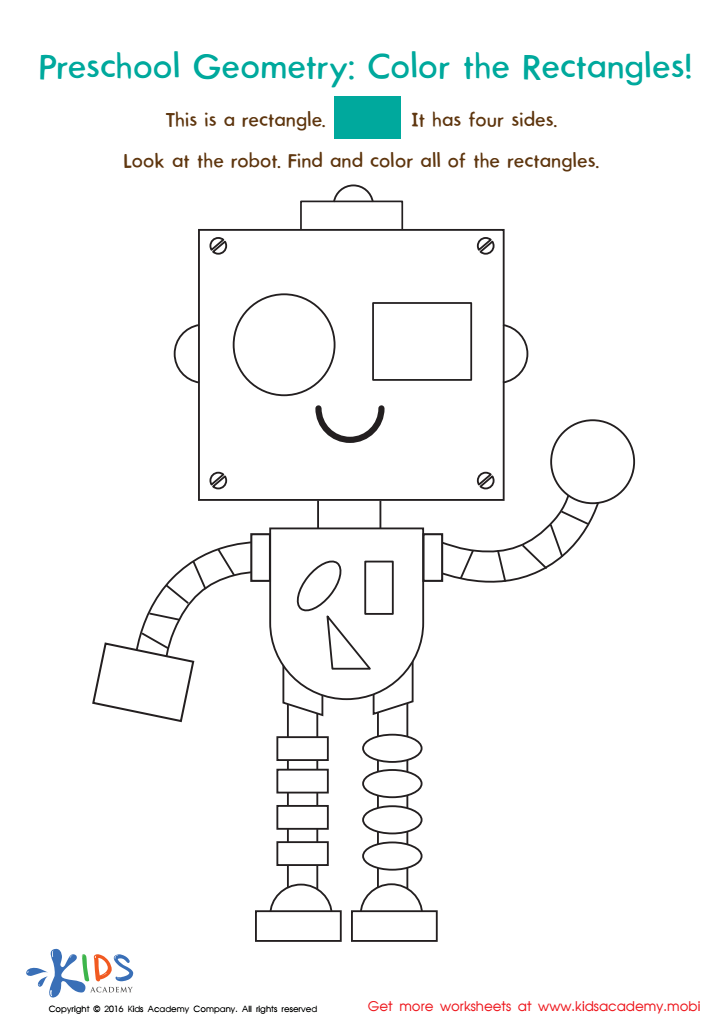
Geometry Worksheet
 Assign to My Students
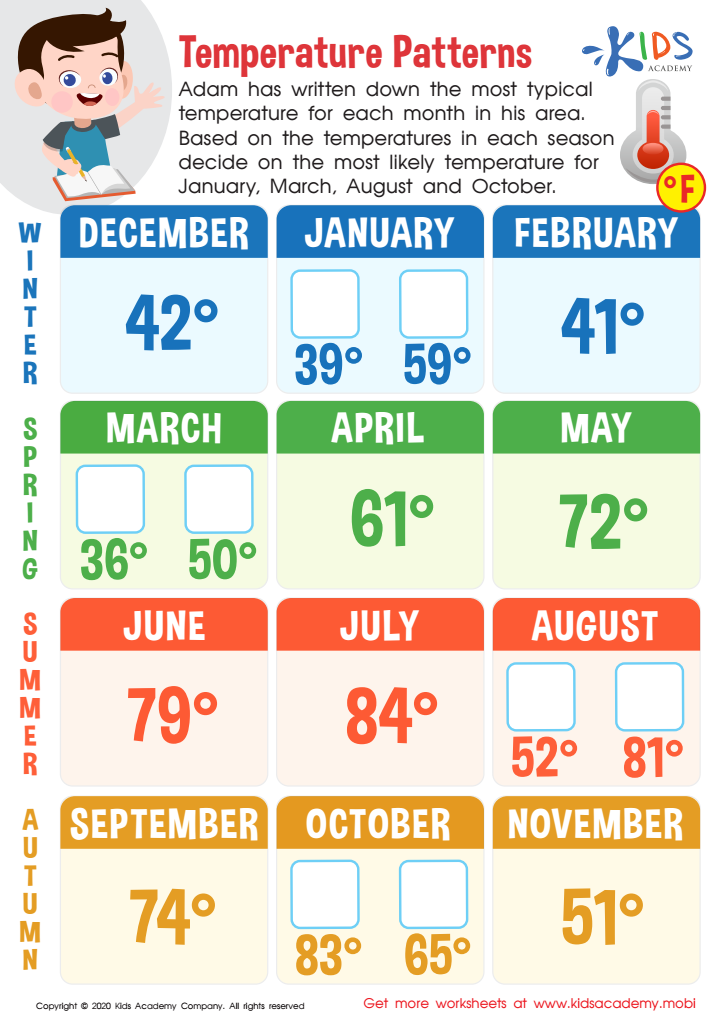
Temperature Patterns Worksheet
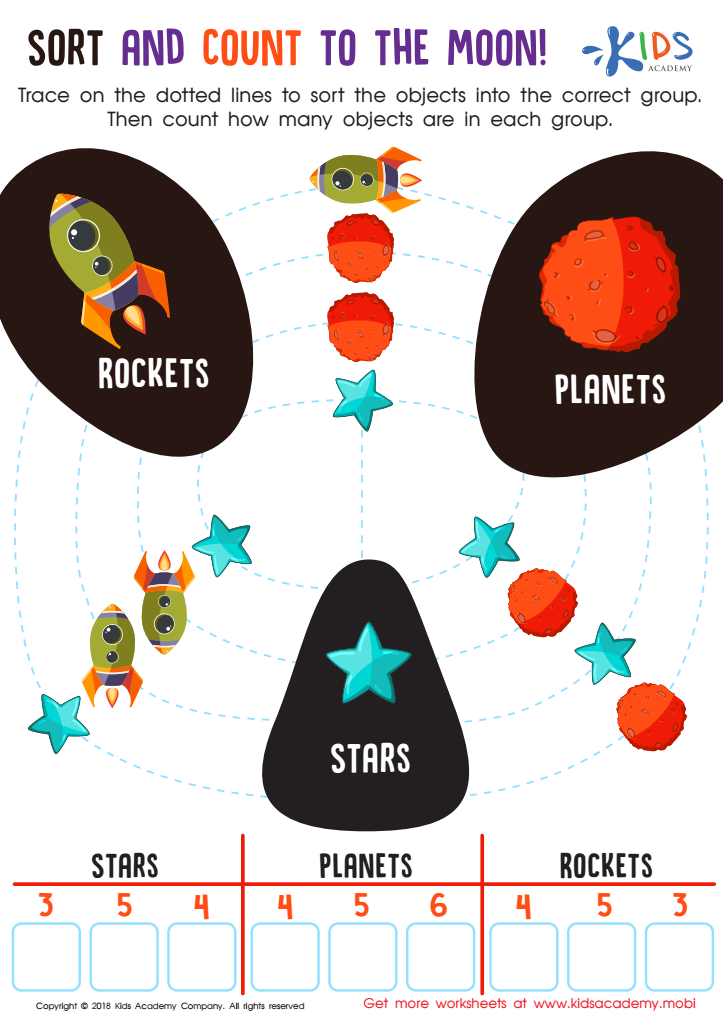
Sort and Count to the Moon Worksheet
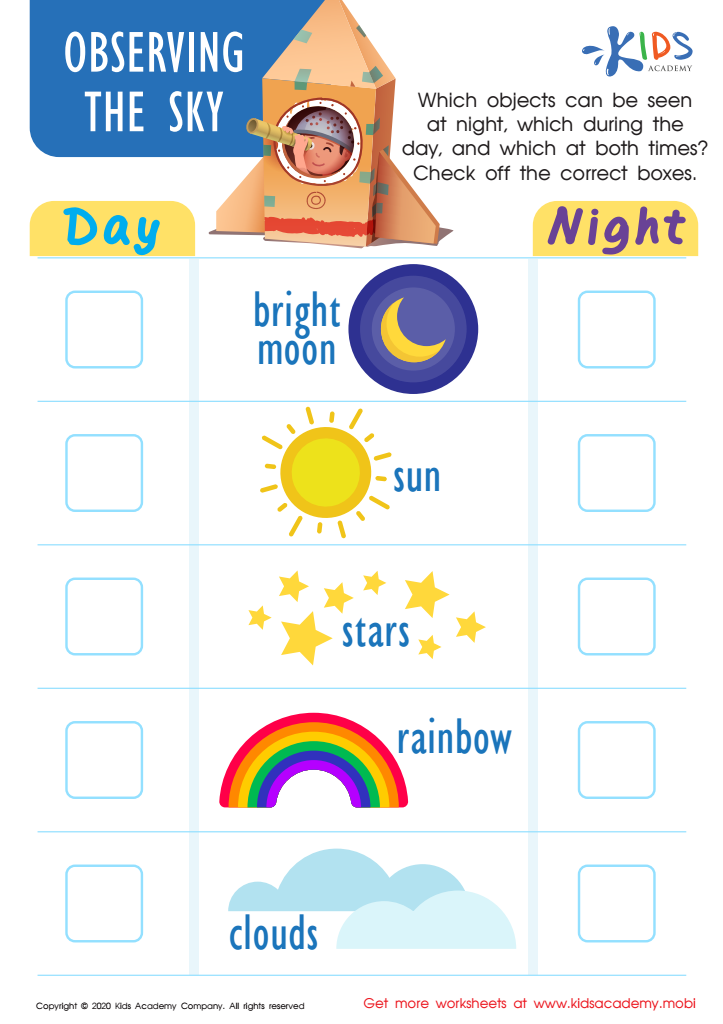
Observing the Sky Worksheet
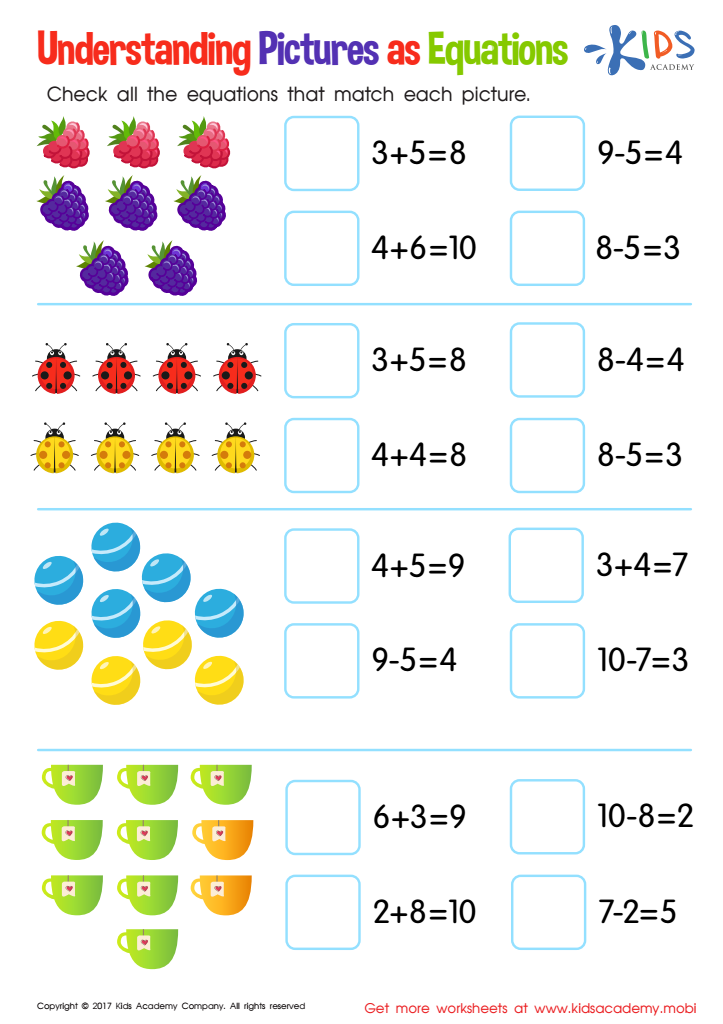
Understanding Pictures as Equations Worksheet
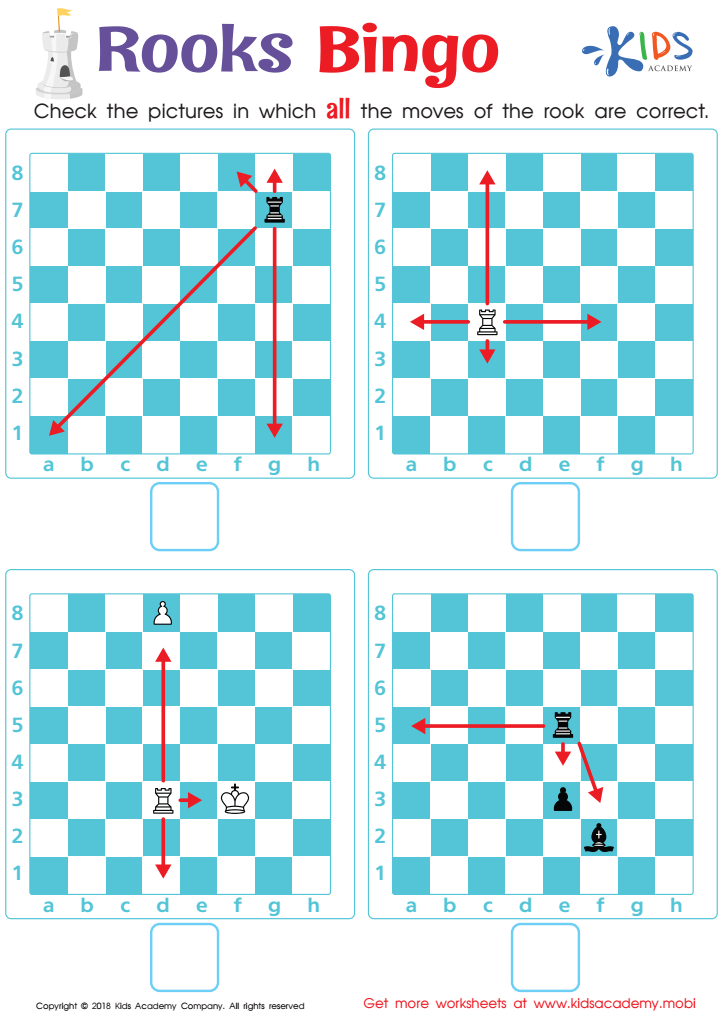
Rooks Bingo Worksheet





Recognizing patterns is a fundamental cognitive skill that plays a pivotal role in a child's mathematical and analytical development, particularly for children aged 6-8. During these formative years, children are naturally curious and eager to explore their environment. Engaging them in recognizing patterns can sharpen their observational skills, enhance their critical thinking, and bolster their problem-solving abilities.
Additionally, the ability to identify patterns lays the groundwork for a deeper understanding of mathematical concepts such as counting, addition, and sequences. Teachers and parents should prioritize pattern recognition as it fosters connections between different areas of knowledge, making learning a more cohesive and integrated experience.
Moreover, pattern recognition encourages creativity and innovation. Children learn that patterns are not just mathematical in nature—they can be found in art, music, and nature. This broader understanding enhances their ability to connect disparate ideas and think outside the box.
In an increasingly complex world, recognizing patterns is essential for navigating everyday challenges. By fostering this skill early, parents and educators equip children with critical tools that will serve them throughout their academic journey and in real-life situations. Thus, investing in pattern recognition is investing in a child’s future success.








