
Spatial Orientation Normal Worksheets for Ages 6-8
4 filtered results
Difficulty Level
Grade
Age
-
From - To
Subject
Activity
Standards
Our "Spatial Orientation Normal Worksheets for Ages 6-8" are thoughtfully designed to develop and refine children's spatial awareness and direction-following skills. These engaging, age-appropriate worksheets are perfect for young learners and make it fun to understand concepts like left, right, up, down, and more. With vibrant graphics and interactive exercises, children can practice their sense of direction and space, crucial for daily activities and academic success. Through various puzzles and tasks, our worksheets foster cognitive development and enhance problem-solving abilities. Help your child navigate their world with confidence using our expert-designed spatial orientation worksheets.
Favorites
With answer key
Interactive
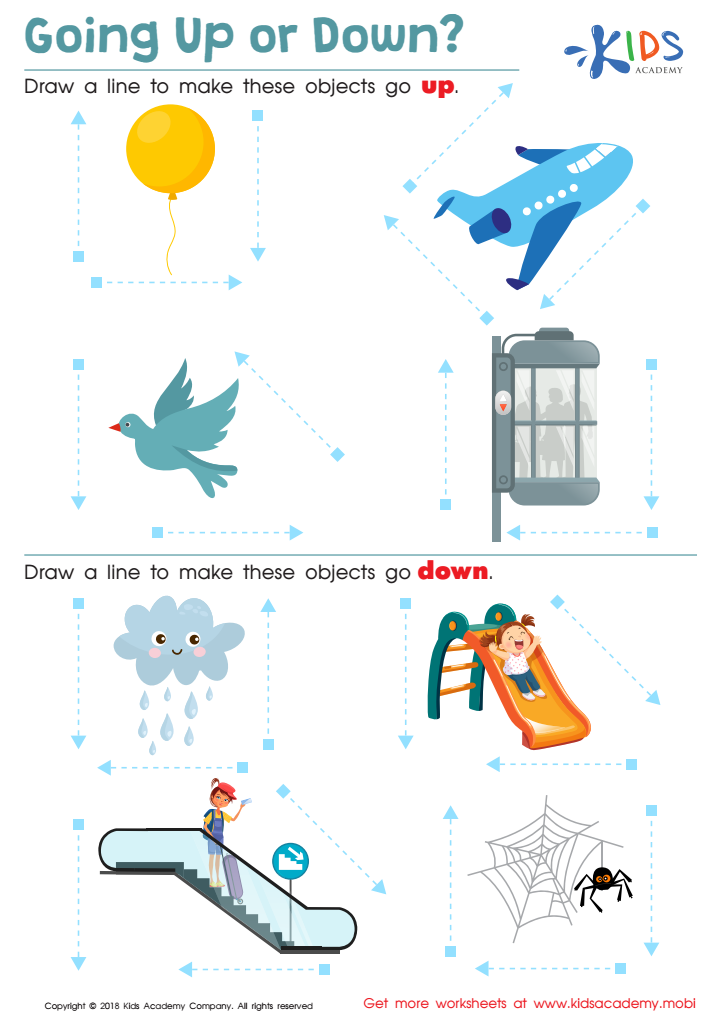
Going up or Down? Worksheet
Young students learn the concept of up and down with this geometry worksheet. They trace lines to identify relative positioning as an object travels. Kids can use position words to describe an object's movement, enhancing their spatial relationship skills - an important geometry foundation.
 Assign to My Students
Going up or Down? Worksheet
Worksheet
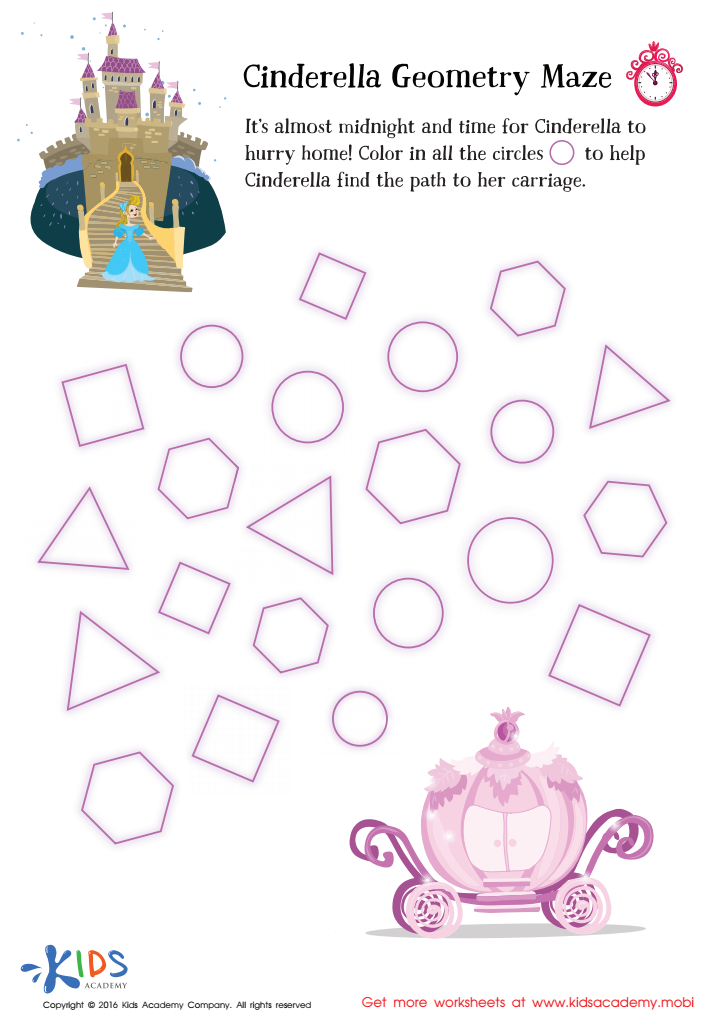
Cinderella Geometry Maze Worksheet
Help Cinderella hurry home! Your preschooler will have fun problem-solving and sorting shapes in this geometric maze. As they shade in the circles, they'll be helping their favorite princess reach her carriage on time. Not only that, but they'll strengthen their logic skills in the process. Get this and other fairy tale mazes to keep them entertained while learning.
Cinderella Geometry Maze Worksheet
Worksheet
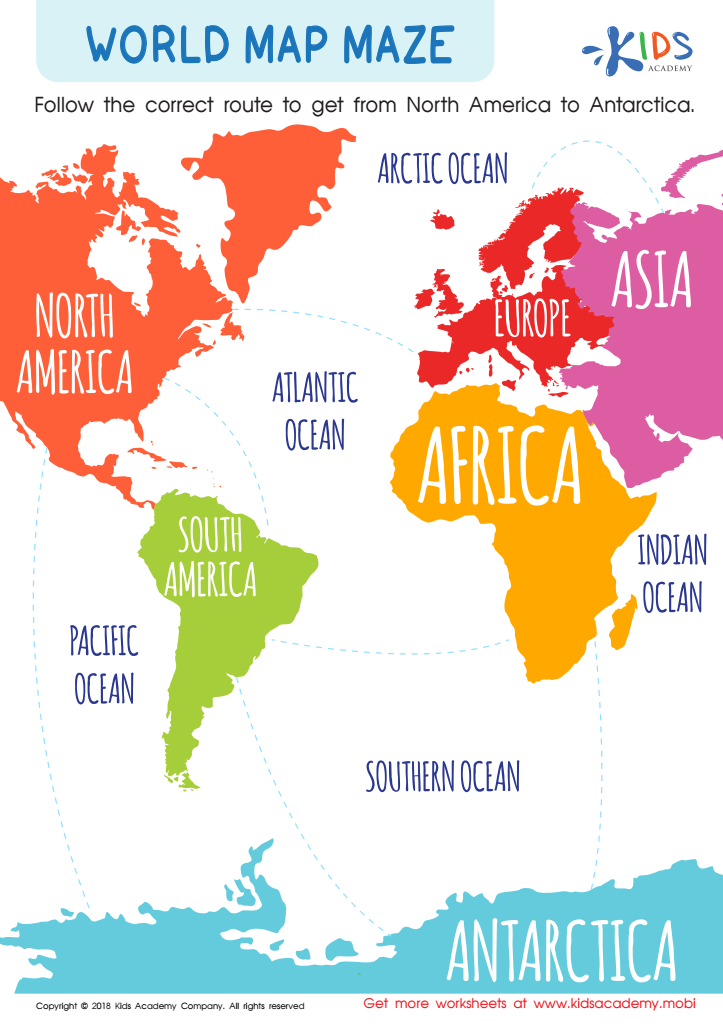
World Map Maze Worksheet
Explore the world with your kids and this free colorful world map maze. Have them trace the lines and travel from North America to Antarctica, learning the locations and names of oceans and continents. It's an exciting expedition!
World Map Maze Worksheet
Worksheet
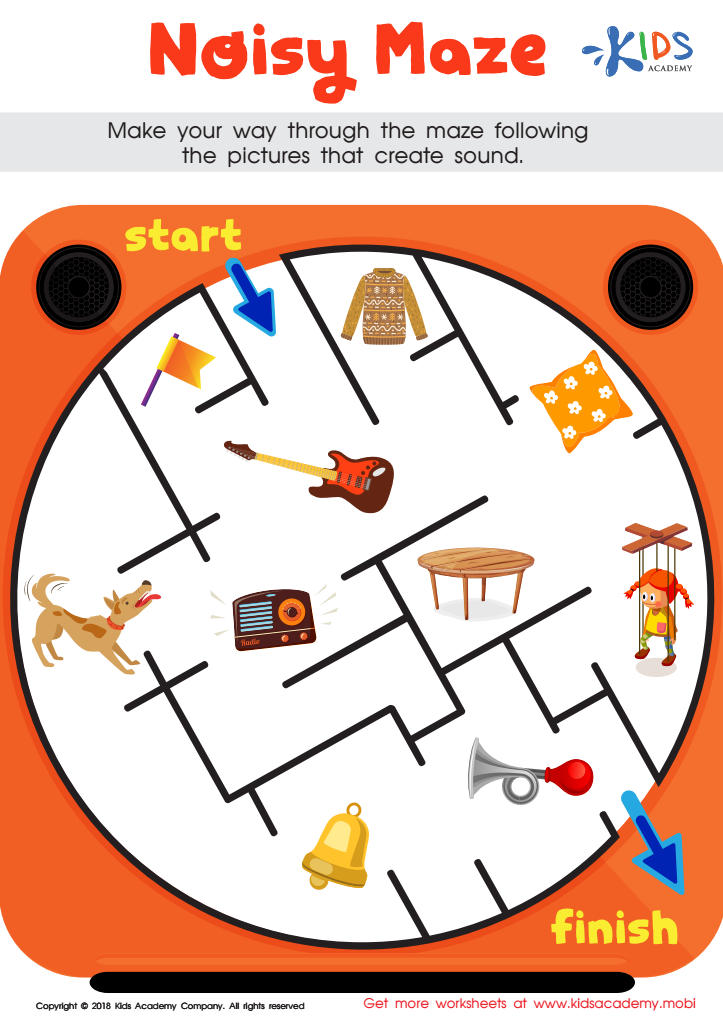
Noisy Maze Worksheet
Have your kids name some objects that make noise? Then, look at the worksheet with them and help them identify each object. Guide them through the maze, following the sound-producing pictures.
Noisy Maze Worksheet
Worksheet
Join Kids Academy for Free
Who is primarily going to use this learning content?







Spatial orientation is an essential cognitive skill that allows children to comprehend and interact with the world around them. For children aged 6-8, developing a normal sense of spatial orientation is critical for several reasons:
Firstly, spatial skills play a fundamental role in basic daily activities, such as navigating spaces, organizing belongings, and understanding directions. Children with good spatial orientation can easily find their way around their school or neighborhood, enhancing their independence and confidence.
Academically, spatial orientation is closely linked to success in subjects such as mathematics, science, and even reading. For example, understanding geometry, interpreting graphs, reading maps, or following written instructions often requires strong spatial abilities. These skills are also the foundation for more advanced cognitive tasks, such as problem-solving and critical thinking.
Moreover, fostering spatial orientation contributes to motor development. Activities such as playing sports, dancing, or even partaking in simple physical education exercises require kids to be aware of their body position in space, coordination, and movement.
From a social perspective, children with well-developed spatial skills are often better at engaging in group play and coordinating activities with their peers, which is crucial for building social connections and teamwork skills.
Therefore, parents and teachers should prioritize nurturing spatial skills during these formative years to support holistic development and set the foundation for future academic and personal success.








