
Story analysis Normal Worksheets for Ages 6-8
4 filtered results
Difficulty Level
Grade
Age
-
From - To
Subject
Activity
Standards
Introducing our Story Analysis Worksheets, perfect for ages 6-8! These engaging worksheets are designed to develop your child’s reading comprehension and analytical skills. With fun, age-appropriate stories and activities, children will learn to identify key elements like plot, characters, and setting. Each worksheet encourages critical thinking and creativity, helping young learners to delve deeper into the narratives they read. Ideal for classroom use or at-home practice, these worksheets make mastering story analysis enjoyable and effective. Visit Kids Academy to explore our wide selection of resources that cater to developing essential learning skills in children.
Favorites
With answer key
Interactive
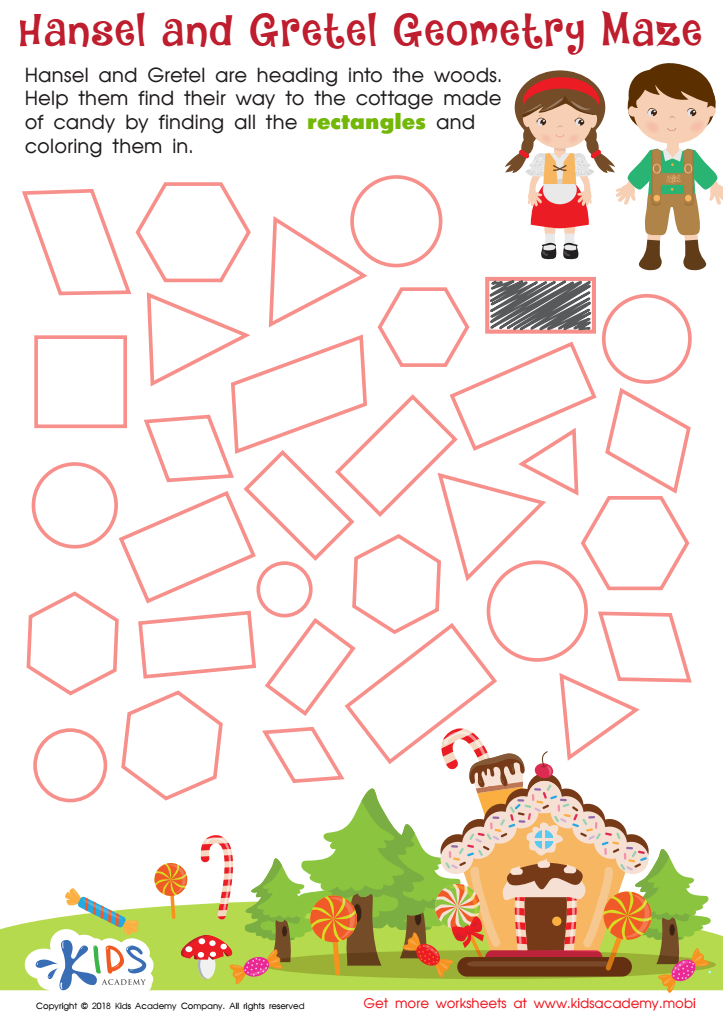
Hansel and Gretel Geometry Maze Worksheet
Your kids will have fun helping Hansel and Gretel get through a colorful forest of shapes! This free PDF reinforces the properties of rectangles, building skills in visual discernment and laying the foundations for geometry. They'll be too busy enjoying the story to realize they're learning!
 Assign to My Students
Hansel and Gretel Geometry Maze Worksheet
Worksheet
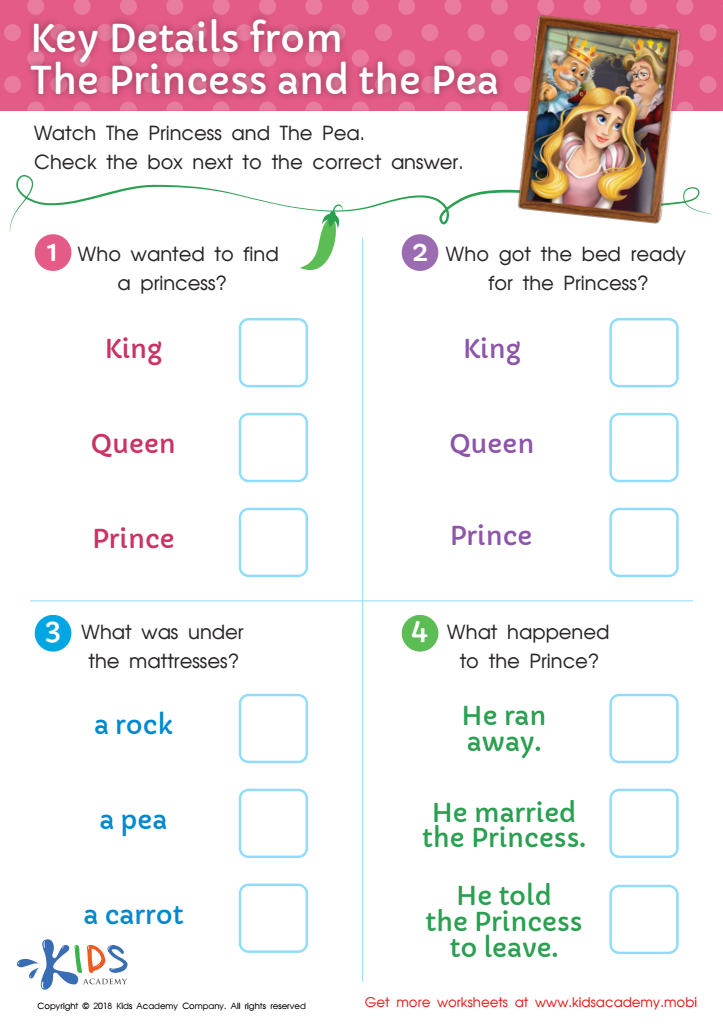
Key Details from the Princess and the Pea Worksheet
After reading The Princess and the Pea, ask your students questions to assess their comprehension of the story. Check their knowledge of key details. This printable can be used to help evaluate their understanding. Encouraging the recall of story events helps build important reading skills.
Key Details from the Princess and the Pea Worksheet
Worksheet
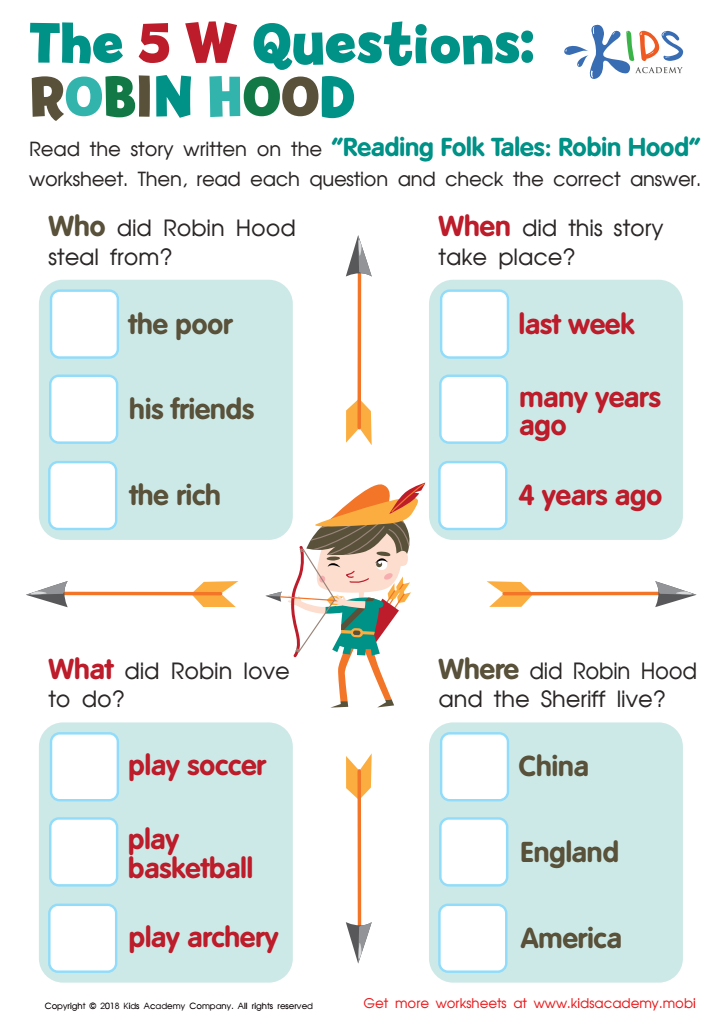
The 5 W Questions: Robin Hood Worksheet
Before embarking on this Robin Hood adventure, ensure your child reads and comprehends the 'Reading Folk Tales: Robin Hood' worksheet. Have them consider the story's lessons, and observe the details. Read the questions and help your kids select the correct answers.
The 5 W Questions: Robin Hood Worksheet
Worksheet
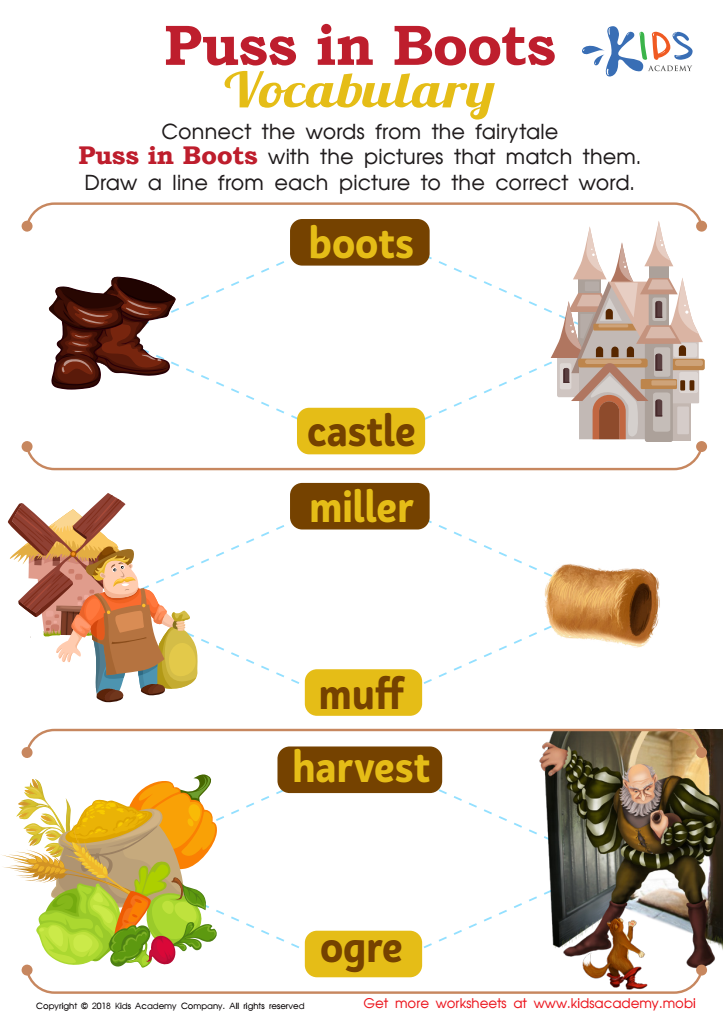
Puss in Boots Vocabulary Worksheet
Let your kids enjoy story-telling while learning at the same time. Help them learn from the fairytale, Puss in Boots, by connecting words from the worksheet with the matching pictures. Ask them to draw a line between each picture and corresponding word to build their vocabulary.
Puss in Boots Vocabulary Worksheet
Worksheet
Join Kids Academy for Free
Who is primarily going to use this learning content?







Story analysis is an important activity for children aged six to eight because it enhances their comprehension, critical thinking, and communication skills. At this developmental stage, children begin transitioning from learning to read to reading to learn. Engaging them in story analysis fosters a deeper understanding of texts, aiding in literacy development that is foundational for future academic success.
When parents or teachers guide young children through story analysis, they encourage interactive and thoughtful reading. Children learn to identify key components of a story, such as characters, setting, plot, and moral lessons. This helps in developing their ability to recall details and sequences, which is crucial for cognitive development.
Moreover, discussing a story encourages children to think beyond the text, fostering their imagination and creativity. Asking probing questions like, "Why do you think the character acted that way?" or "What could be a different ending?" nurtures critical thinking as children learn to assess motives and consider alternative perspectives.
Furthermore, story analysis helps in emotional development. By exploring characters' feelings and situations, children learn empathy and social skills. It also provides a vocabulary boost as they are exposed to new words and ways of expressing ideas.
In summary, parents and teachers should prioritize story analysis for young children to cultivate essential reading skills, critical thinking, creativity, empathy, and effective communication.








