Understanding chess rules Normal Worksheets for Ages 6-8
5 filtered results
-
From - To
Discover our engaging "Understanding Chess Rules" worksheets designed for children aged 6-8! Ideal for young learners, these resources introduce the fundamental concepts and rules of chess in an enjoyable and interactive manner. Through a variety of fun activities, kids will grasp essential strategies, piece movements, and game etiquette, fostering critical thinking and problem-solving skills. Our worksheets encourage independent learning while making chess accessible to beginner players. Perfect for classroom use or at-home learning, these materials will help your child develop confidence and a love for this classic game. Download now to promote cognitive growth and social interaction through chess!
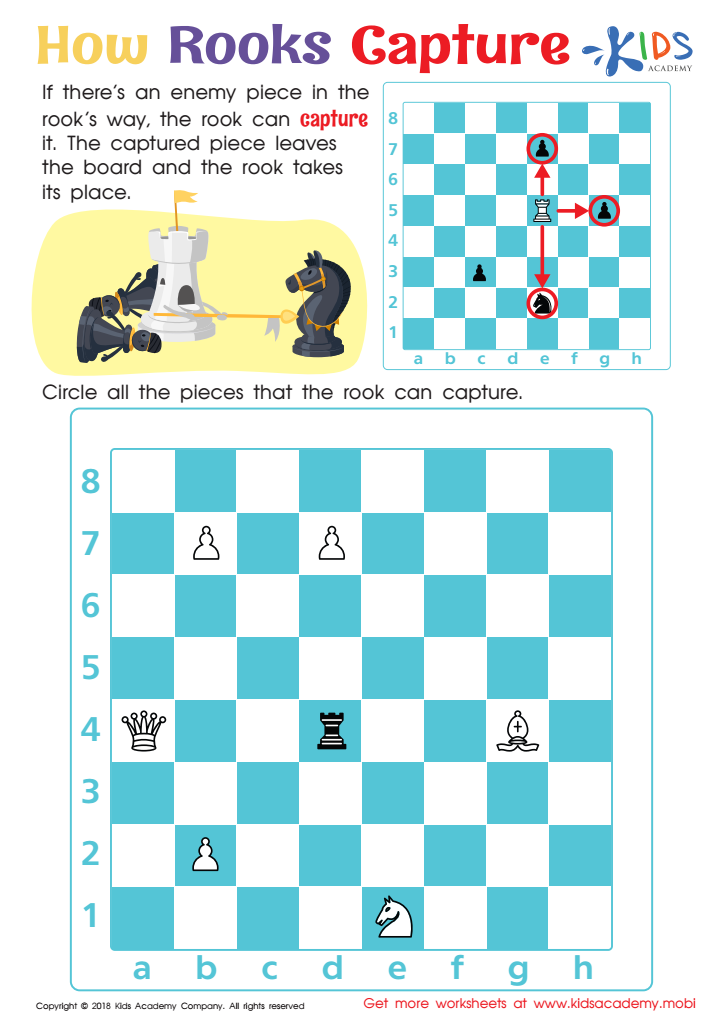
How Rooks Capture Worksheet
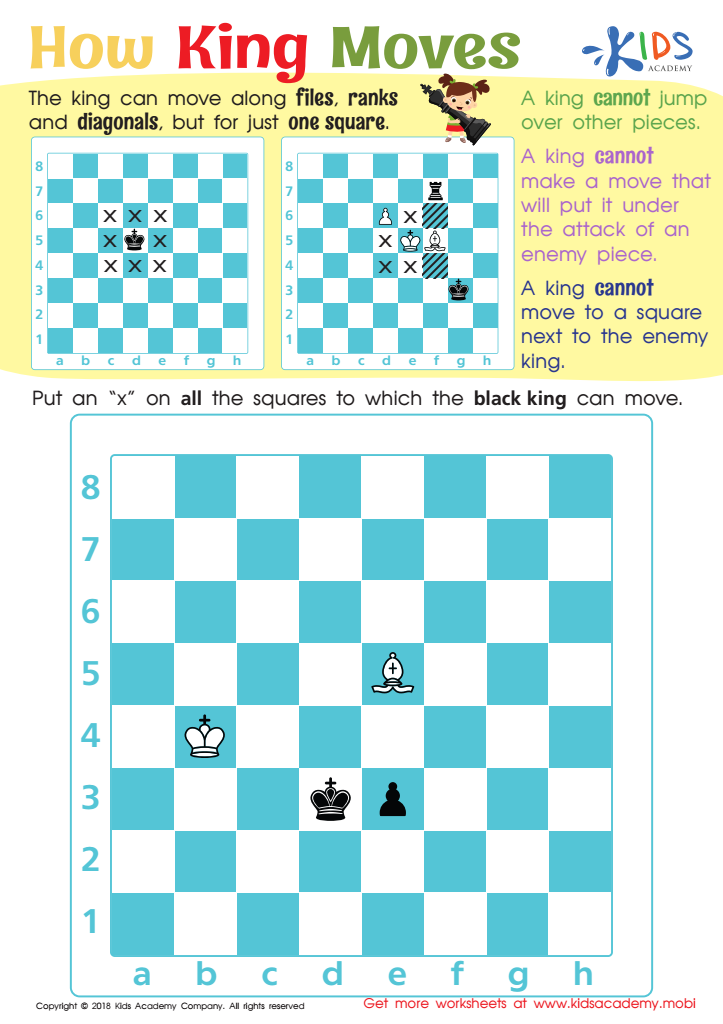
How King Moves Worksheet
 Assign to My Students
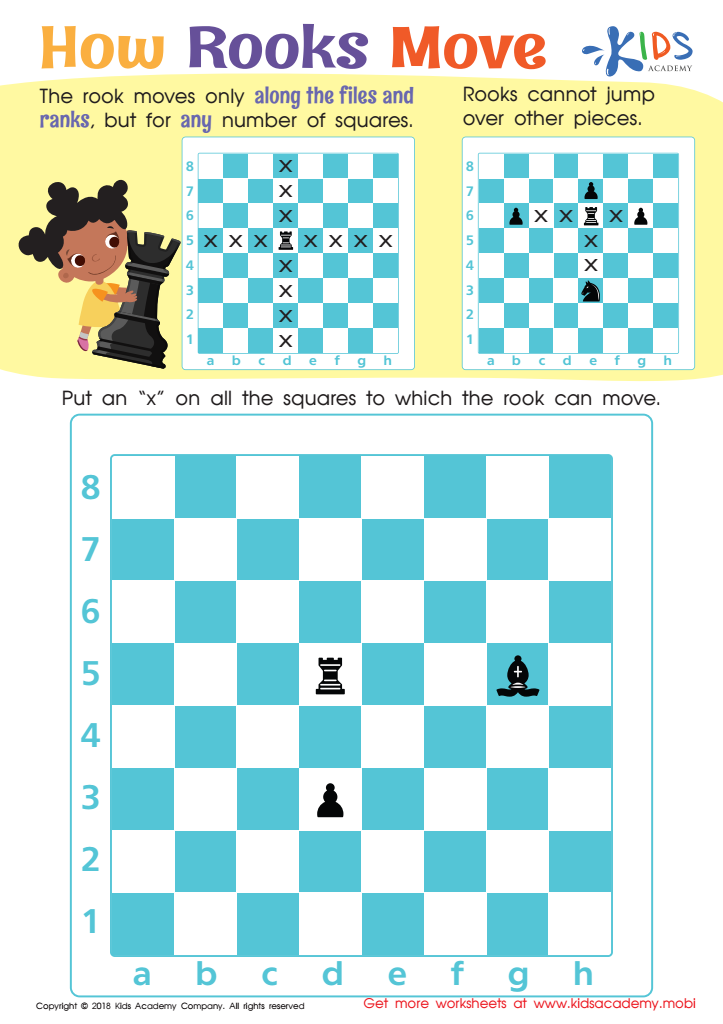
How Rooks Move Worksheet
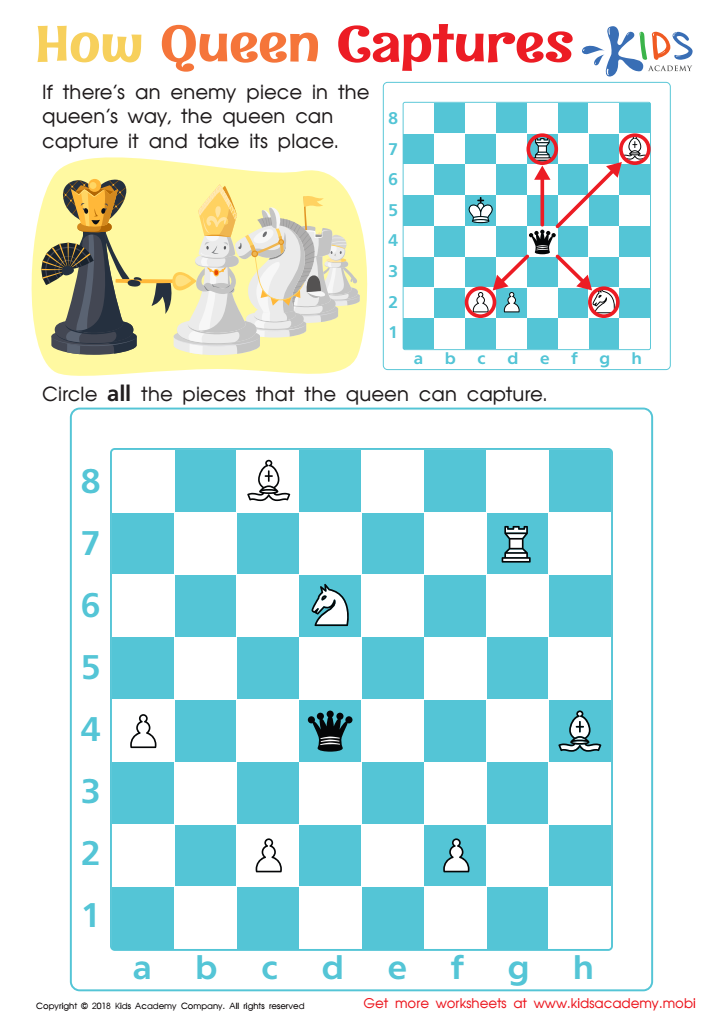
How Queen Captures Worksheet
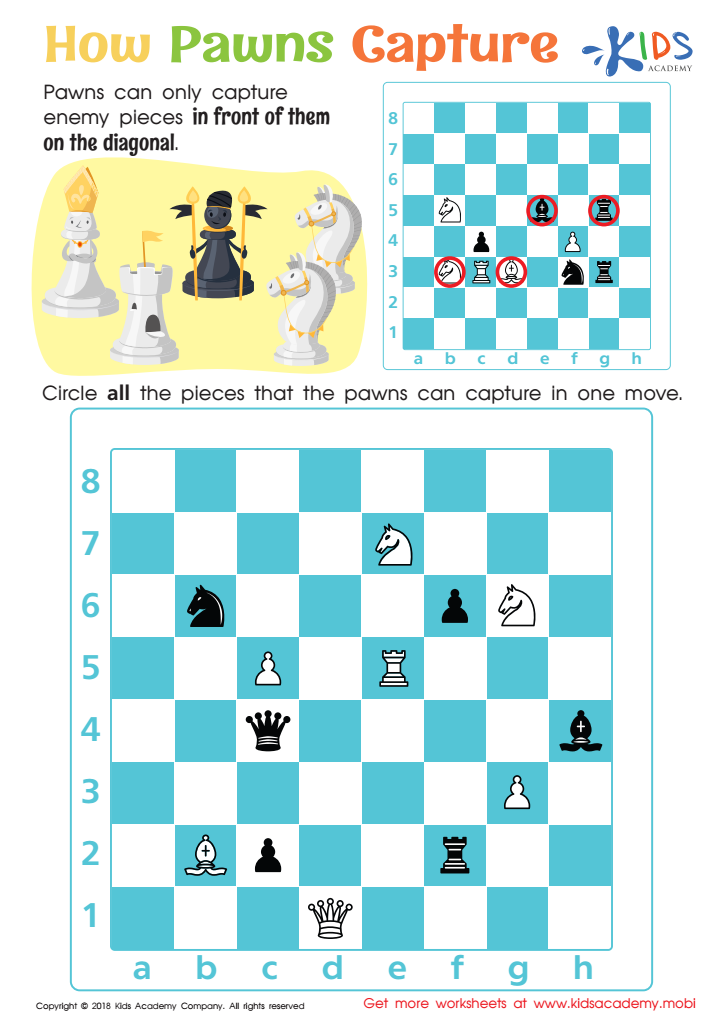
How Pawns Capture Worksheet








Understanding chess rules is crucial for parents and teachers, especially for children aged 6-8, as it fosters essential cognitive and social skills. At this age, children are developing their ability to think critically and strategically. Learning chess encourages problem-solving abilities, as each move requires forethought and planning, making players anticipate their opponent's actions. This enhanced critical thinking aids in their academic performance and daily life decisions.
Additionally, chess instills sportsmanship and patience. As children learn to win gracefully and accept losses, they cultivate resilience and emotional regulation, which are vital interpersonal skills. Playing chess also promotes focus and concentration. In a world full of distractions, mastering the intricate rules and strategies of chess requires sustained attention.
Furthermore, chess offers a unique bonding opportunity for parents and teachers with their children. Engaging in chess can lead to meaningful interactions, enhancing communication and relationships. This shared interest also motivates children to engage in more intellectual discussions and activities.
In summary, understanding chess rules presents a rich opportunity for cognitive development, emotional growth, and relationship building, making it an invaluable tool for parents and teachers in nurturing well-rounded children.








