Understanding multiplication Normal Worksheets for Ages 6-8
3 filtered results
-
From - To
Welcome to our "Understanding Multiplication Normal Worksheets" designed specifically for ages 6-8! These engaging worksheets provide a fun and effective way for young learners to grasp the fundamentals of multiplication. Featuring interactive exercises, bright visuals, and age-appropriate challenges, children will build their confidence while mastering multiplication facts. Our resources encourage hands-on learning, making math enjoyable and accessible. Whether at home or in the classroom, these worksheets are perfect for reinforcing essential skills, enhancing problem-solving abilities, and preparing for future math concepts. Dive into the world of multiplication and watch your child develop a solid mathematical foundation today!
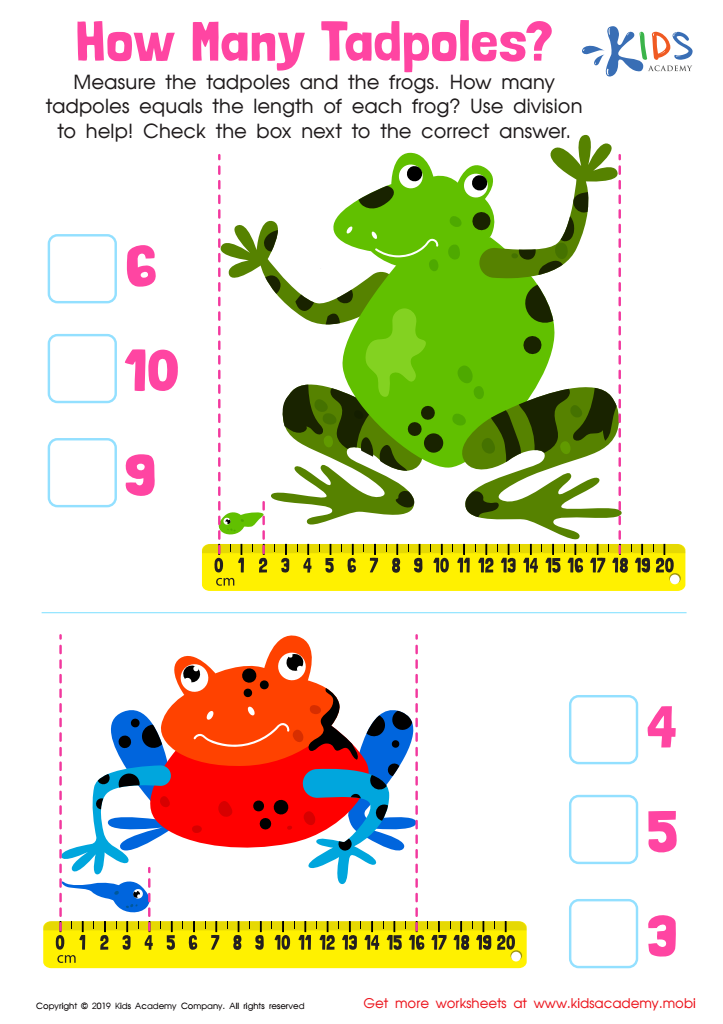
How Many Tadpoles Worksheet
 Assign to My Students
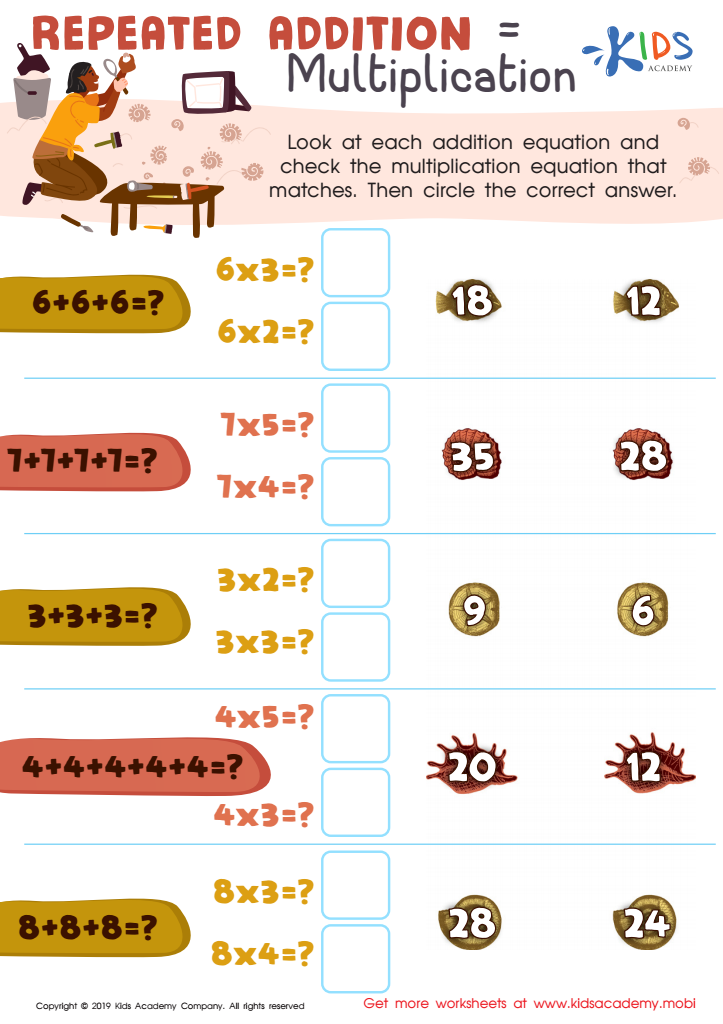
Repeated Addition = Multiplication Worksheet
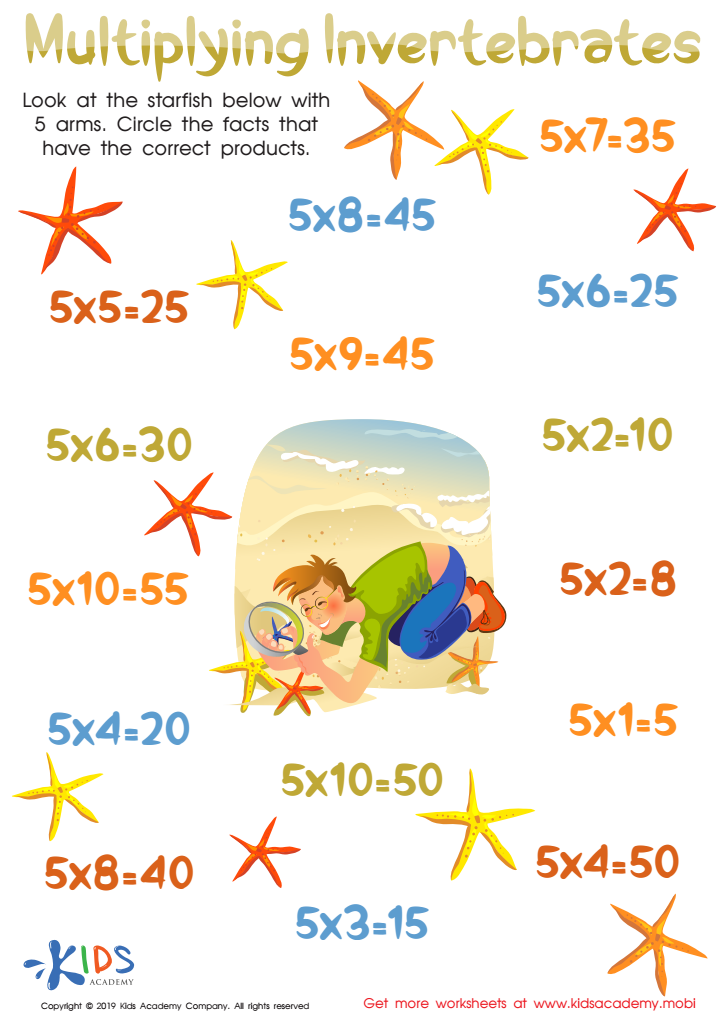
Multiplying Invertebrates Worksheet






Understanding multiplication is crucial for children aged 6-8 as it lays the foundation for their mathematical journey. First, multiplication is not just a standalone concept; it is deeply interconnected with addition. Recognizing that multiplication is essentially repeated addition helps children grasp the idea more intuitively, reinforcing their overall arithmetic skills.
Second, early mastery of multiplication enhances problem-solving skills. When students learn to multiply, they develop the ability to approach complex problems more systematically, fostering critical thinking. This skill is essential as they progress in their education and face more challenging concepts in math and other subjects.
Additionally, a strong foundation in multiplication promotes confidence in mathematics. When children understand multiplication, they are more likely to engage with math proactively, reducing anxiety around the subject. Building this confidence at an early age shapes their attitude towards learning and can influence their academic choices in the future.
Lastly, multiplication is a practical skill used in everyday life. From calculating total costs while shopping to understanding time and scheduling, multiplication is an essential tool for independence and real-world applications. Parents and teachers should care about fostering this understanding to support a child's academic success and lifelong skills.








