Understanding perspectives Normal Worksheets for Ages 6-8
3 filtered results
-
From - To
Welcome to our “Understanding Perspectives Normal Worksheets” designed specifically for children ages 6-8! These engaging worksheets aim to foster critical thinking and enhance empathy by helping young learners explore different viewpoints. Through a variety of interactive activities, students will develop essential skills in recognizing and appreciating diverse perspectives. Whether discussing characters in a story, interpreting emotions, or relating to their peers, these worksheets provide a fun and educational way to build social awareness. Perfect for classroom use or at-home learning, our resources are expertly crafted to keep children motivated and engaged as they learn invaluable lessons about understanding others.
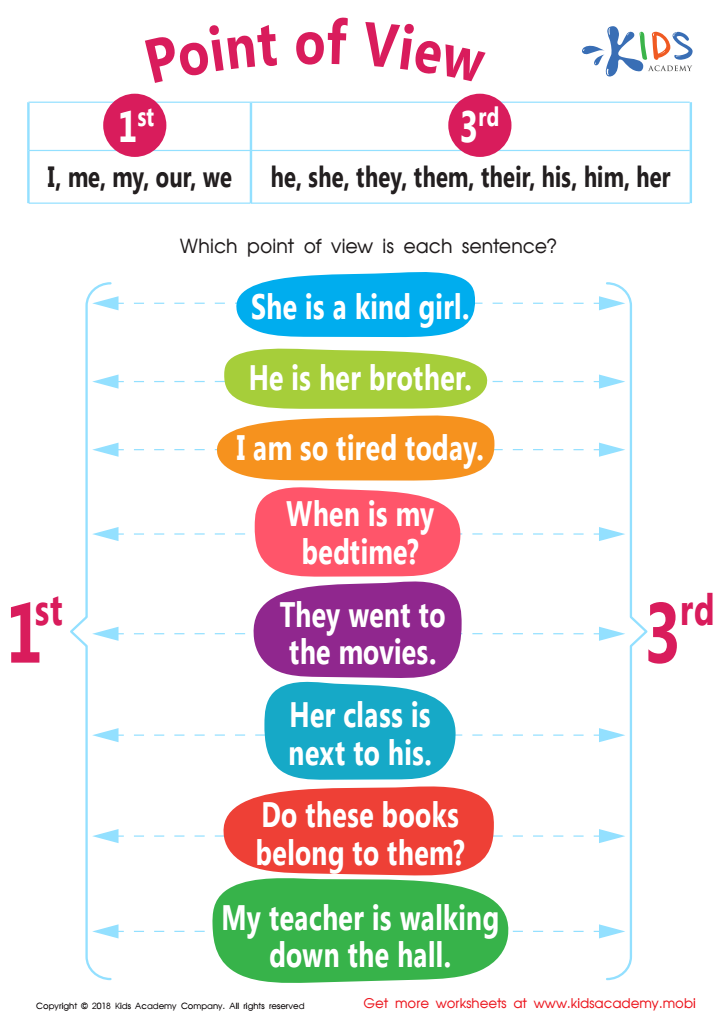
Point of View Worksheet
 Assign to My Students
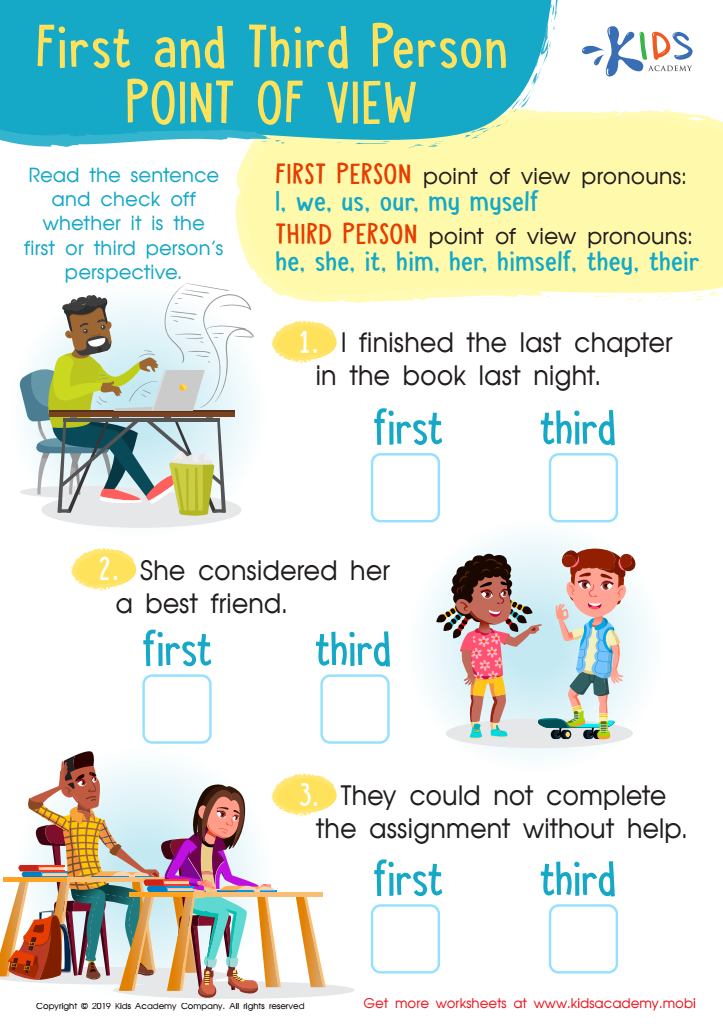
First and Third Person Point of View Worksheet
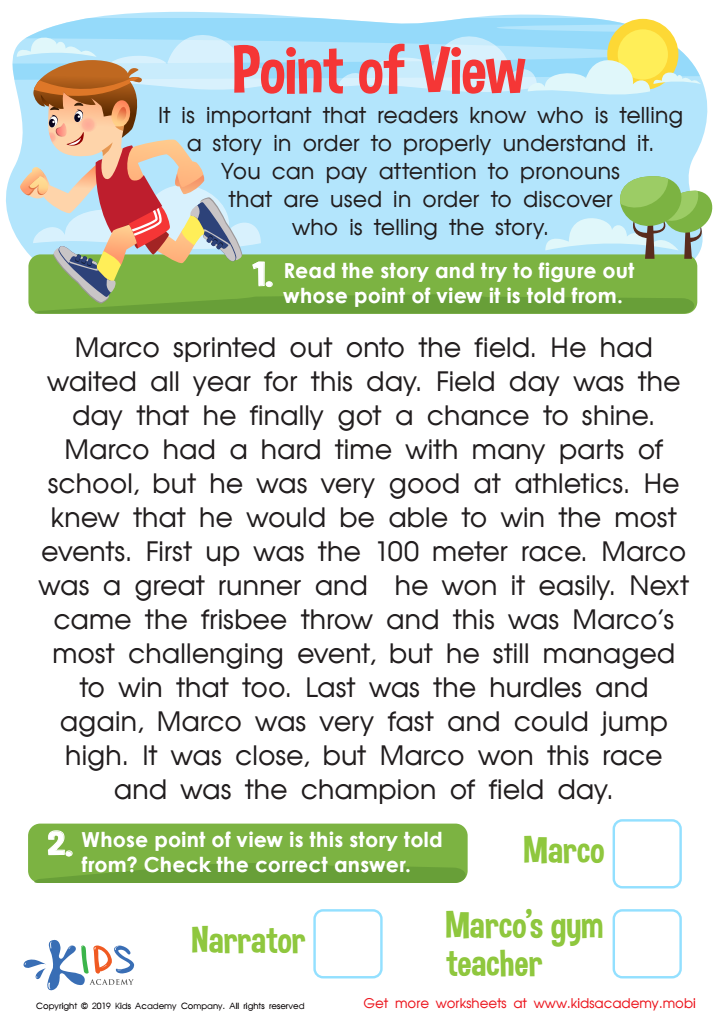
Point of View Worksheet







Understanding perspectives is crucial for children aged 6-8 as it lays the foundation for essential social and emotional skills. At this age, children start to recognize that others have different thoughts, feelings, and experiences. Teaching them to understand perspectives fosters empathy, allowing them to relate better to their peers and resolve conflicts amicably.
Parents and teachers should care about this development because it helps children navigate friendships better, promoting healthier relationships and reducing bullying. When children learn to see things from others' viewpoints, they become more open-minded and accepting of diversity, which is vital in our increasingly interconnected world.
Moreover, this understanding encourages effective communication skills. As children articulate their own thoughts and consider others' feelings, they improve their ability to express themselves clearly and listen actively. These skills are not just important for their immediate social interactions but are essential for lifelong success. Investing in teaching children to understand different perspectives sets them on a positive path toward becoming compassionate, thoughtful adults who contribute to their communities. Thus, parents and teachers play a pivotal role in guiding them through this important developmental phase.








