Understanding prepositions Normal Worksheets for Ages 6-8
3 filtered results
-
From - To
Discover the "Understanding Prepositions" normal worksheets tailored for kids ages 6-8. These engaging worksheets from Kids Academy are designed to help young learners grasp the usage of prepositions through fun activities and exercises. By providing clear examples and interactive tasks, the worksheets make learning prepositions enjoyable and effective, thereby enhancing children's language skills and comprehension. Perfect for early-grade students, these resources support both classroom teaching and home learning, ensuring your child develops a strong foundation in understanding how prepositions function within sentences. Download now and see your child’s confidence soar!
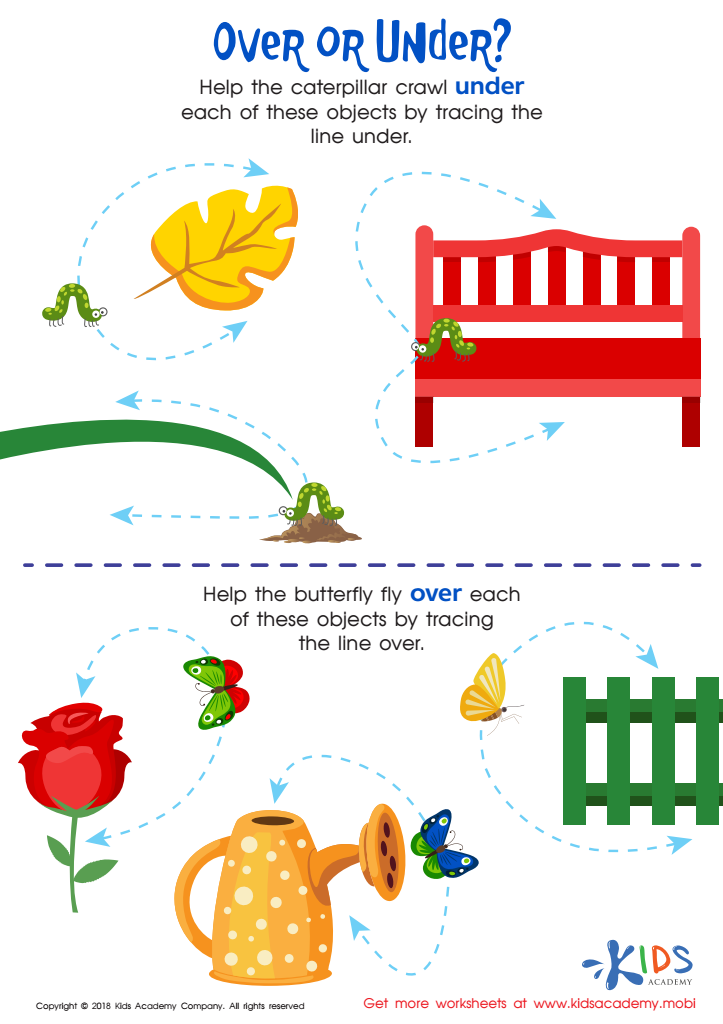
Over or Under? Worksheet
 Assign to My Students
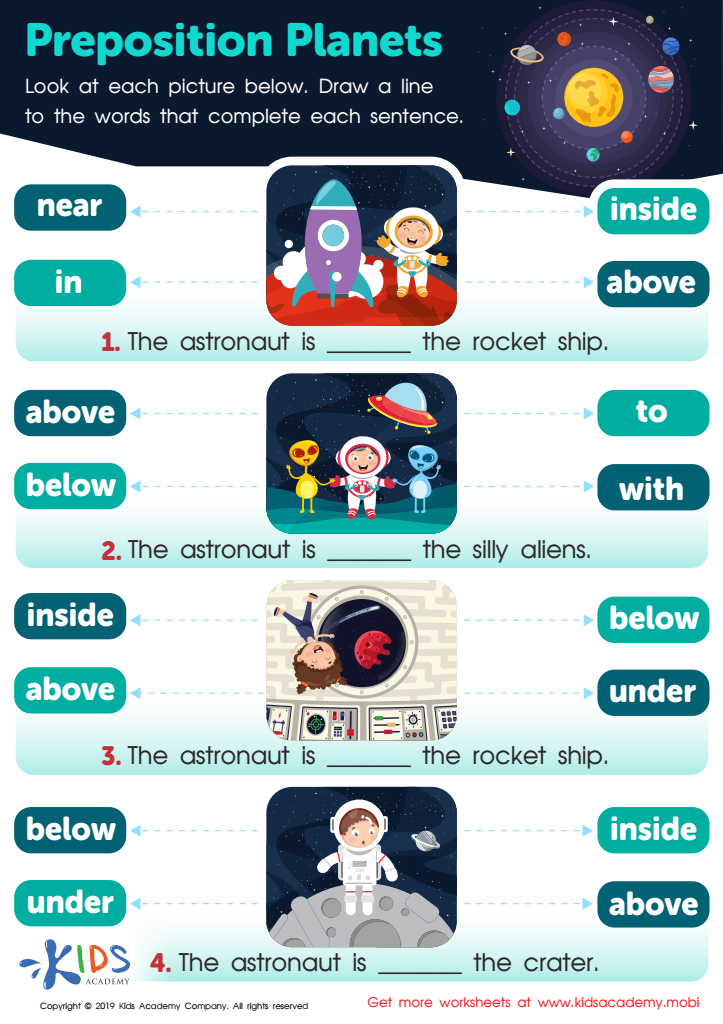
Preposition Planets Worksheet
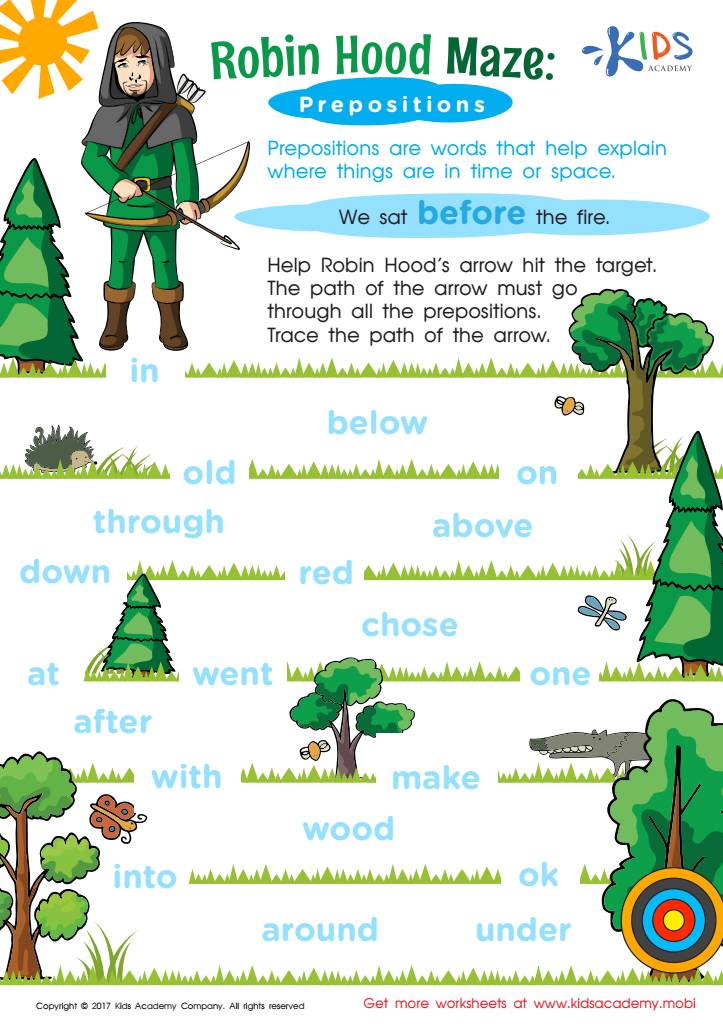
Prepositions Worksheet








Understanding prepositions is crucial for children ages 6-8 as it lays the foundation for effective communication and literacy skills. Prepositions are words that link nouns, pronouns, and phrases to other words within a sentence, providing essential information about time, place, direction, and relationships. For example, knowing the difference between "on the table" and "under the table" helps children follow instructions accurately and describe their surroundings more precisely.
At this developmental stage, children are expanding their vocabulary and starting to write more complex sentences. Mastery of prepositions enhances their ability to create coherent and descriptive sentences, which is fundamental for reading comprehension and writing. It allows children to better understand stories they read and write clear, detailed narratives of their own.
Additionally, prepositions play a pivotal role in social interactions. When children use prepositions correctly, they can more effectively convey their thoughts and needs, reducing frustration and misunderstandings. This skill is vital in classroom settings, where clear communication with teachers and peers is essential for collaborative activities and effective learning.
Therefore, parents and teachers should emphasize the importance of prepositions, ensuring that children grasp their meanings and uses, thereby building a solid linguistic foundation. This focus will equip children with the tools they need for academic success and effective daily communication.








