Basic Math Skills Normal Addition and Subtraction Word Problems Worksheets for Ages 6-8
3 filtered results
-
From - To
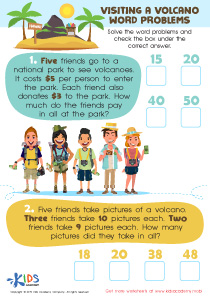
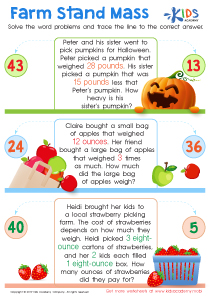
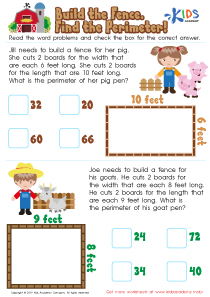
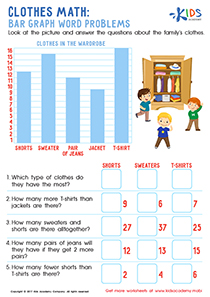
Discover our engaging "Basic Math Skills Normal Addition and Subtraction Word Problems Worksheets" tailored for children ages 6-8. These worksheets are designed to enhance problem-solving abilities through practical, real-world scenarios that make learning fun! Each activity focuses on developing essential math skills, encouraging your students to apply addition and subtraction in meaningful contexts. With colorful illustrations and relatable problems, young learners will enjoy practicing their math while building confidence in their abilities. Perfect for use at home or in the classroom, our worksheets are a valuable resource for reinforcing foundational math concepts. Help your child excel in early math today!
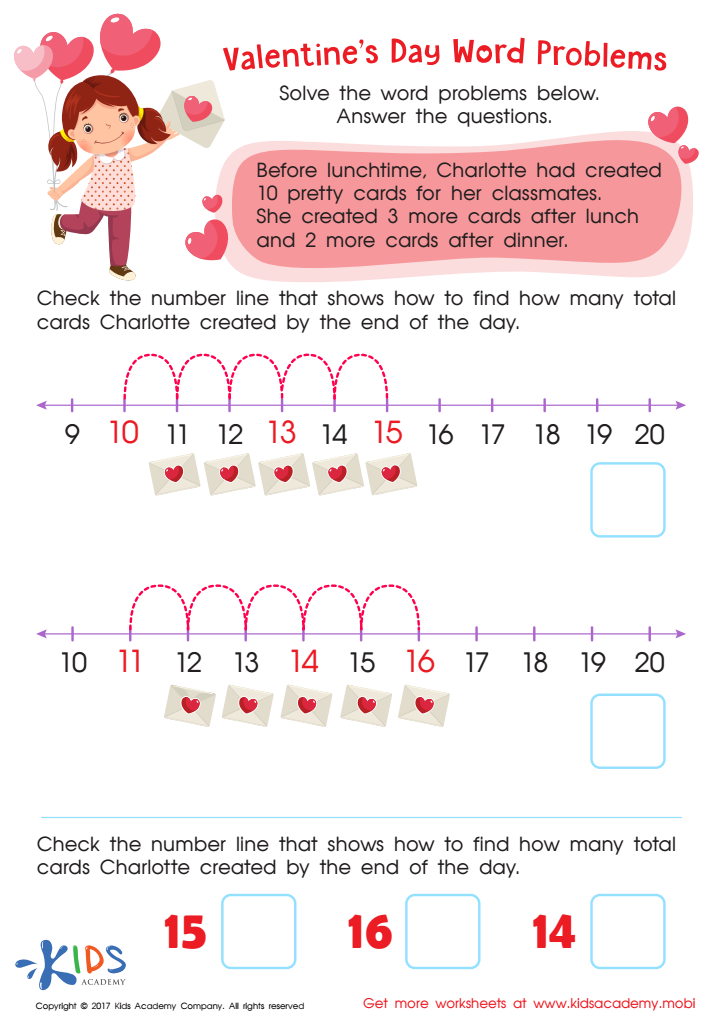
Valentines Day Word Problem Worksheet
 Assign to My Students
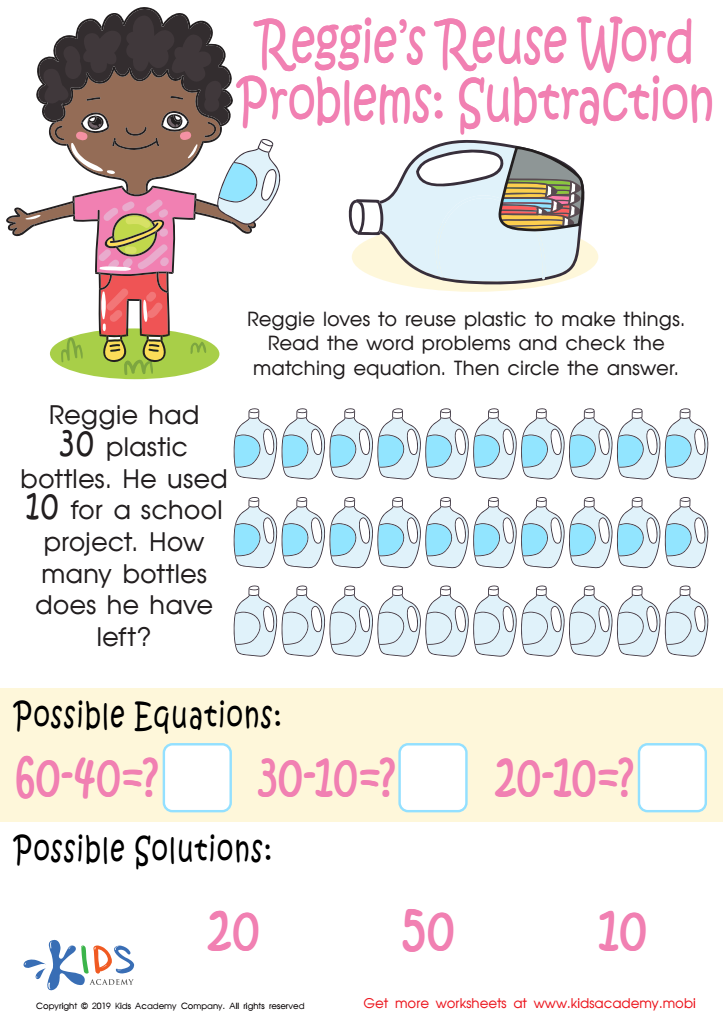
Reggie's Reuse Word Problems: Subtraction Worksheet
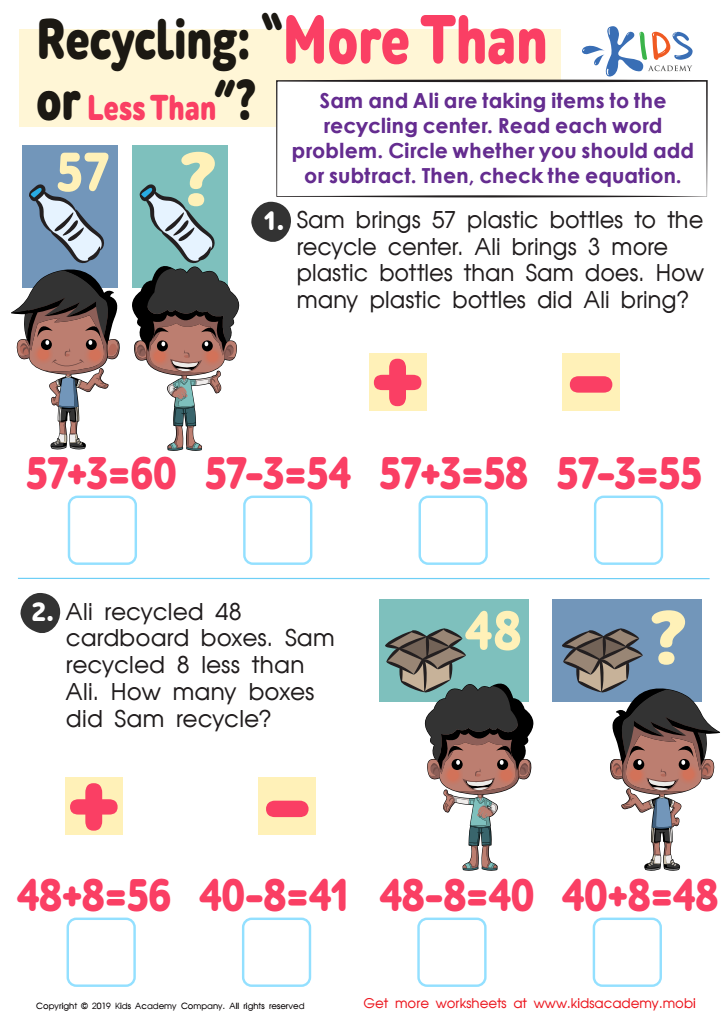
Recycling - More or Less Worksheet








Parents and teachers should prioritize basic math skills, particularly normal addition and subtraction word problems, for children aged 6-8 for several essential reasons. Firstly, these skills lay the foundation for future mathematical learning. As children progress in their education, a solid grasp of addition and subtraction is critical for understanding more complex concepts such as multiplication, division, and fractions.
Additionally, word problems develop critical thinking and problem-solving skills. When children are faced with real-life scenarios presented in word problems, they learn to analyze information, extract relevant data, and apply mathematical operations to find solutions. This process helps them connect math to everyday life, making learning more meaningful.
Furthermore, fostering proficiency in these basic math skills builds confidence in children. Mastery of addition and subtraction can instill a sense of achievement, encouraging them to tackle more challenging topics.
Moreover, supporting basic math skills at an early age can benefit emotional regulation by alleviating anxiety associated with math. By making practice enjoyable through games and activities, both parents and teachers can create positive attitudes towards math. Ultimately, priority on basic math skills among young learners empowers them not only academically but also enhances their problem-solving abilities life-long.